Robotics has gone through a clear evolution—from ambition exceeding capability to a data-driven inflection point that is now unlocking real-world deployment. Early robotics focused on building human-like systems but ended up delivering narrow, highly specialized machines (e.g., factory arms), because encoding every possible action through rules quickly became intractable. (AI Foresights)
The first major shift came around the mid-2010s with simulation and reinforcement learning. Instead of hardcoding behavior, engineers began training robots in virtual environments using trial-and-error with reward signals. This allowed systems to scale learning across millions of scenarios, but it introduced a key limitation: models trained in simulation often failed when exposed to real-world variability. Techniques like domain randomization were introduced to bridge that gap by exposing models to diverse simulated conditions, improving transfer to physical environments. (Robotics Center)
The real breakthrough emerged post-2022 with the rise of foundation models. Borrowing from large language models, robotics systems began ingesting multimodal data—vision, text, sensor inputs, and joint positions—and predicting actions directly. This marked a shift from task-specific learning to generalized reasoning, where robots could interpret instructions and adapt to unfamiliar scenarios with higher success rates. (Robotics Center)
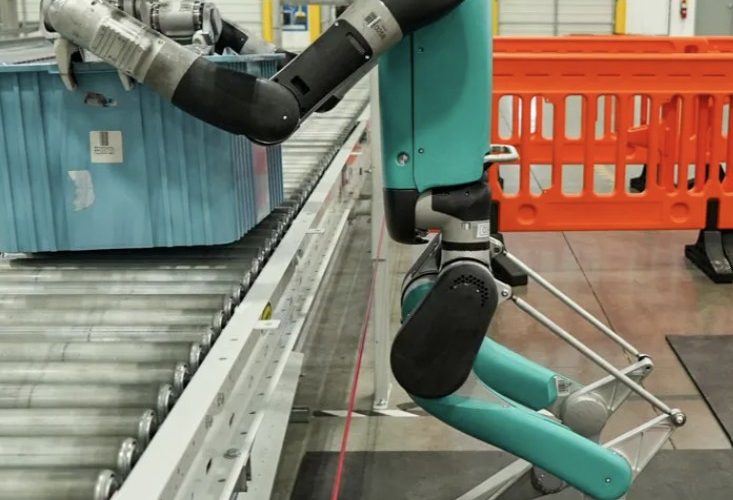
At the same time, the industry moved toward large-scale data collection in real environments. Instead of waiting for perfect systems, companies began deploying imperfect robots in production settings (e.g., warehouses), using them as continuous data pipelines. This feedback loop significantly accelerated learning and improved performance over time, especially for repetitive but variable tasks like picking, sorting, and handling objects. (Robotics Center)
Today, the field is converging on a hybrid approach: combining simulation, real-world data, and foundation models. This has reignited both technical ambition and capital investment—particularly in humanoid robotics—because the learning paradigm is finally aligning with the complexity of real-world environments. Investment surged to billions annually, reflecting confidence that robots are transitioning from controlled settings to scalable, economically viable deployment. (linkedin.com)
The key takeaway: robotics is no longer constrained by rule-based engineering or narrow task optimization. It is becoming a data-centric, AI-driven system—closer to how I see GenAI pipelines evolving (data → model → feedback loop). The remaining bottleneck isn’t model capability anymore—it’s data quality, environment variability, and system integration at scale.