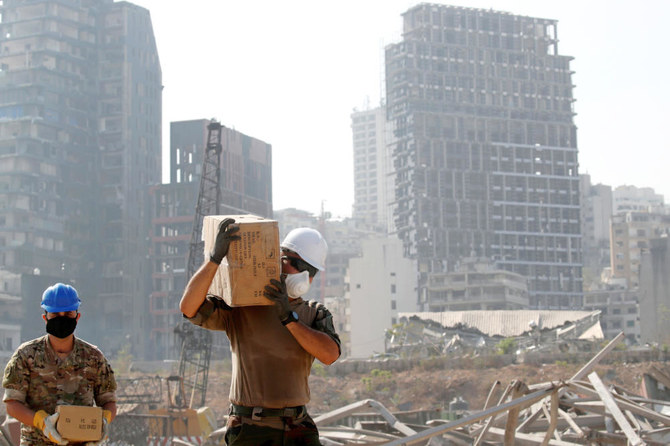
By Najia Houssari — arabnews.com –BEIRUT: Tons of wheat, corn and barley stored at the Port of Beirut since the devastating explosion that rocked the city 16 months ago are to be disposed of as they are no longer fit for consumption, it has been found. As temperatures change, mold, weevils and other insects have made it impossible to reach the contents of silos at the site without protective equipment; according to the World Health Organization, mold produces mycotoxins “which can cause a variety of adverse health effects and pose a serious health threat to both humans and livestock … ranging from acute poisoning to long-term effects such as immune deficiency and cancer.” Before the blast, the port’s silos contained about 45 tons of wheat, barley and corn, most of which was lost during the explosion. Minister of Environment Nasser Yassin said that six to seven tons remain at the site. Lab tests run on samples of wheat in cooperation with the ministries of economy, agriculture and environment, the American University of Beirut, Saint Joseph University, and the French Embassy, which brought in experts to assist, showed that the crops “are suitable for neither human nor animal use.”
In August, a year after the explosion, the remaining grains were removed from their silos and stored in the open air to reduce the risks of accidental fires in the hot weather, but resulted in hastening the demise of the crops as fit for consumption. A committee formed under the government of former Prime Minister Hassan Diab failed to reach a solution. Yassin told Arab News: “We decided to ferment these quantities and turn them into compost to be distributed to farmers for free, or turn them into industrial firewood to be given to the Lebanese Army to heat its units in the high mountains, or donate them to needy families living in cold areas.” He added: “Turning them into compost allows us to avoid any procedure that produces heavy metals, and we started with this process with the help of MAN Group, which obtained funding from France to treat organic waste resulting from the explosion, and had signed the contract with the Lebanese state in May.”