by naharnet.com — Both President Michel Aoun and Central Bank Governor Riad Salameh have denied discussing the issue of Hizbullah’s controversial financial institution, al-Qard al-Hasan, in a meeting that they held in Baabda. A statement issued by the Presidency said media reports that claimed the opposite were “baseless,” noting that the discussions tackled “the monetary […]
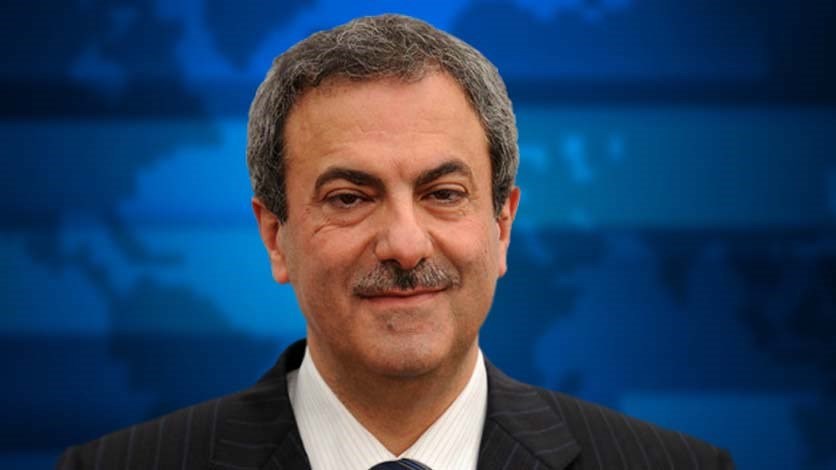
وطنية – الفاتيكان – منح البابا فرنسيس سفير لبنان لدى الكرسي الرسولي فريد الياس الخازن وسام “مؤسسة بيوس الرابع”.
وأوضح الخازن في حديث إلى “الوكالة الوطنية للإعلام” أن “هذا الوسام (Ordine di Papa Pio IX) الذي أنشئ بداية في زمن البابا بيوس الرابع في 1560 وأعاد احياءه البابا بيوس التاسع في 1847، مصدر فخر واعتزاز”.
وقال: “انا ممتن لقداسة البابا فرنسيس على هذه الالتفاتة الكريمة. انه لشرف عظيم أن أنال هذا التكريم الذي يرتب علي مسؤولية أدبية تلازم مهامي. وهي بمثابة المحفز لانطلاقة جديدة لمتابعة عملي بصدق وجدية وتفان، خدمة للعلاقات التاريخية وروابط الصداقة والتعاون المثمر بين لبنان والكرسي الرسولي، خصوصا في الظروف الصعبة التي يمر بها لبنان والمعاناة التي دخلت بيوت الناس وأصابتهم في الصميم. تجدر الإشارة الى أن هذا الوسام يمنح لسفراء لدى الكرسي الرسولي وسواهم، بينما الوسام الأعلى رتبة من الفئة (ordre) نفسها يمنح لرؤساء الدول”.
وبالنسبة إلى زيارة الرئيس المكلف سعد الحريري روما، قال: “تعاطى الكرسي الرسولي مع زيارة الرئيس سعد الحريري الأخيرة بحسب الأصول البروتوكولية المتبعة، كرئيس حكومة مكلف. ولم يتم الإعلان عن الزيارة في وسائل إعلام الفاتيكان. كما أن الإعداد للزيارة تم بالتنسيق مع السفارة البابوية في لبنان، بناء على موعد كان طلبه الرئيس الحريري، ولم يصدر بيان رسمي بعد اختتامها. هذا لا يقلل من أهمية الزيارة، بل يعكس التزام التقاليد المعتمدة في الفاتيكان. لقاء الرئيس الحريري مع قداسة البابا تناول المسائل المبدئية المطروحة وحرص البابا الدائم للمساعدة على انتشال لبنان من أزماته. ومواقف الحبر الأعظم بهذا الخصوص معروفة، وسبق الإعلان عنها في مناسبات عدة. أما اجتماع العمل بين الرئيس الحريري والوفد المرافق من جهة، والكردينال بارولين، أمين سر الدولة، والمونسنيور كالاغر، (وزير الخارجية)، من جهة أخرى، فتناول مسائل مرتبطة بالعلاقات الثنائية بين لبنان والكرسي الرسولي في أبعادها الداخلية والخارجية”.
يطل عيد الفطر على الوطن العربي والعدو يهجر ويقتل الفلسطنيين ويدمر ممتلكاتهم. فالى متى تستمر هذه الغطرسة وهذا الاجرام وينتهي الظلم ويرتدع الظالم ؟
![A poster depicting Lebanon's Hezbollah leader Sayed Hassan Nasrallah is seen in Marwahin, southern Lebanon [Aziz Taher/Reuters]](https://www.aljazeera.com/wp-content/uploads/2021/05/2021-05-043_LEBANON-ISRAEL-MARITIME.jpg?resize=770%2C513)
The United States Treasury Department has sanctioned seven Lebanese people connected to Hezbollah and its banking arm for illicitly transferring $500m on behalf of the Iran-backed group.
by Reuters — The United States on Tuesday called on governments worldwide to take action against Lebanon’s Iranian-backed militant group Hezbozllah, as the Treasury Department sanctioned seven Lebanese nationals it said were connected to the group and its financial firm, Al-Qard al-Hassan (AQAH). “The threat that Hizballah (Hezbollah) poses to the United States, our allies, and interests in the Middle East and globally, calls for countries around the world to take steps to restrict its activities and disrupt its facilitation networks,” U.S. Secretary of State Antony Blinken said in a statement on the action against the group, designated a terrorist organization by Washington. The Treasury Department said in a statement that it had blacklisted Ibrahim Ali Daher, who it described as chief of Hezbollah’s Central Finance Unit, as a specially designated global terrorist, accusing him of acting on behalf of Hezbollah.
The United States also slapped sanctions on six others linked to AQAH, including a man it said was the financial director, Ahmad Mohamad Yazbeck, as well as Abbas Hassan Gharib, Wahid Mahmud Subayti, Mostafa Habib Harb, Ezzat Youssef Akar, and Hasan Chehadeh Othman. The Treasury accused the six men of using the cover of personal accounts at Lebanese banks to evade sanctions targeting AQAH and transfer $500 million on behalf of the U.S.-blacklisted firm. Officials in Hezbollah had no immediate comment. Tuesday’s move freezes any U.S. assets of those blacklisted and generally bars Americans from dealing with them. Those who engage in certain transactions with the designated individuals also risk being hit with secondary sanctions. “Hizballah (Hezbollah) continues to abuse the Lebanese financial sector and drain Lebanon’s financial resources at an already dire time,” Andrea Gacki, director of the Treasury’s Office of Foreign Assets Control, said in the statement.

by AFP — BEIRUT — Lebanon’s central bank on Sunday announced a “conditional” plan that would allow depositors, hit by strangling financial restrictions, to access part of their foreign currency savings stuck in Lebanese banks. Lebanon is in the grips of its worst economic crisis since the 1975-1990 civil war, and more than half of the population is now in poverty. The Lebanese pound, officially pegged to the dollar at 1,507 since 1997, has lost more than 85 per cent of its value against the greenback on the black market. Since Autumn 2019, banks have largely prevented ordinary depositors from accessing their dollar savings or transferring them abroad, forcing them to resort to the black market to obtain foreign currency.
Holders of dollar accounts have only been able to access their money by exchanging it into the local currency at a rate of 3,900 to the greenback. The dollar is currently trading for more than 12,500 pounds on the black market. The central bank said on Sunday it was negotiating “a mechanism [with Lebanese lenders]under which the banks would begin to gradually give [clients] access to their deposits… in all currencies”. The institution is mulling a plan that would involve banks “paying [savers] sums of up to $25,000 in US dollars or any [other] foreign currency along with its equivalent in Lebanese pounds”, the statement added. It did not specify the exchange rate for amounts converted to the local currency.
by justice.gov — ALEXANDRIA, Va. – A dual Lebanese and U.S. citizen who resides in Vienna, Virginia pleaded guilty today to participating in a conspiracy to launder money as part of a decade-long scheme to ship electronics equipment to a Hizballah-owned television station in Lebanon. In addition, the defendant and her husband pleaded guilty to conspiring to commit tax fraud by concealing income from her employment in Virginia. “For over a decade, Racha Farhat participated in a conspiracy to purchase electronics equipment using the proceeds of illegal activity, which benefited a Lebanese television station owned by Hizballah,” said Raj Parekh, Acting U.S. Attorney for the Eastern District of Virginia. “Working with our law enforcement partners, we will bring to justice those who use the U.S. financial system to further the interests of prohibited entities that engage in unlawful activities abroad.”
According to court documents, Racha Farhat, 44, began laundering money in 2010 and continued to do so until the time of her arrest in February 2021. The scheme involved Farhat receiving money from an unindicted co-conspirator (UCC-1) in Lebanon, which she used to purchase electronics equipment in the United States. Farhat then shipped the items purchased by herself and other co-conspirators overseas, primarily to Lebanon, where UCC-1 supplied at least $175,000 worth of goods to Al Manar TV. Al Manar TV is a Lebanon-based TV station owned and operated by Hizballah. Both Hizballah and Al Manar TV are prohibited entities for a U.S. person to conduct business with under the International Emergency Economic Powers Act (IEEPA).
![Mavia's bakers prepare dough for the next batch of bread [Maghie Ghali/Al Jazeera]](https://www.aljazeera.com/wp-content/uploads/2021/05/Mavias-bakers-prepare-dough-for-the-next-batch-of-bread.-Photo-by-Maghie-Ghali.jpg?resize=770%2C513)
By Maghie Ghali – aljazeera.com — – Beirut, Lebanon – As the deepening economic crisis continues, the soaring prices of basic necessities like bread have pushed many Lebanese below the poverty line. With Lebanon’s bakers relying on imported wheat to produce their goods, the cost of even the heavily subsidised traditional flatbread – eaten by rich and poor alike with most meals – has tripled since 2019. Mavia Bakery, a small outfit tucked away in Beirut’s Gemmayzeh district, is trying to ensure Lebanon has better food security and is less dependent on imported flour for its bakeries with a series of humanitarian projects. Opened in 2020 by educational NGO Sadalsuud founder and avid baker Brant Stewart, the bakery works out of a cooperative kitchen in Tripoli and only hires women from marginalised communities. “This space came about because I wanted to do something that is desirable and needed regardless of who makes it, otherwise it’s not sustainable,” Stewart told Al Jazeera. “The number of people willing to buy something because of who made it dries up quickly – there are only so many beaded bags that people can buy, but everyone needs bread.”
Locally grown
Currently, 80 percent of the wheat Lebanon consumes is imported from countries like Ukraine, which has high production on vast tracts of land Lebanon lacks. What little local wheat is grown is used as freekeh or burghul (bulgur). “Wheat as a commodity crop is not financially viable in Lebanon. There are people who grow their own wheat for personal use but, on an industrial scale, local wheat doesn’t happen,” Stewart said. “The flour that we buy here from the Bakalian mill, which is made from imported wheat, costs 1,500 lira per kilo [$1], which is much cheaper than the local Bekaa wheat that we buy, which is for 5,000 lira [$3.30] a kilo because there is not enough being grown to cover demand. “There hasn’t been a mill focused on milling locally grown wheat either – these massive mills working imported wheat can’t just take a small amount of local stuff and mill it,” he added. “These machines are huge and it really is the milling that is the missing link in the chain. Milling is an art and the milling that’s happening on a smaller scale is not milled well and is low quality.”
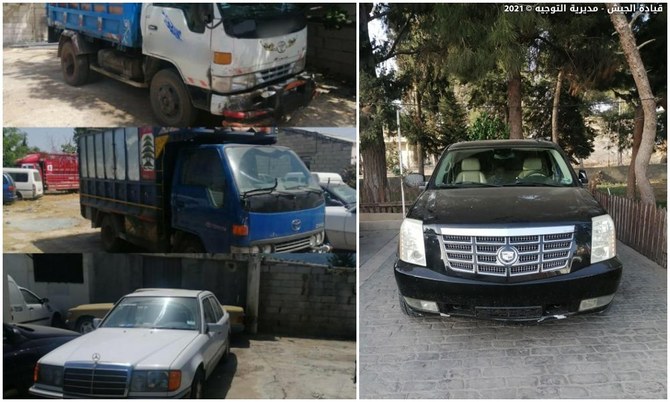
by arabnews.com — BEIRUT: Lebanese security forces have foiled a bid to smuggle 8,000 liters of fuel into Syria. The Internal Security Forces (ISF) arrested a four-member gang of Lebanese smugglers, who had stashed the subsidized fuel in two secret tanks that were hidden inside pick-up trucks. ISF said an informant had tipped off intelligence and information teams about the smugglers’ intent to conceal the fuel and smuggle it through one of the Akkar-Hermel routes to Syria. An ISF squad stopped and impounded three vehicles in a sting operation at Bayno-Al Oyoun highway, leading to Hermel, on Thursday.
The three impounded cars were the pick-up trucks and a white Mercedes, which was used to monitor the route. “Unfortunately, while law enforcement bodies are working vigilantly to curtail smuggling of subsidized products by smugglers to Syria, many of those are covered up by politicians or influential figures,” an unnamed senior lieutenant said. “Smuggling subsidized goods (mainly petrol and diesel) has prospered recently, especially with smugglers purchasing fuel products here for around LBP40,000 ($26.53) per tank and selling them in Syria for three or four times that price.”
by arabnews — Najia Houssari — BEIRUT: The Banque du Liban has informed the Economy Ministry and other concerned ministries of the need to wait to grant approval for subsidized imports. The move by Lebanon’s central bank comes as the caretaker government has been unable to secure a social safety net by agreeing to issue […]

by thearabweekly.com — BEIRUT – Lebanon’s lights may go off this month because cash for electricity generation is running out, a lawmaker said on Thursday, as the country grapples with a deep economic crisis. Lebanon’s parliament had approved a $200 million emergency loan to finance fuel imports for power generation in March, but a committee reviewing the loan has yet to approve it. “We should not forget that starting May 15, gradual darkness will start,” said Nazih Negm, a member of parliament, according to a government statement released after he met the caretaker finance and energy ministers. The Lebanese have long learned to live with regular power cuts that run for at least three hours a day in the capital and much longer in other areas, because the state’s power plants cannot meet demand. Many people rely on private generators. But the financial crisis has exacerbated the heavily-indebted nation’s problems, as the government struggles to find enough foreign exchange to pay for fuel and other basic imports.
The loan, approved by lawmakers in March, is being reviewed by a constitutional committee, which is studying whether it is lawful. The government resigned after a massive blast in Beirut in August and is now acting in a caretaker capacity. “We hope that the constitutional committee does not take a month to reach its decision because the situation can’t wait,” Negm said, according to the government statement. Lebanon usually keeps enough fuel for about two months or so, as it is too costly to hold strategic reserves for longer. The economic meltdown, the biggest crisis since the end of Lebanon’s 1975-1990 civil war, has fuelled unrest, locked depositors out of their accounts and hammered the currency, which has lost around 90% of its value against the dollar. Earlier in March, Lebanon’s caretaker energy minister warned the country would plunge into “total darkness” at the end of the month if no money was secured to buy fuel for power stations.
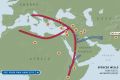
Population Movements to Keserwan - The Khazens and The Maans
ما جاء عن الثورة في المقاطعة الكسروانية
ثورة أهالي كسروان على المشايخ الخوازنة وأسبابها
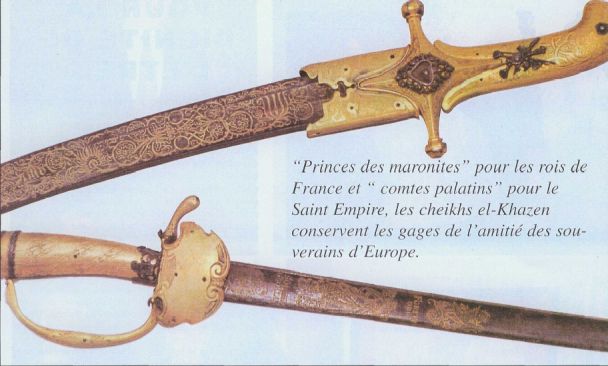
Origins of the "Prince of Maronite" Title
Growing diversity: the Khazin sheiks and the clergy in the first decades of the 18th century
Historical Members:
Barbar Beik El Khazen [English]
Patriach Toubia Kaiss El Khazen(Biography & Life Part1 Part2) (Arabic)
Patriach Youssef Dargham El Khazen (Cont'd)
Cheikh Bishara Jafal El Khazen
Patriarch Youssef Raji El Khazen
The Martyrs Cheikh Philippe & Cheikh Farid El Khazen
Cheikh Nawfal El Khazen (Consul De France)
Cheikh Hossun El Khazen (Consul De France)
Cheikh Abou-Nawfal El Khazen (Consul De France)
Cheikh Francis Abee Nader & his son Yousef
Cheikh Abou-Kanso El Khazen (Consul De France)
Cheikh Abou Nader El Khazen
Cheikh Chafic El Khazen
Cheikh Keserwan El Khazen
Cheikh Serhal El Khazen [English]
Cheikh Rafiq El Khazen [English]
Cheikh Hanna El Khazen
Cheikha Arzi El Khazen
Marie El Khazen