Khazen

How AI will reshape search

For the past two decades, search engines have answered most users’ queries in the same way: with a ranked list of webpages. But Microsoft’s unveiling of its AI-powered Bing search engine this week suggests this period of stasis is over, tech critic Kevin Roose writes. Using natural language, a user can ask Bing to do tasks as diverse as planning a dinner party — it’ll serve up a menu with links to sources — to drafting a social media post or summarizing a financial report. “It’s an entirely new way of interacting with information on the internet,” Roose writes.

An AI arms race is underway between two tech giants. Here’s who has an edge.

by Tanya Dua — Linkedin — A deep-dive into one big theme or news story every week. Though I hesitated to call it as such until recently, the rapidly unfolding events of the past week would suggest that we’re squarely in the midst of an AI arms race. ICYMI: Last Friday, Google invested $300 million into Anthropic on the heels of Microsoft’s (LinkedIn’s parent company) recent $10 billion investment into ChatGPT-creator OpenAI. Google quickly followed with an unveiling of its own AI chatbot, Bard, on Monday. Microsoft then made waves when, a day later, it announced ChatGPT’s integration with its search engine Bing.

Google has had an indisputable stranglehold on search for a long time, but the heralding of AI as the next big frontier in technology has somewhat leveled out the playing field. And the viral popularity of ChatGPT is only adding more heat, with the OpenAI chatbot recently becoming the fastest-growing consumer app in internet history. “The internet search wars are back,” declared the Financial Times’ Richard Waters, noting that AI has “opened the first new front in the battle for search dominance since Google fended off a concerted challenge from Microsoft’s Bing more than a decade ago.” And this time around, Google is at a disadvantage, not just because of Microsoft’s first-mover advantage or Bard’s bumpy debut this week, some experts say.
Read more
What are the top 10 smallest countries? These countries are ranked as the top 10 smallest in the world

Maldives ranked 9th  What are the top 10 smallest countries? These countries are ranked as the top 10 smallest in the world Vatican City (0.19 square miles) Monaco (0.78 square miles) Nauru (8.1 square miles) Tuvalu (10 square miles) San Marino (24 square miles) Liechtenstein (62 square miles) Marshall Islands (70 square miles) Saint Kitts […]

Read more
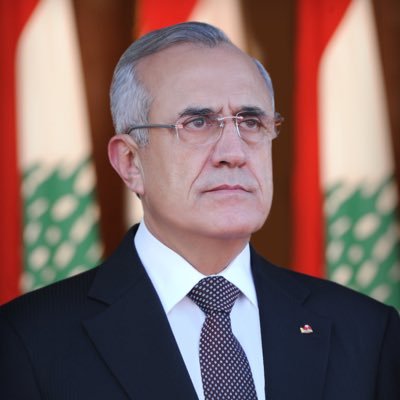
الرئيس ميشال سليمان ومحطّات في القيادة والرئاسة والعلاقة مع “حزب الله” (4 من 7) ماذا طلب الأسد من سليمان في معركة “نهر البارد”؟ كيف انتهت المعركة وفرّ شاكر العبسي؟

نجم الهاشم


حصلت معركة مخيم نهر البارد ضدّ تنظيم «فتح الإسلام» في ظلّ انقسام سياسي وحصار مفروض على حكومة الرئيس فؤاد السنيورة. لذلك أخذ الجيش على عاتقه مهمّة التصدّي لهذه الظاهرة والردّ على استهداف عناصره وحواجزه في محيط المخيم. كيف حضّر الجيش لهذه الحرب وماذا قال قائده العماد ميشال سليمان للرئيس السوري بشّار الأسد وماذا قال له الأسد؟ وما هي حقيقة الأخبار التي تحدّثت عن تسهيل عملية فرار قائد «فتح الإسلام» شاكر العبسي؟ في هذه الحلقة الرابعة من محطات قيادة ورئاسة الرئيس سليمان

Read more
EXPLAINER – Why was the Turkey-Syria earthquake so bad?

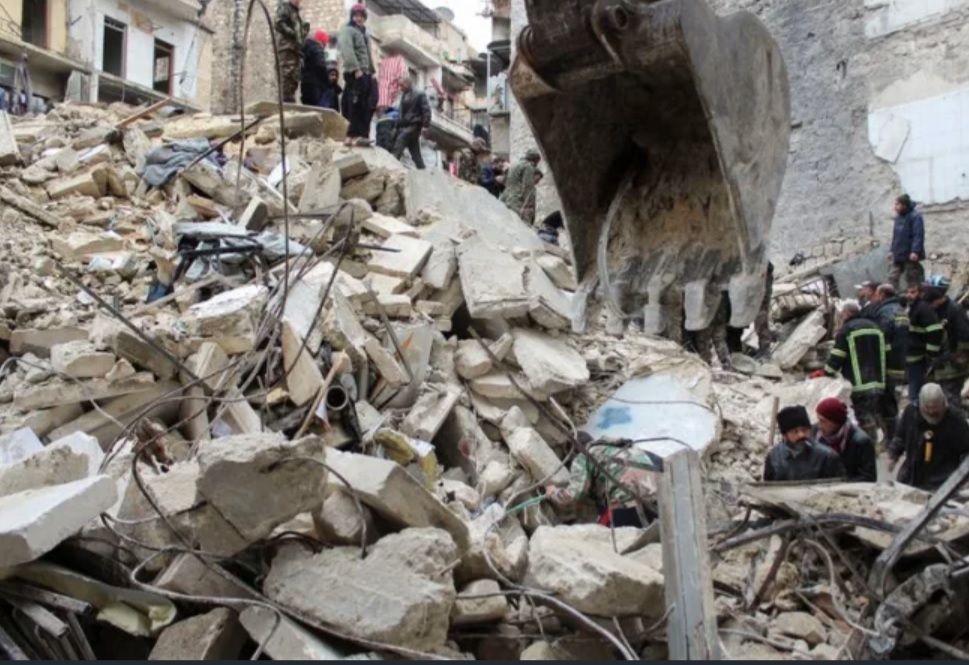
By Gloria Dickie LONDON (Reuters) – The magnitude 7.8 earthquake that struck Turkey and Syria on Monday is likely to be one of the deadliest this decade, seismologists said, with a more than 100 km (62 miles) rupture between the Anatolian and Arabian plates. Here is what scientists said happened beneath the earth’s surface and what to expect in the aftermath:

WHERE DID THE EARTHQUAKE ORIGINATE? The epicentre was about 26 km east of the Turkish city of Nurdagi at a depth of about 18 km on the East Anatolian Fault. The quake radiated towards the northeast, bringing devastation to central Turkey and Syria. During the 20th century, the East Anatolian Fault yielded little major seismic activity. “If we were going simply by (major) earthquakes that were recorded by seismometers, it would look more or less blank,” said Roger Musson, an honorary research associate at the British Geological Survey. Only three earthquakes have registered above 6.0 on the Richter Scale since 1970 in the area, according to the U.S. Geological Survey. But in 1822, a 7.0 quake hit the region, killing an estimated 20,000 people.

HOW BAD WAS THIS EARTHQUAKE?

On average, there are fewer than 20 quakes over 7.0 magnitude in any year, making Monday’s event severe. Compared with the 6.2 earthquake that hit central Italy in 2016 and killed some 300 people, the Turkey-Syria earthquake released 250 times as much energy, according to Joanna Faure Walker, head of the University College London Institute for Risk and Disaster Reduction. Only two of the deadliest earthquakes from 2013 to 2022 were of the same magnitude as Monday’s quake.

WHY WAS IT SO SEVERE?

Read more
a bloody story on France 5

By Le Figaro — CRITICISM – The excellent investigation carried out by Sofia Amara and Jérôme Fritel reveals the networks of hidden financing, thanks to drugs, of the Shiite militia. Hezbollah, the prohibited investigationa three-part documentary not to be missed, this Sunday February 5 at 8:55 p.m. on France 5. With Hezbollah,Iran has created the most powerful asymmetrical military force in modern history.” One of the hardest to pin down as well. Former CIA agent Robert Baer, ​​who spent years tracking down Lebanon’s “Party of God,” knows this. More than a real investigation into its forty years of existence, Hezbollah, the prohibited investigationthe documentary in three 52-minute episodes each by journalists Jérôme Fritel and Sofia Amara, broadcast this Sunday February 5 on France 5, is first and foremost the story of an infiltration operation by the financing networks of the Lebanese Shiite militia in from drug money.

Alongside Bashar al-Assad

An infiltration codenamed Cassandra, which will lead the sleuths of the American DEA (Drug Enforcement Administration) from Colombia and Venezuela to West Africa before ending in a fiasco on the altar of cold realpolitik in Paris, the day of Iranian President Hassan Rouhani’s visit to France in January 2016. Thanks to telephone interceptions, the DEA had managed in the early 2000s to infiltrate one of its agents of Lebanese origin with Chekri Harb , responsible on behalf of Hezbollah for part of the drug trafficking that the movement organizes from Colombia.

Over more than fifteen years, the agency then succeeded in identifying one by one the barons of a cartel which brought in up to 1 billion dollars a year to Hezbollah. From Ali Fayad, in charge of buying weapons for drugs in Russia and Ukraine for the war waged by the militia alongside Bashar el-Assad in Syria, to Mohammed Nourredine, who supervised operations in Europe from Paris , via Ali Joumaa, Ali Kharoubi, Adnan Tabaja and Abdallah Safieddine, the “godfather” of the cartel, as if by chance ambassador of the militia to his Iranian godfather.

Abductions of Americans and French

Read more
Lebanese officials must bear responsibility: Barbara Leaf

US Assistant Secretary of State for Near Eastern Affairs Barbara Leaf told Lebanese MPs that the solution today is in the hands of Lebanese officials who must bear the responsibility for getting the country out of this situation it has reached. MPs Elias Bou Saab, Mark Daou, Neamat Freim, and Yassin Yassin held a meeting […]

Read more
UN experts slam slow progress in Lebanese activist murder probe

by arabnews.com — AFP — GENEVA:UN rights experts voiced deep concern Thursday at the slow pace of an investigation into the killing of Lebanese intellectual Lokman Slim two years ago, demanding that Beirut ensure accountability. “It is incumbent on the Lebanese authorities to fully investigate and bring to justice the perpetrators of this heinous crime,” the four independent experts said. “Failing to carry out a prompt and effective investigation may in itself constitute a violation of the right to life.”

A secular activist from a Shiite family, 58-year-old Slim was found dead in his car on February 4, 2021, a day after his family reported him missing. His bullet-riddled body was found in southern Lebanon — a stronghold of the Iran-backed Hezbollah movement of which he was heavily critical. In their statement, the UN special rapporteurs on extrajudicial executions, the independence of judges and lawyers, the right to freedom of opinion and expression and the situation of human rights defenders voiced outrage that no one responsible for his assassination had been identified. “Shedding light on the circumstances surrounding the death of Mr. Lokman Slim and bringing those responsible to justice is also part of the State’s obligation to protect freedom of opinion and expression,” said the experts, who are appointed by the UN Human Rights Council but who do not speak on behalf of the world body. “A culture of impunity not only emboldens the killers of Mr. Slim, it will also have a chilling effect on civil society as it sends a chilling message to other activists to self-censor,” they said.

Read more
Explainer: What is behind Lebanon’s new exchange rate?

by al-monitor.com – Adam Lucente — Lebanese officials devalued their currency on Wednesday amid the ongoing economic crisis. The devaluation is still well below the dollar exchange rate on the street, and multiple rates remain in place in Lebanon. Lebanon’s central bank, Banque Du Liban, lowered the official exchange rate to the US dollar from 1,507 to 15,000 pounds, multiple outlets reported. Bank governor Riad Salameh told Reuters Tuesday that the move constitutes an effort to unify different exchange rates in the country. What it means: The official 1,507 rate for the Lebanese pound was in place from 1997 until now. The rate on the street correlated to the official rate until 2019 when the Lebanese economic crisis began. Since then, the Lebanese pound has lost more than 90% of its value on the parallel street exchange market.

The pound, aka lira, has been falling even more on the street in recent weeks. On Wednesday, one US dollar traded at more than 62,000 pounds. The new official rate therefore does not resemble the rate the public is using, despite the devaluation decision. The official rate and the street rate are two of several dollar-to-lira exchange rates in Lebanon. Banque Du Liban’s Sayrafa rate, which is used for international card payments, ATMs and e-commerce, remains at 38,000 to the dollar, the bank said in a statement Tuesday. There are also separate rates for fuel prices, public sector salaries and other things, according to The Associated Press.

Read more
Lebanon to devalue currency by 90% on Feb. 1, central bank chief says

BEIRUT, (Reuters) – Lebanon will adopt a new official exchange rate of 15,000 pounds per U.S. dollar on Feb. 1, central bank governor Riad Salameh said, marking a 90% devaluation from its current official rate that has remained unchanged for 25 years. The shift from the old rate of 1,507 to 15,000 is still far […]

Read more
Lebanese MPs charged in blast probe file appeals to remove investigator

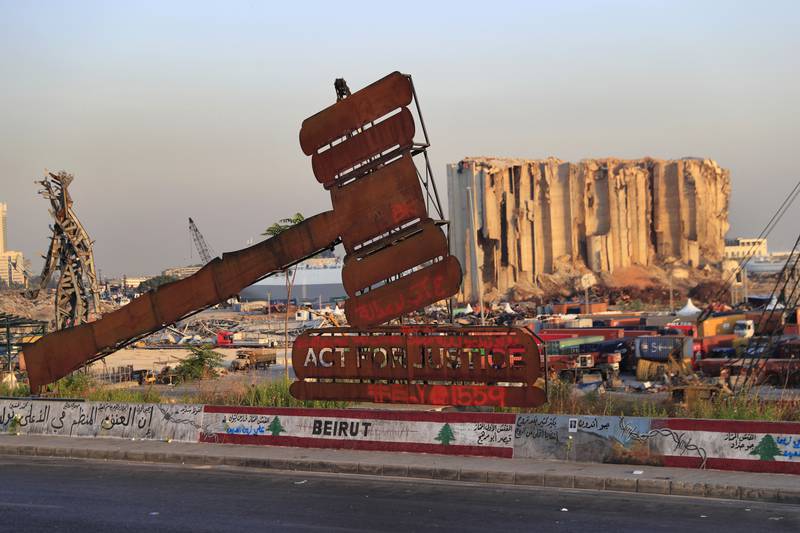
By Nada Homsi — .thenationalnews.com — Two Lebanese MPs charged in connection with the explosion at Beirut port on Monday filed appeals to have the lead investigator dismissed in the latest attempt by those he has charged to stall the probe. MPs Ghazi Zaiter and Ali Hassan Khalil, members of Hezbollah ally the Amal Movement, filed appeals only days after Judge Tarek Bitar resumed his investigation that had been delayed for months by political interference. The resumption led to more judicial paralysis as another judge ordered him to stop and accusations were made by rights groups that officials were obstructing justice. Attorney for the MPs, Samer Hajj, confirmed the latest move and showed The National a copy of the appeals he had filed. “The first appeal I filed was a form on behalf of both MPs requesting the transfer” of the judge leading the investigation, “and the second was a penal complaint against him by Ali Hassan Khalil”, Mr Hajj said. Mr Khalil accused Mr Bitar of “abuse of power and breach of job duties”. “Judge Bitar’s role in the investigation is a violation of his position, provoking sectarian and racial strife,” the complaint stated.

The MP also accused Mr Bitar of “usurping administrative authority” and committing “the crime of impersonating Lebanon’s top prosecutor”. Mr Bitar last week cited legal residence and unexpectedly resumed his investigation after 13 months and charged multiple high-profile officials in connection with the blast ― including Prosecutor General Ghassan Oueidat, head of General Security Gen Abbas Ibrahim and State Security chief Gen Tony Saliba. The backlash to those charges was immediate, leading to challenges from within the judiciary itself and a legal tug-of-war. Mr Oueidat maintains that the investigation is still suspended and says Mr Bitar is “rebelling against the judiciary”. Mr Bitar, however, cited studies that challenge the suspension’s legality. Mr Khalil and Mr Zaiter were charged in December 2020 by the previous judge leading the investigation into the port blast, Fadi Sawan. Both deny wrongdoing and have refused to attend interrogation hearings.

Read more