Khazen

Lebanon’s President Aoun reiterates support for impartial central bank audit

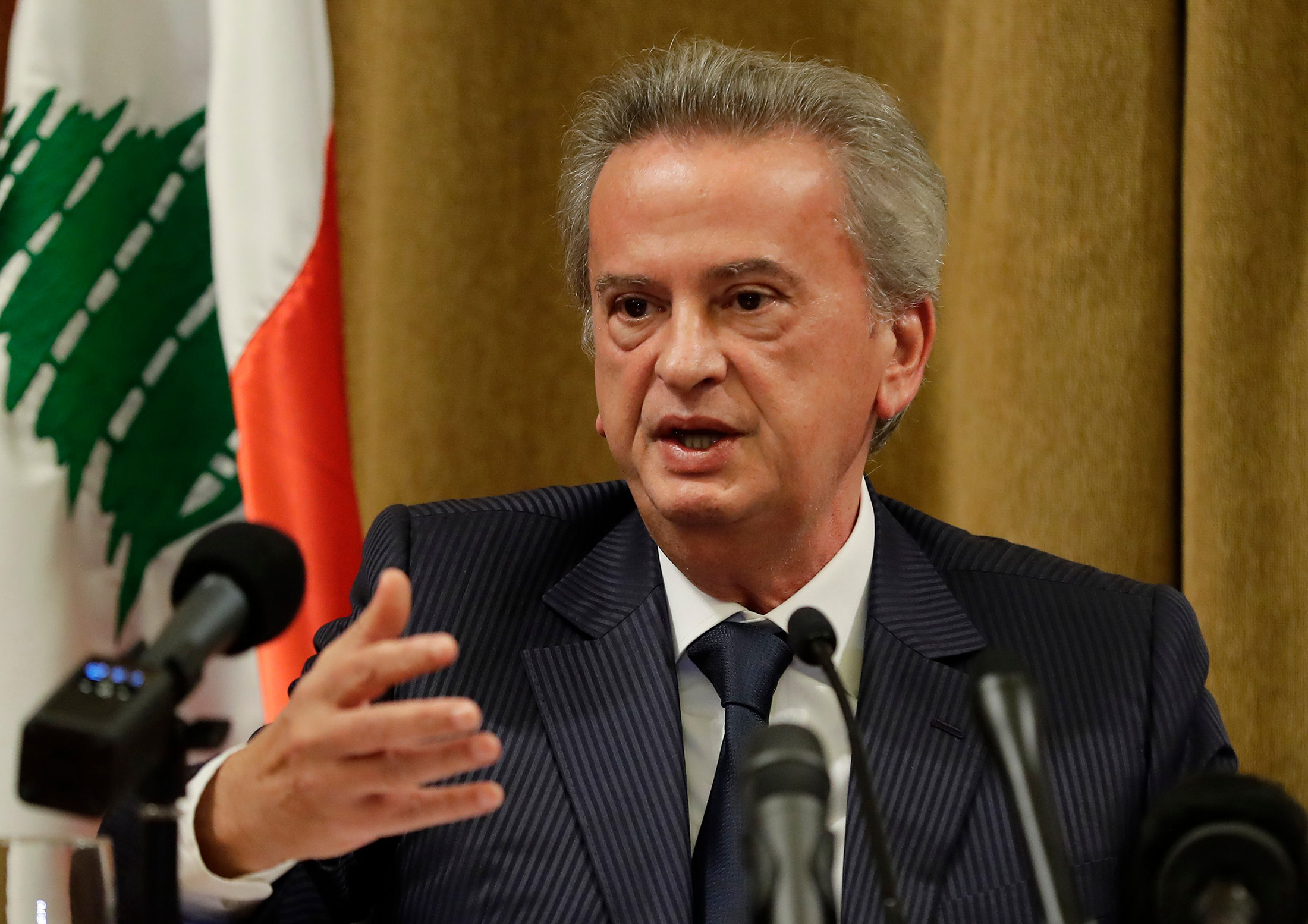
Riad Salameh — Lebanese central Governor of Banque Du Liban 

By Najia Houssari — arabnews.com — BEIRUT: Lebanese President Michel Aoun on Thursday stressed that “the financial criminal audit of Banque du Liban (the country’s central bank) should reach practical results, while steering clear of personal interests.” During a speech on Thursday to the recently formed National Anti-Corruption Commission, Aoun said the Lebanese people “have the right to know where their life savings went. Any party that says otherwise has certainly benefited from the wrong practices in managing the affairs of the state and its institutions, especially BDL. These parties are waging campaigns against me and continue to mislead public opinion.” Judge Ghada Aoun, who is politically affiliated with the president, continues to insist that Riad Salameh, the governor of the bank, be prosecuted. On Wednesday, the judge decided to prosecute Maj. Gen. Imad Osman, head of the Internal Security Forces, for preventing officers from State Security from entering Salameh’s home in Rabieh on Tuesday.

The State Security officers were acting on a summons issued by Judge Aoun against Salameh after he failed to appear three times as a witness in a criminal case brought by the group The People Want to Reform the System over allegations of “unjust enrichment, money laundering and wasting public funds.” The ISF’s General Directorate said: “The members in front of Salameh’s house have been stationed there for some time to protect him from any security threat and they are not authorized to interfere, report or prevent the implementation of any official memorandum. This was stressed during a call between Osman and the Director-General of State Security Maj. Gen. Tony Saliba as part of the continuous coordination between them.” Observers see the ISF and State Security as having differing loyalties within Lebanon’s sectarian political system. In April 2021, Judge Ghassan Oweidat, the public prosecutor, suspended Judge Aoun from cases related to major financial crimes and instead referred them to judicial inspection.

Judge Aoun insisted on carrying on with her investigations, however, and issued a subpoena against Salameh as a witness, not a defendant. His lawyers submitted a request to dismiss Judge Aoun from the case but she refused to step down. According to a BDL source quoted by Reuters: “Salameh is working normally from his office.” Judge Aoun accused the security services of being “an accomplice” and added that she has the right “to punish any employee seeking to violate the rule of law.”
Read more
Lebanese religious take on roles as relief, social workers

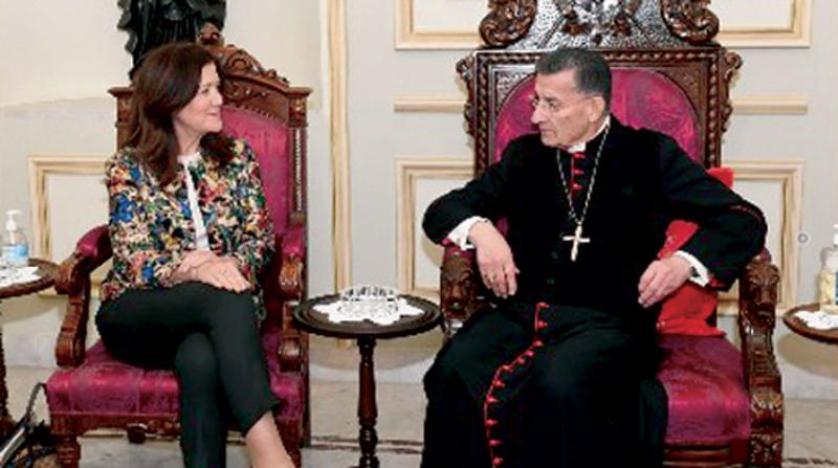
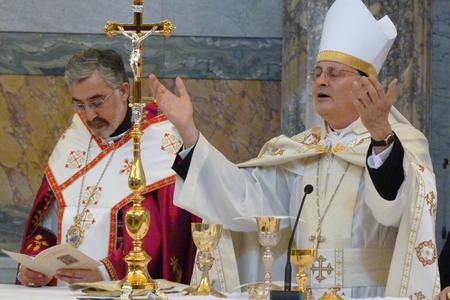
By Doreen Abi Raad, Catholic News Service — cna – As Lebanon crumbles under a socioeconomic crisis, Lebanon’s religious are assuming roles as relief and social workers. “We cannot be a real priest, a real presence of Jesus Christ, without helping the people. Otherwise, we are just a functionary of the church,” Maronite Father Hani Tawk told Catholic News Service. “We are missionary workers, because we see Our Lord Jesus Christ in the face of every family, every person we meet,” said Father Tawk, a member of the informal group Church for Lebanon, which includes 15 priests and one nun from three Catholic rites: Maronite, Latin and Melkite. “We made this decision to be with the people, to help them, to support them and to seek justice,” Father Tawk said.

The roots of their union stem from the October 2019 mass uprising in Lebanon against a corrupt government; during that time, some of the priests became acquainted on the street. Little by little, they started to meet. As Lebanon’s economy began to unravel, individual and collective outreach initiatives began. They have lost their purchasing power. People are not able to afford the minimum necessities. It hurts so much to see the loss of dignity of the people Jesuit Father Gabriel Khairallah, with a team of volunteers that includes the Circle of Catholic Youth, organized the distribution of hot meals and food boxes and established a health clinic and dispensary. What started as 25 hot meals a day in 2019 has now grown to 260 a day. And from 30 weekly food boxes in 2019, the initiative is now delivering about 300 a week. The increase reflects the emergence of the “new poor” in Lebanon, Father Khairallah said.

Read more
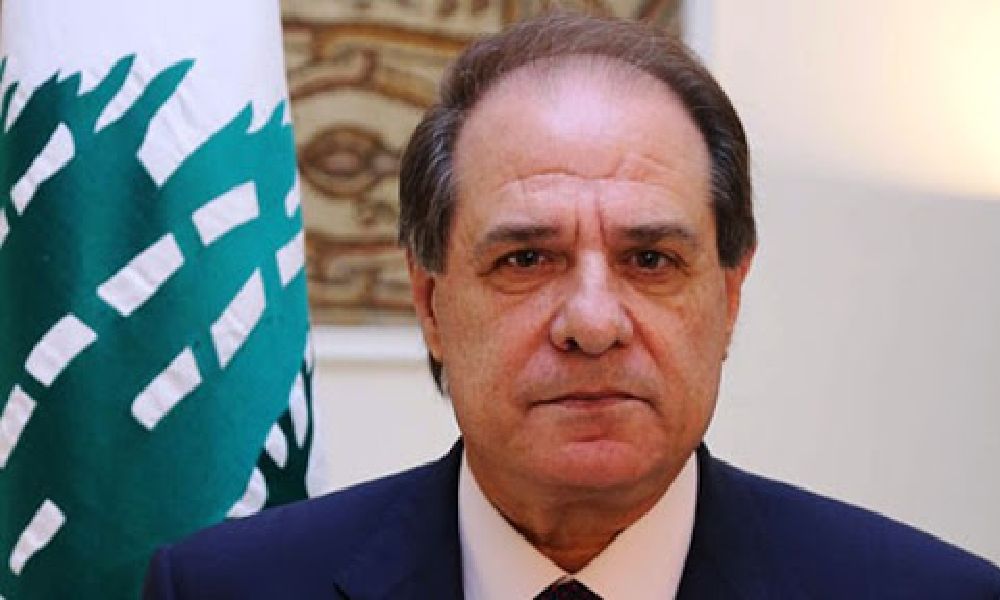
Minister Sejaan Azzi: لئلّا يَظلَّ التغييرُ هوايةً لفظيّة


سجعان قزي

@AzziSejean


لتعطيلِ التغييرِ الحقيقيِّ وعلى مَرْأى من الشعبِ، تُمرِّرُ القوى السياسيّةُ اللبنانيّةُ الوقتَ الجاري بتسوياتٍ صغيرةٍ، أقَلُّ ما يُقال فيها إنّها خلافُ المألوفِ والدستور. سَلَّمَ بها الحاكِمون والمعارِضون، بتبريراتٍ مختلفةٍ، ريثما تَنقشِعُ الاستحقاقاتُ الداخليّةُ والتسوياتُ الإقليميّة. منهم من يَنتظرُ الانتخاباتِ النيابيّةَ، ومنهم من يَقفِزُ مباشَرةً إلى الانتخاباتِ الرئاسيّة، ومنهم من يَتوقّعُ إرجاءَ الاستحقاقَين، ومنهم من يَترقّبُ حَدثًا جَللًا تَلْهَجُ به المنتدياتُ وتَتعطّشُ إليه بعدما سُدَّت طرقُ الإنقاذِ الداخليّ.

والطريفُ أنَّ كلَّ طرفٍ لبنانيٍّ يَتوقّعُ أن تأتيَ التطوّراتُ لمصلحتِه، فيُرجئُ الاعترافَ بالآخَر ويؤجِّلُ الحوارَ معه كأنَّ اللاعبين سيَتغيّرون غدًا. لكنَّ اللافتَ اليوم، أنَّ التسوياتِ الصغيرةَ لم تَعد، بدورِها، صالحة. رغم ذلك تَتصرّفُ الدولةُ المتهاويةُ كأنّها قائمةٌ ومكتِملةُ الصلاحيّاتِ وقابضةٌ على قرارِها، والعهدُ في أوّلِ طَلعتِه. هَمُّ أركانِ هذه الدولةِ أنْ يَحصُروا التغييرَ النيابيَّ والسياسيَّ في ما بينَهم، ويُراهِنوا على سأمِ قِوى التغيير (أين هي؟).

Read more
Nasrallah: Hezbollah has been manufacturing drones and precision missiles for years

by Tal Heinrich — allarab.news — In a speech marking his 30-year anniversary as the leader of Hezbollah, Hassan Nasrallah said on Wednesday that the group is able to produce drones and transform thousands of standard rockets into precision-guided missiles. “We have been producing drones in Lebanon for a long time and whoever wants to […]

Read more
Divisions in Lebanon over questioning of central bank chief

Riad Salameh – Central Bank governor — 

BEIRUT (AP) — — An investigative judge said Tuesday she may sue Lebanon’s police chief, accusing him of preventing a security force from bringing in for questioning the central bank governor, who is accused of corruption. Judge Ghada Aoun told The Associated Press that central bank governor Riad Salameh failed to show up for questioning for a fourth time on Tuesday. She alleged that the banker was defying judicial orders because he has political protection. Salameh, who is accused of corruption and dereliction of duty during Lebanon’s historic economic meltdown, is facing a lawsuit filed by a Lebanese anti-corruption group. The value of the national currency has plunged, foreign reserves are running low and the highly indebted government has been unable to agree on an economic recovery plan. Many hold Salameh partly responsible for the financial crisis, blaming him for policies that only drove national debt up and caused the currency to tumble. Salameh, 71, has been in the post for nearly three decades and enjoys backing from most politicians, including the country’s prime minister.

Salameh is also being investigated in several countries including Switzerland, Luxembourg and France for potential money laundering and embezzlement. Local media reported in recent months that Salameh, his brother and an aide have been involved in illegal businesses, including money transfers abroad despite the informal capital controls imposed at home. Aoun had issued an order to appear to Salameh earlier this month. But Salameh dismissed the lawsuit against him as political, saying it lacked evidence. It was filed by a group of lawyers known by the name “The People Want to Reform the Regime.” Salameh has called for Judge Aoun to be dismissed from the case and accused her of bias. Salameh’s case revealed divisions within Lebanon’s security agencies after a force from State Security, an intelligence department, went to his home and office to bring him in for questioning and no one answered when they knocked on the door. Aoun said she then told the force to break in after he failed to show up for questioning for a fourth time. At that point, she said, members of the Internal Security Forces, or police, warned State Security agents that they cannot go in by force otherwise “there will be a confrontation.” Interior Minister Bassam Mawlawi denied there were divisions within the two security agencies, saying they are both carrying out their duties, according to the state-run National News Agency.

Read more
Saad Hariri expects the worse for Lebanon on anniversary of PM Rafiq Hariri Killing

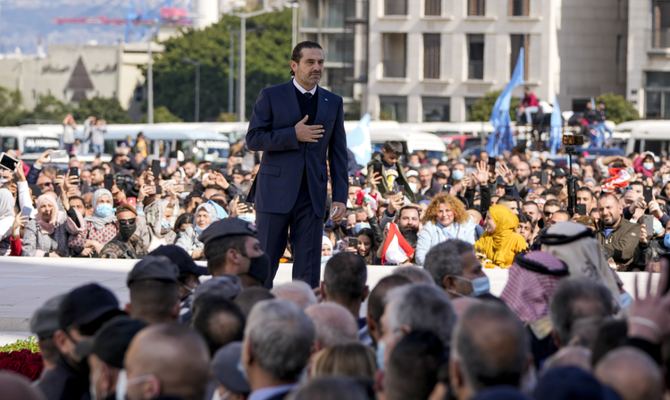
By Najia Houssari — arabnews.com — — BEIRUT: The situation in Lebanon is deteriorating, said former Prime Minister Saad Hariri during a meeting with his parliamentary bloc on Sunday. Hariri met his supporters after he had paid his respects at the grave of his father, Rafik Hariri, on the 17th anniversary of his assassination in Beirut. Prime Minister Najib Mikati and former premier Fouad Siniora also prayed at the grave. Hariri said that his home in Beirut will remain open, and the Future Movement will continue to work with the people and provide services and assistance to them, and it will never abandon its people.

The anniversary is a few weeks after Hariri announced he was leaving politics for now and would not run in upcoming parliamentary elections. Thousands gathered in front of Hariri’s tomb in Beirut for a moment of silence at 12:55 p.m., to commemorate the murder. The supporters raised blue Future Movement banners and pictures of Saad Hariri, cheering and waving as he walked past them. One supporter said: “How will become of life in Lebanon? The day of the assassination was a dark one, and it has gotten darker with Hariri’s withdrawal from political life.” A woman from Tariq Al-Jadida said: “They killed the father and betrayed the son, so we became orphans, but we will never hand over our fate to them.” The size of the crowd at Martyrs’ Square in downtown Beirut surprised event organizers. People climbed the stairs of the Al-Amin Mosque next to the tomb and filled the parallel road. The Future Movement did not invite its supporters to participate but supporters rallied for the commemoration on social media.

Read more
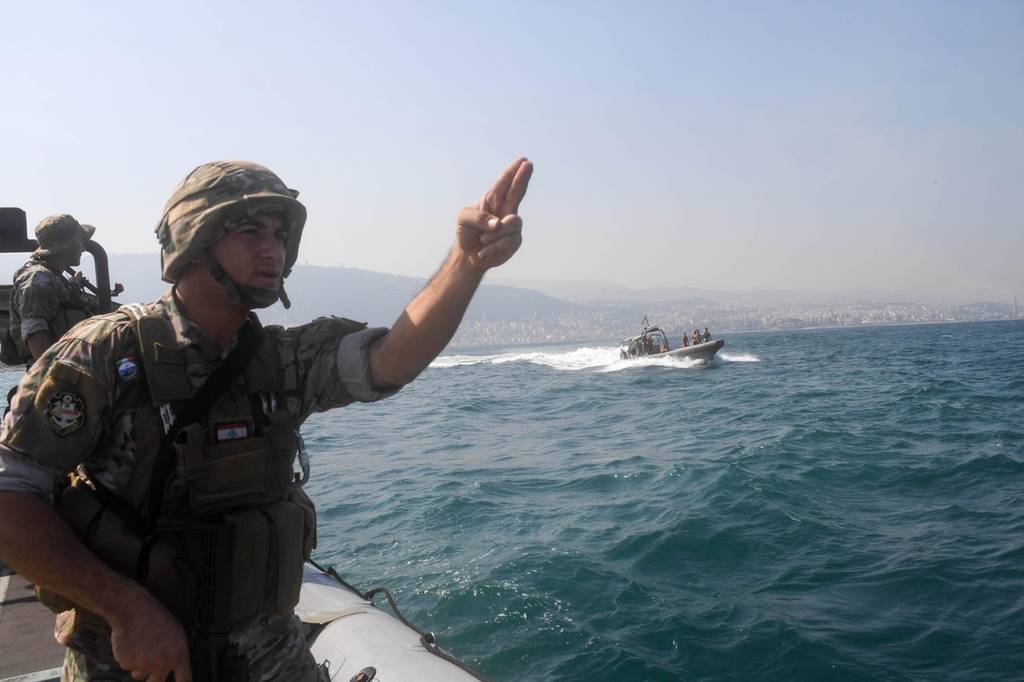
Lebanon’s Navy to receive multipurpose boats from Italy, patrol boats from United States

By Agnes Helou — defensenews.com — BEIRUT — Lebanon’s Navy is expected to receive this year multi-purpose boats from Italy and Protector-class coastal patrol boats from the United States, but the country still hopes to revive frigate negotiations with Italy. Last month, the Lebanese Navy received a donation from Italy of a 12-meter-long multi-purpose boat known as a Rigid Inflatable Boat, an 8000-liter fuel tanker and two 20-passenger vans. “A similar donation is expected to be received during July 2022. The Navy also expects to receive a donation [of] 100,000 Euros worth from the Italian side for the maintenance of the Multi Beam Echo Sounder and the updating of the software used in the production of nautical charts,” Navy Commander Senior Capt. Haissam Dannaoui told Defense News. However, Dannoui said no agreement has been reached with the Italian government about a potential donation of frigates. “The project of frigates provided as an Italian donation has not yet taken shape, and the detailed specifications of these frigates have not been discussed,” he said. “If the situation in the country improves, the Navy aspires to re-launch this project and to set the detailed specifications for such boats.”

Members of the Lebanese Naval Forces conducted training on two U.S. Coast Guard ships at the Beirut Naval Base earlier this month, according to the Lebanese Army official website. The website said this was “training members of the Naval Forces to use boats that will be a donation to the navy during 2022.” Dannoui told Defense News the Navy is set to receive from the United States “three Protector-class boats, 27 meters long each, with a total weight of 93 tons. These boats are considered as coastal patrol boats that contribute to enhancing the ability of the navy to carry out the tasks assigned to it.” He said the exercises taking place with the two U.S. ships included those focused on sharing experiences in the field of damage control on board boats, exchanging experiences in the field of search and rescue and a workshop on boats donated by the American side. Dannoui said the Protector-class vessels are expected in late 2022 or early 2023.

Read more
Once Lebanon’s center of glamour, Hamra Street goes dark

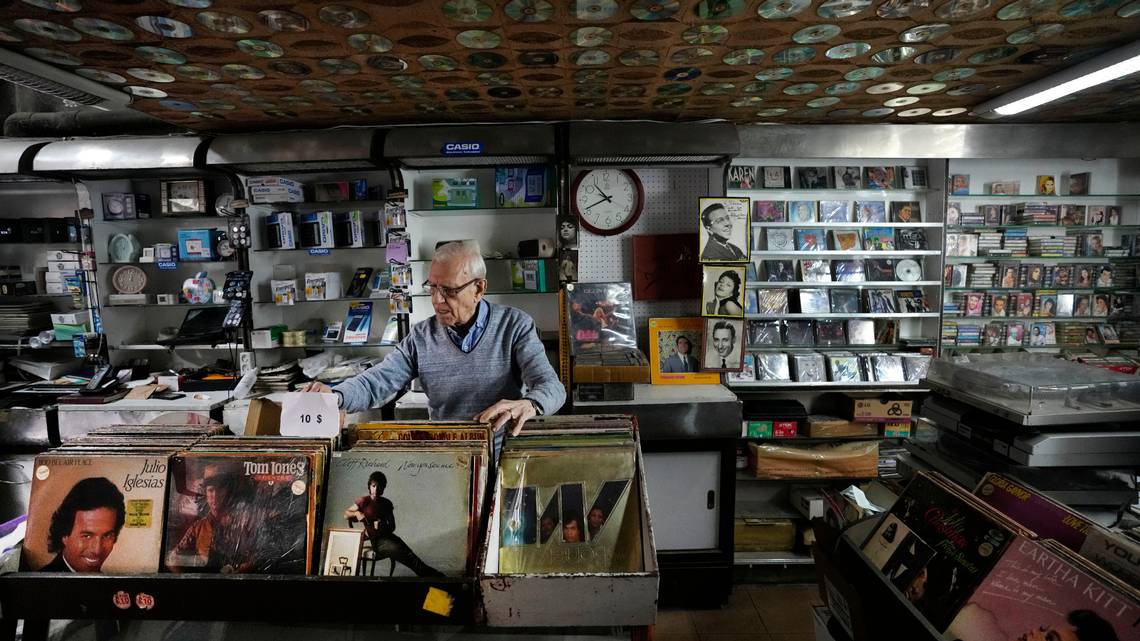
By BY BASSEM MROUE ASSOCIATED PRESS — From his small music shop on Beirut’s Hamra Street, Michel Eid witnessed the rise and fall of Lebanon through the changing fortunes of this famed boulevard for more than 60 years. Hamra Street was the center of Beirut’s glamour in the 1960s and 1970s, home to Lebanon’s top movie houses and theaters, cafes frequented by intellectuals and artists, and shops selling top international brands. It saw a revival the past decade, thriving with international chain stores and vibrant bars and restaurants. Now many of its stores are shuttered. Poverty-stricken Lebanese and Syrian refugees beg on its sidewalks. Trash piles up on its corners. Like the rest of Lebanon, the economic crash swept through the street like a destructive storm.

At 88 years old, Eid remembers the bad times, during Lebanon’s 1975-1990 civil war, when Hamra saw militias battling, assassinations at its cafes and, at one point, invading Israeli troops marching down the street. Nothing was as bad as now, Eid says. “We have hit rock bottom,” he said. Few customers come to his Tosca Music Shop and Electronic Supplies, which sells records and a variety of electronic clocks, calculators and watches. His business has dropped 75%.

Lebanon’s economic meltdown, which began in October 2019, was the culmination of the country’s post-war era. The war’s militia leaders became the political leadership and have kept a lock on power ever since. They ran an economy that at times boomed but was effectively a Ponzi scheme riddled with corruption and mismanagement. The scheme finally collapsed in what the World Bank calls one of the world’s worst economic and financial crises since the mid 1800s. The currency’s value evaporated, salaries lost their buying power, dollars in banks became inaccessible, prices skyrocketed in a country where nearly everything is imported.

Read more
Lebanon: Int’l Pressure to Hold Parliamentary Elections on Time

by english.aawsat.com — The International Support Group for Lebanon (ISG) has openly joined forces to push the Lebanese authorities to hold the parliamentary elections on their scheduled date on May 15. The ISG met in Beirut on Friday to review preparations for the upcoming polls. Echoing the recent Security Council press statement on Lebanon, and recalling its previous statements, the ISG reiterated its call for free, fair, transparent and inclusive elections, as scheduled on May 15, an official statement said. It added: “The ISG noted that while the international community was deeply committed to and had provided significant financial, material, technical and political support to Lebanon’s electoral process, the elections are first and foremost a right and expectation of the people of Lebanon and a sovereign responsibility which is incumbent on the authorities to deliver on.” Three months before the election, the International Support Group urged “expeditious preparatory work respecting the existing legislative framework and the constitutional timelines.”

The ISG also called on the relevant authorities to “promptly make available all the necessary resources and intensify technical and administrative preparations to ensure the timeliness and integrity of the electoral process.” The ISG brings together representatives of the United Nations and the governments of China, France, Germany, Italy, the Russian Federation, the United Kingdom and the United States, in addition to the European Union and the Arab League. It was launched in September 2013 by the UN Secretary-General with former President Michel Sleiman to help mobilize support and assistance for Lebanon’s stability, sovereignty and state institutions. In its statement, the ISG urged “relevant bodies to allocate the necessary financial resources to hold the elections in Lebanon and abroad, enable the Ministry of Interior and Municipalities and the Supervisory Commission for Elections to be fully functional, and ensure timely organization for the conduct of the diaspora voting.”

Read more