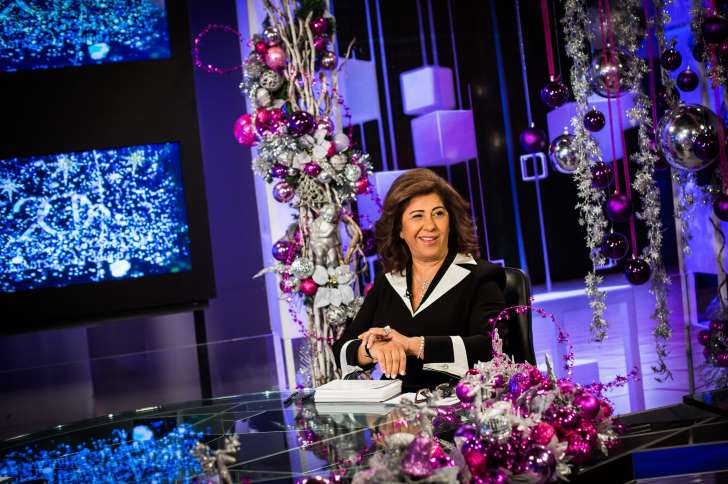
Andrew McConnell for The New York Times Leila Abdel Latif preparing to go on air at LBC studios in Jounieh, Lebanon, on New Year’s Eve, when she makes predictions about the year ahead.
By ADMA, Lebanon — As the clock ticked toward midnight on New Year’s Eve, Leila Abdel Latif, a Lebanese fortuneteller, sat under the glaring lights of a television studio here and unveiled to viewers across the Arab world what 2015 held in store. Wearing a black pantsuit and a diamond necklace, Ms. Abdel Latif peered through reading glasses and read from a two-inch thick stack of cards, stating her predictions one by one. Chaos would rock Beirut. Bloodshed would roil Iraq. Blacks and whites would clash in the United States. A band would win international fame for reviving the hits of Michael Jackson.
Such predictions have put Ms. Abdel Latif among the most prominent of the self-declared soothsayers who appear on competing Lebanese television channels in what has become a widely watched New Year’s Eve tradition in the Arab world. In a region where religious extremism is on the rise and many governments criminalize divination, Lebanon stands apart for giving its fortunetellers a prominent role.