Maronite Patriarch Beshara al-Rahi lamented on Thursday the ongoing vacancy in the presidency, urging lawmakers to exercise their duty and elect a president. He said: “Lebanon has been deprived of a president for factional reasons.” He made his remarks during a mass marking the eleventh anniversary of the inauguration of the patriarchate garden in al-Diman. […]
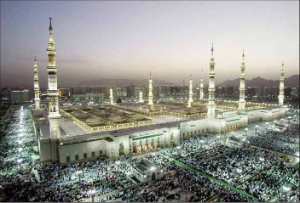
LOS ANGELES, CA (Catholic Online) – A proposal to dismantle Mohamed’s tomb in Saudi Arabia, and to anonymously bury the remains of the Islamic prophet in a common grave has sparked heated debate in Saudi Arabia and highlighted differences between mainline Sunni and Shi’ite Muslims and those following a small, but powerful fundamentalist sect.
Those calling for the destruction of Mohamed’s tomb are known as Wahhabi Muslims. They follow a two-century old sect of conservative Sunni Islam that calls for the purification of Islam and a strict adherence to the religion as it was practiced in the time of Mohamed and during the first three generations after his death. All teachings that follow this time, and all veneration of saints, objects and other artifacts of Islam are distractions-even heresies.
There is a striking similarity between Wahhabi Islam and the Puritan Christians of the sixteenth and seventeenth centuries. Puritans, as many remember, sought to cleanse Christianity of what was considered by some to be idolatry and heresy, returning Christian practice to how it was thought to be done during the time of Christ.
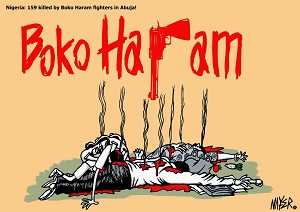
ABUUJA, Nigeria (Catholic Online) – While news reports give us the gruesome details of the Islamic State beheading one more American journalist in the land which was once a part of Iraq and Syria, the rising tide of Islamist evil spreads in Africa, under the banner of Boko Haram. Like the Islamic State, these Islamists have also proclaimed a Caliphate. And like the Islamic State (ISIS,ISIL), they especially hate Christians.
On August 22, 2014, the FIDES Agency reported that 11,000 people fled the town of Gwoza, in the State of Borno in Northern Nigeria. They had to abandon their home or face the sword of the evil Islamist movement called Boko Haram. According to the United Nations Office for Humanitarian affairs, 650,000 have fled the onslaught of these evil Islamists since May, 2013.
The Catholic Church has lashed out at the Israeli government, after its property in East Jerusalem was bulldozed to the ground. Meanwhile, thousands of Palestinian flats were marked for demolition just before US Secretary of State John Kerry’s visit. Last week Israeli security forces arrived with bulldozers at a piece of property owned […]
President Obama sent seemingly conflicting signals Wednesday about his ultimate goal in the fight against the Islamic State, saying at a press conference in Europe that the aim is to "degrade and destroy" the terror group — but moments later, claiming he wants to make it a "manageable problem." The president spoke as […]
Copenhagen police on Wednesday raided four addresses with ties to a charity suspected of selling stickers to raise funds for the Islamic State. A 35-year-old stateless man born in Libya, a 30-year-old Danish woman of Lebanese origin and a 50-year old Danish woman were questioned over the sale of stickers that appeared to […]
BEIRUT: Lebanon’s General Security is disrupting migrant workers’ right to family life with a recently issued directive that restricts the renewal of residency permits. It has resulted in the deportation of some migrants’ children and their mothers, Human Rights Watch said Wednesday. “A recent decision by General Security, Lebanon’s security agency in charge of […]
France and Saudi Arabia are close to signing a $3 billion arms deal for Lebanon, the Elysee Palace said late Monday following talks between President Francois Hollande and the Saudi crown prince. The deal ‘is being finalised’, according an aide to the president. The deal is for military equipment and arms to be supplied to […]
The Islamic State released a video on Tuesday purporting to show the beheading of American hostage Steven Sotloff, raising the stakes in its confrontation with Washington over U.S. air strikes on its insurgents in Iraq. A masked figure in the video seen by Reuters also issued a threat against a British hostage, a man the […]
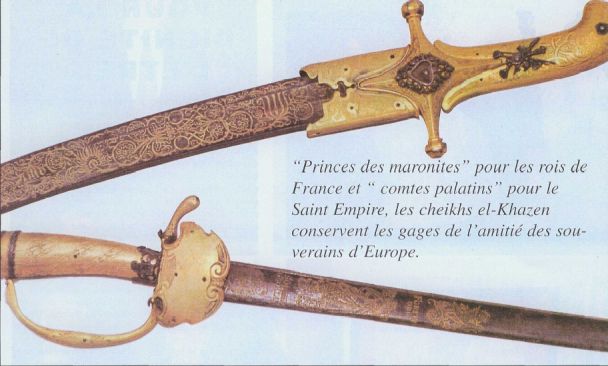
Population Movements to Keserwan - The Khazens and The Maans
ما جاء عن الثورة في المقاطعة الكسروانية
ثورة أهالي كسروان على المشايخ الخوازنة وأسبابها
Origins of the "Prince of Maronite" Title
Growing diversity: the Khazin sheiks and the clergy in the first decades of the 18th century
Historical Members:
Barbar Beik El Khazen [English]
Patriach Toubia Kaiss El Khazen(Biography & Life Part1 Part2) (Arabic)
Patriach Youssef Dargham El Khazen (Cont'd)
Cheikh Bishara Jafal El Khazen
Patriarch Youssef Raji El Khazen
The Martyrs Cheikh Philippe & Cheikh Farid El Khazen
Cheikh Nawfal El Khazen (Consul De France)
Cheikh Hossun El Khazen (Consul De France)
Cheikh Abou-Nawfal El Khazen (Consul De France)
Cheikh Francis Abee Nader & his son Yousef
Cheikh Abou-Kanso El Khazen (Consul De France)
Cheikh Abou Nader El Khazen
Cheikh Chafic El Khazen
Cheikh Keserwan El Khazen
Cheikh Serhal El Khazen [English]
Cheikh Rafiq El Khazen [English]
Cheikh Hanna El Khazen
Cheikha Arzi El Khazen
Marie El Khazen