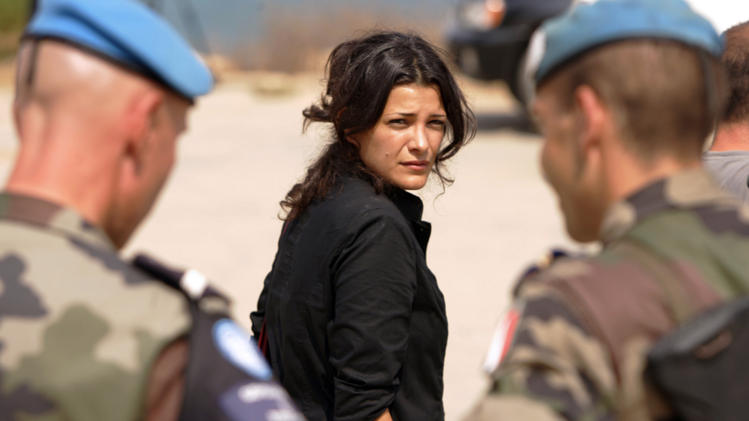
File picture of Lebanese actress Nada Abu Farhat in Sidiqin, during the shooting of "Summer Rain" by Director Philippe Aractingi
Lebanon’s civil war ended a quarter of a century ago but its filmmakers remain fixated on this dark period, seeing their movies as a kind of catharsis to help heal collective trauma.
The industry’s focus contrasts sharply with a society that has yet to come to terms with its devastating past, where war has marked the last five generations — and each community, be it Christian or Muslim, looks back through a different lens.
The latest example to hit the screens is "Mirath" ("Heritages") by French-Lebanese filmmaker Philippe Aractingi.
Mingling fact and fiction, Aractingi shares with his children memories of the 1975-1990 war, his exile and his return home, a story to which most Lebanese can relate.
"The Lebanese tend to deny the past and the war" that pitted Christian militias against Palestinian groups and their Lebanese Muslim and leftist allies, Aractingi told AFP.
"So discussing the war through cinema is kind of cathartic. In ‘Mirath’, I talk about how we need to communicate with our children, so that (war) never returns."
AFP / Ramzi Haidar
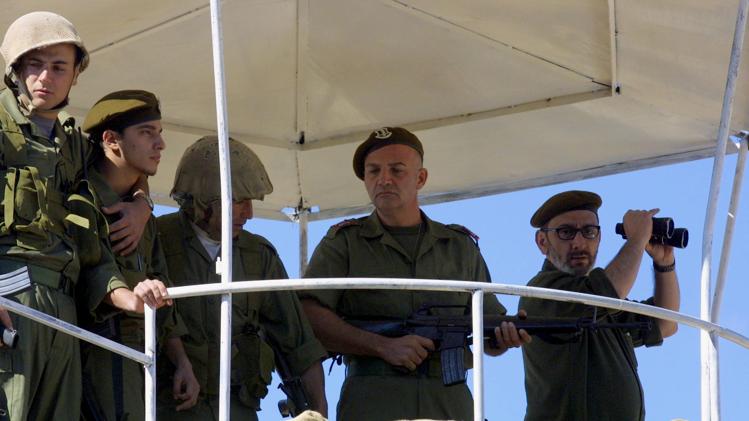
File photo of Lebanese musician and actor Ziad Rahbani (R)during shooting of late Lebanese director Randa Chahal’s film "Cerf Volant"
Among Aractingi’s other films are the 2005 "Bosta" (The Autobus) and the 2007 "Under the Bombs", which both represented Lebanon at the Academy Awards.