Khazen

Reports of Christian martyrdom nearly doubled in 2013


.- Nearly twice the number of Christians were reported as dying for their faith in 2013 than the previous year, according to a new study by an organization monitoring global religious persecution. The World Watch List, issued by Open Doors USA each year, documents oppression of Christians throughout the world. Based on data from the past year, it ranks the 50 countries that are home to the worst treatment of Christians.

Along with the release of the 2014 report, Open Doors USA also offered information about global Christian persecution on its website, explaining that it had gathered evidence of 2,123 Christians who were killed for their faith in 2013, up from 1,201 such martyrdoms in 2012. “This is a very minimal count based on what has been reported in the media and we can confirm,” said Frans Veerman, head of research for the organization, according to Reuters. He explained that the actual numbers could be much higher. The Open Doors USA report estimated that around 100 million Christians were persecuted for their faith in 2013. North Korea, which ranked as the worst offender on the 2013 World Watch List, remains the most dangerous country for Christians in 2014 as well, solely because of the national government’s targeting of religious believers.
Read more
Car Bombs Change Beirut Coffee Habits as Violence Escalates

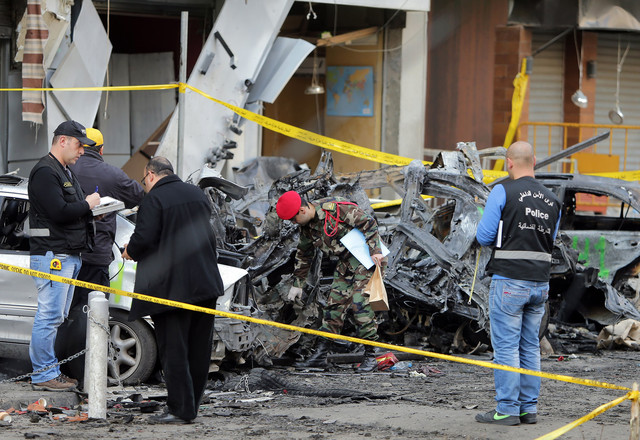
bloomberg:  Donna Abu-Nasr : When Omar Jabaly plans an outing in Beirut these days his main concern is finding the least likely place to be targeted by car bombers.

“A sidewalk cafe is more risky than a mall,” said Jabaly, 39, an engineer for a local telecommunications company in the Lebanese capital. “There’s security at mall entrances while a suicide bomber can blow himself up in front of a cafe.” The wave of car explosions started in July with a suicide bombing in Hezbollah’s south Beirut stronghold and spread across Sunni and Shiite Muslim communities as Lebanon gets mired even deeper in the sectarian nature of the Syrian conflict next door. The attacks intensified in recent weeks, with one that killed former Finance Minister Mohamad Chatah, a senior Sunni Muslim figure, in December followed by another in a Shiite area of the capital that left at least five people dead last week.

Security will only deteriorate further as long as the almost three-year-old Syrian civil war lasts, said Hassan Mneimmneh, senior fellow at the Washington-based German Marshall Fund of the United States, a research organization. “We have ahead of us many years of serious difficulties,” Mneimmneh said. “Lebanon has become part and parcel of the Syrian conflict. It’s an open field for any action against a Lebanese party, such as Hezbollah, or, for the passing of a message from one security service to another.”

Read more
‘Not A Martyr’ Campaign Condemns ‘Martyrdom’ Following Beirut Bombings

  A series of bombings have rocked Beirut in the past couple of weeks, killing dozens and injuring many more, and now sparking an online campaign, #NotAMartyr, that encourages people to voice their frustrations with the ongoing violence.   The latest explosion comes just days after the car bomb attack that killed Lebanon’s former Finance […]

Read more
The mysterious burning of the Saeh bookstore

  TRIPOLI, Lebanon – It took Father Ibrahim Surouj around half an hour to enter his bookstore on Tuesday morning. The recent fire didn’t prevent his entry. The stream of well-wishers did. “Abouna! [Our father],” person after person shouted upon seeing Surouj as he walked down a narrow street and turned into an even narrower alleyway toward […]

Read more
Saudis’ Grant to Lebanon Is Seen as Message to U.S.


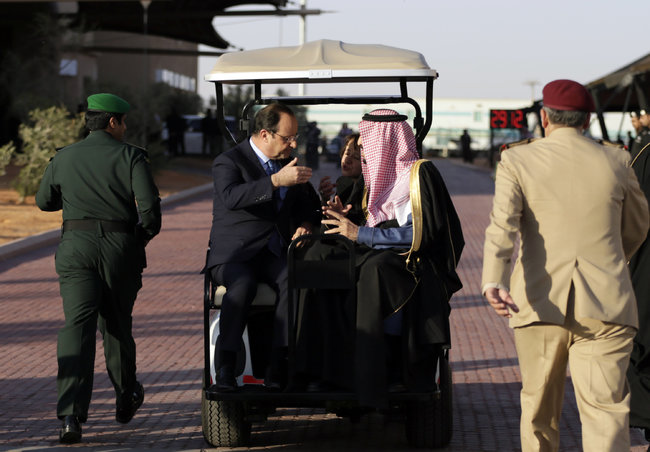
By BEIRUT, Lebanon — If a wealthy patron were all the Lebanese Army needed to counter the Shiite militant group Hezbollah as the dominant force in the country, the recent $3 billion grant from Saudi Arabia might make a decisive difference in the country’s complex political landscape.

But the Saudi aid package — nearly twice Lebanon’s $1.7 billion annual defense budget — is earmarked to buy French arms and is unlikely to give the army what it needs most, say supporters and opponents of Hezbollah here. And even if it does, they say, it will take years to make an impact.

And while the Saudis are clearly alarmed at Hezbollah’s staying power and its intervention in Syria’s civil war, analysts say the gift announced last week was intended as much to send a message to the United States as to shift the military balance.

Yezid Sayigh, a scholar of Arab militaries at the Carnegie Middle East Center in Beirut, said the Saudis were declaring a “tactical divorce” from the Obama administration over their frustrations with what they see as America’s indecisiveness on Syria and its attempts at reconciliation with Iran, Saudi Arabia’s regional rival and Hezbollah’s patron.

“They’re on the warpath, angry, and that doesn’t make for good policy,” Mr. Sayigh said.

Analysts on both sides agree that if Lebanon’s government, under Saudi pressure, pushed the army to confront Hezbollah, it would risk fracturing the force along political and sectarian lines and destroying the closest thing the country has to a broad-based national institution. Mr. Sayigh said that not even the United States had tried to link aid to Lebanon’s army with action against Hezbollah.


Read more
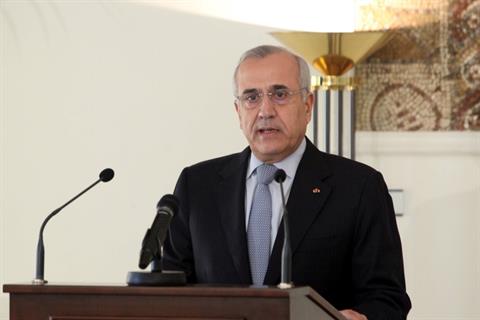
President General Michel Suleiman says can’t keep delaying Cabinet formation


Daily Star Lebanon – BEIRUT: President Michel Sleiman hinted Monday he could move ahead with the formation of a fait accompli Cabinet if a consensus over a new government is not reached soon, in a challenge to Hezbollah which insists on a national unity government. “In case there isn’t a consensus on a [national] unity Cabinet, do we stay without a government? Would a consensus on a government necessarily reflect national consensus?” Sleiman asked. “How long can a president keep on rejecting Cabinet formulas and how long can the delay go on?” the president asked.

Sleiman hinted that non-political partisans should be given a chance to form the next government in the country. “Are not the Lebanese who do not belong to any [political group] allowed to take part in reviving the country? Do such people harm the consensus in Lebanon?” he asked.

However, the president said the political rivals still had a chance to reach a consensus over the next Cabinet.

“Anyway, the door for consultations is still open and political rivals still have a chance to reach a unifying [Cabinet] formula with Prime Minister-designate Tammam Salam,” he said.

Lebanon’s Cabinet formation process has been stalled for over nine months due to conditions and counter conditions set by the March 8 and March 14 rivals groups.


Read more
Contacts Ongoing to Persuade Pope to Visit Lebanon in May

  Pope Francis expressed readiness to visit Lebanon during a trip planned to the Holly Land, al-Joumhouria newspaper reported on Monday.   According to the daily, contacts are ongoing with the Vatican to convince the pontiff to make a brief visit to Beirut during his first trip to the Holy Land, visiting Amman, Bethlehem and […]

Read more
What is the polar vortex?

    A blast of brutally cold air – thanks to the polar vortex – is roaring across the central and eastern USA early this week, sending temperatures to levels not seen in 20 years.   The polar vortex is a strong area of low pressure that usually wanders around the Arctic throughout the winter. […]

Read more
Historical Library Torched in Tripoli

  TRIPOLI – A decades-old library owned by a Greek Orthodox priest in north Lebanon’s majority Sunni city of Tripoli was torched late Friday, a day after a sectarian scuffle, a security source said. "Unknown assailants torched the Saeh Library in Tripoli, destroying two thirds of some 80,000 books and manuscripts housed there," said the source, […]

Read more