
By Naharnet.com
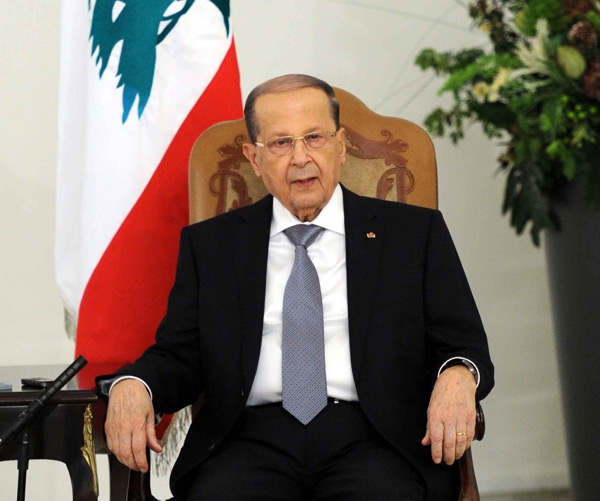
Prime Minister Saad Hariri presided Wednesday over a Cabinet session at the Grand Serail, during which he stressed that the government's “priority” is the organization of parliamentary elections. At the beginning of the session, Hariri lauded President Michel Aoun's speech before the the diplomatic corps and “the national inclinations it included.”
“I stress that our priority in the government is to hold the parliamentary elections and that our agenda will never include – neither secretly nor publicly – any intentions or desire to extend the parliament's term,” the premier added. “All political forces represented in the government are concerned with realizing this approach, as much as they are concerned with agreeing on a new electoral law based on unified standards that ensure fair representation,” Hariri said.
The session had 32 items on its agenda. The issue of amending the Lebanese Petroleum Administration's financial system was postponed to the next session, Information Minister Melhem Riachi said after the session.
Asked whether the Cabinet discussed the issues of the Costa Brava garbage landfill, flight safety at Beirut's airport and the bird-repelling devices that have been offered as a grant, Riachi said the conferees tackled the topic and that it would be thoroughly discussed by the competent ministerial panel. State Minister for Women's Affairs Jean Oghassabian said the Cabinet discussed "an idea for a reevaluation of the entire waste management file."
Speaker Nabih Berri and Interior Minister Nouhad al-Mashnouq have warned that the country is likely headed to parliamentary elections under the controversial 1960 electoral law due to the parties' failure to agree on a new law.
From yalibnan.com
A Progressive Socialist party delegation met with President Michel Aoun on Wednesday, where talks focused on the controversial electoral law, amid reports saying that the PSP leader MP Walid Jumblatt who favors the 1960 electoral law headed to Baabda today , to meet with president Michel Aoun Jumblatt was accompanied by a Progressive Socialist Party delegation that included MPs: Wael Abou Faour, Ghazi al-Aridi, Akram Shehayyeb, Alaa Terro and Henri Helou. Jumblatt reportedly planned to suggest some amendments to the 1960 electoral law which has been rejected by Aoun and his key ally Hezbollah who prefer the proportional representation law
Aridi, who spoke to reporters after the meeting, said that sectarianism and proportional representation law do not together Insisting on diversity and partnership, Aridi remarked: “If the standards are to adopt proper representation (for the upcoming parliamentary polls), we hope that the opinion of the Druze community is taken into consideration.”
Earlier, reports have said that the PSP delegation carries ideas of amendments that Jumblatt believes would develop the 1960 law, and help “save everyone’s face.” They added that the MP is expected to put forward a suggestion to create a new governorate that includes the Chouf and Aley areas, and to reconsider the distribution of MPs in Beirut, North Lebanon, West and North Bekaa to ensure proper representation at parliament. Lebanon is divided into eight governorates (mohafazah): Akkar, Baalbek-Hermel, Beirut, Bekaa, Mount Lebanon, Nabatieh, North Lebanon and South Lebanon.

thenational.ae
ISTANBUL // When a gunman stormed the Reina nightclub on the banks of the Bosphorus and opened fire on more than 600 revellers welcoming the New Year, 21 of the 39 people killed were Arab nationals. And although the suspect has finally been arrested after more than two weeks, many business owners are wondering how much damage the enormous death toll of Arab tourists will do to Istanbul’s tourism industry. "It has been a really terrible season, and it does feel like there are less Arabs tourists here," says Mehmut, the owner of a cafe on one of the side streets off Istiklal Avenue, an area catering to Arab tourists with many signs in Arabic.
"I hope it feels this way because of the winter, and not because of what happened at the Reina." Over the past year, a string of terror attacks and increasing political instability in Istanbul has caused the city’s once thriving tourism industry to slow to a mere trickle. European – particularly German and Russian – tourists who once enjoyed the rich historical sites of Istanbul and the pristine beaches of the Aegean and the Mediterranean, have increasingly opted not to visit Turkey, instead flocking to beaches in Croatia and the Greek islands.
In the absence of European tourists, Arab tourists – largely from the Gulf states, but also from Lebanon, Egypt and North Africa – have been keeping Istanbul’s tourism industry going. With plenty of natural beauty, religious tourism, and – most importantly – largely visa-free entry requirements, Istanbul and other cities in Turkey have remained popular holiday destinations tourists from the Middle East. Tour guides say visitors from countries in the region that have faced their own share of political turmoil in recent years, are less concerned about the risks of instability than European visitors.
By Akin Oyedele The White House is worth $397.9 million, according to the real-estate listings firm Zillow. The home of every US …




Population Movements to Keserwan - The Khazens and The Maans
ما جاء عن الثورة في المقاطعة الكسروانية
ثورة أهالي كسروان على المشايخ الخوازنة وأسبابها
Origins of the "Prince of Maronite" Title
Growing diversity: the Khazin sheiks and the clergy in the first decades of the 18th century
Historical Members:
Barbar Beik El Khazen [English]
Patriach Toubia Kaiss El Khazen(Biography & Life Part1 Part2) (Arabic)
Patriach Youssef Dargham El Khazen (Cont'd)
Cheikh Bishara Jafal El Khazen
Patriarch Youssef Raji El Khazen
The Martyrs Cheikh Philippe & Cheikh Farid El Khazen
Cheikh Nawfal El Khazen (Consul De France)
Cheikh Hossun El Khazen (Consul De France)
Cheikh Abou-Nawfal El Khazen (Consul De France)
Cheikh Francis Abee Nader & his son Yousef
Cheikh Abou-Kanso El Khazen (Consul De France)
Cheikh Abou Nader El Khazen
Cheikh Chafic El Khazen
Cheikh Keserwan El Khazen
Cheikh Serhal El Khazen [English]
Cheikh Rafiq El Khazen [English]
Cheikh Hanna El Khazen
Cheikha Arzi El Khazen
Marie El Khazen