catholicculture.org – In an address to judges of ecclesiastical courts, the head of the Maronite Catholic Church deplored the conversion of Lebanese …
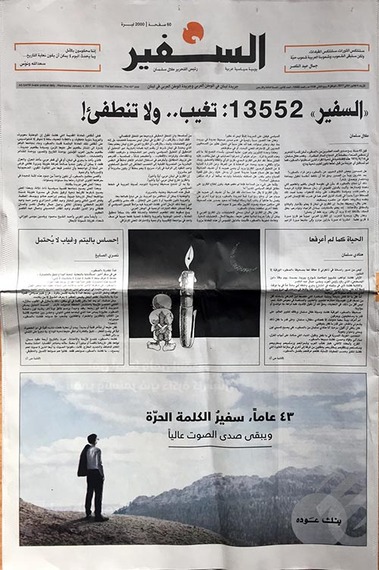
By Magda Abou-Fadil - Huffington Post
Assafir finally bit the dust following a protracted battle with a metastasized sickness that is afflicting most of Lebanon’s newspapers. “Assafir 13,552: Absent...Not Extinct,” was the front page headline of a special 60-page mega issue on January 4 chronicling the paper’s milestones and featuring bittersweet farewells from many of its journalists and contributors over the years.
The 43-year-old daily had gone into remission a few times with repeated infusions of funds from assorted patrons when faced with bankruptcy, but succumbed to the Grim Reaper hovering over the country’s print media on December 31, 2016. “The nation without Assafir“ was that day’s headline above a cartoon of a tearful dove (part of the paper’s logo) and a broken pen.
It couldn’t have come at a worse time for staffers who hadn’t been paid in over a year like hundreds of counterparts in other newspapers, and as the industry goes into a dizzying free-fall. Although founder and editor-in-chief Talal Salman had announced his intention to close shop in 2016, he reversed his decision and kept limping along until he said it was too costly to keep the paper going.
Last year he also said he’d lay off about 50 staffers and cut journalists’ hours to allow them to look for other jobs but they threatened to stage a sit-in fearing they’d lose benefits by working shorter shifts. “This is where I learned the letter, the profession and the soul of journalism, and still do,” wrote veteran reporter Saada Allaou nostalgically in the special issue recalling her modest beginnings in an impoverished northern town and her move to Beirut where she had studied journalism and longed to join Assafir’s ranks.
The paper had reinforced her leftist credentials, Arabism, and support for the Palestinian struggle, she added. Salman had launched Assafir in 1974 as a platform for pan-Arab nationalist causes, with Egypt’s late leader Gamal Abdel Nasser as his role model, and remained its editor-in-chief until its demise. Its motto was “The Voice of the Voiceless.”

Zhang is expected to meet with President Michel Aoun, Speaker Nabih Berri and Prime Minister Saad Hariri during his two-day visit to Beirut. Upon his arrival, Zhang expressed his happiness to be in Lebanon for the first time in 20 years, saying his visit was aimed at discussing with Lebanese leaders ways to "further strengthen relations between the two countries."
He said he would also consult with Lebanese officials on "regional and international issues of mutual interest." Zhang and the delegation of Chinese Foreign Ministry officials accompanying him were greeted at the Beirut airport's VIP lounge by Chinese Ambassador Wang Kejian and officials from Lebanon's Foreign Ministry.
The Chinese diplomat welcomed the recent election of Aoun, saying it had "returned the vitality of Lebanese society, and we expect a new and strong vision for this friendly country."Asked about Lebanon's recent moves to begin oil and gas exploration, Zhang said: "This is good ... Lebanon enjoys natural wealth, but the real wealth of this country lies in its human wealth, the Lebanese, who even in the days of war did not stop business or efforts to rebuild what was destroyed. This is something that is greatly respected and appreciated by the Chinese and all the people in the world."
Beirut #1950 #LiveLoveLebanon #khazen
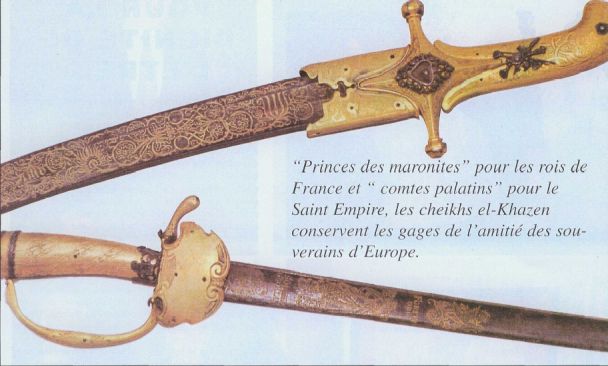

Population Movements to Keserwan - The Khazens and The Maans
ما جاء عن الثورة في المقاطعة الكسروانية
ثورة أهالي كسروان على المشايخ الخوازنة وأسبابها
Origins of the "Prince of Maronite" Title
Growing diversity: the Khazin sheiks and the clergy in the first decades of the 18th century
Historical Members:
Barbar Beik El Khazen [English]
Patriach Toubia Kaiss El Khazen(Biography & Life Part1 Part2) (Arabic)
Patriach Youssef Dargham El Khazen (Cont'd)
Cheikh Bishara Jafal El Khazen
Patriarch Youssef Raji El Khazen
The Martyrs Cheikh Philippe & Cheikh Farid El Khazen
Cheikh Nawfal El Khazen (Consul De France)
Cheikh Hossun El Khazen (Consul De France)
Cheikh Abou-Nawfal El Khazen (Consul De France)
Cheikh Francis Abee Nader & his son Yousef
Cheikh Abou-Kanso El Khazen (Consul De France)
Cheikh Abou Nader El Khazen
Cheikh Chafic El Khazen
Cheikh Keserwan El Khazen
Cheikh Serhal El Khazen [English]
Cheikh Rafiq El Khazen [English]
Cheikh Hanna El Khazen
Cheikha Arzi El Khazen
Marie El Khazen