
By Paul Astih -
Beirut – Contrary to the status quo that prevailed in Lebanon by the end of 2015, the situation today in the Mediterranean country looks significantly more positive, especially following the election of a new Lebanese president in October and the formation of a unity government that has restored life to the different state institutions. Nonetheless, the new government, led by Prime Minister Saad al-Hariri, has a major challenge, represented in the adoption of an electoral law that would gain the approval of the different Lebanese factions.
In this regard, sources told Asharq al-Awsat newspaper that there has been an overwhelming agreement over the need to put behind the 1960 electoral law, which was used in the last parliamentary elections in 2009. Based on the majority system, the electoral law, which was adopted in 1960, divides the country into 24 electoral districts. However, Lebanese politicians are currently studying the adoption of a modern electoral law that provides an appropriate representation of the different Lebanese factions.
While Hezbollah and other political factions are insisting on a law that would be solely based on the proportional system, other parties, including the Future Movement, the Lebanese Forces and the Progressive Socialist Party, back the adoption of a proportional system in some regions and the majority system in others.

By John Alexander - Brooklyn Daily Eagle
The humanitarian work of Catholic Relief Services (CRS) and its partner agencies directed toward refugees in the Middle East deserves far more attention than it has received and Maronite Bishop Gregory J. Mansour says it’s time Catholics in the pew knew about it. The work of feeding, sheltering and providing health care for hundreds of thousands of people who have trekked to safety in Jordan and Lebanon from Iraq and Syria is a story that the mainstream media largely has ignored, much to the chagrin of Mansour, the incoming chairman of the board at CRS.
In a Dec. 16 interview with Catholic News Service, he said that the focus of much media reporting has been on assessing blame for the catastrophe or analyzing the response of governments in the region with little attention paid to the plight of the people uprooted from their homes. Mansour heads the Eparchy of St. Maron in Brooklyn, which includes Maronite Catholics in the District of Columbia and 16 states. It is one of two Maronite eparchies in the U.S.
by Pamela Engel - Business insider
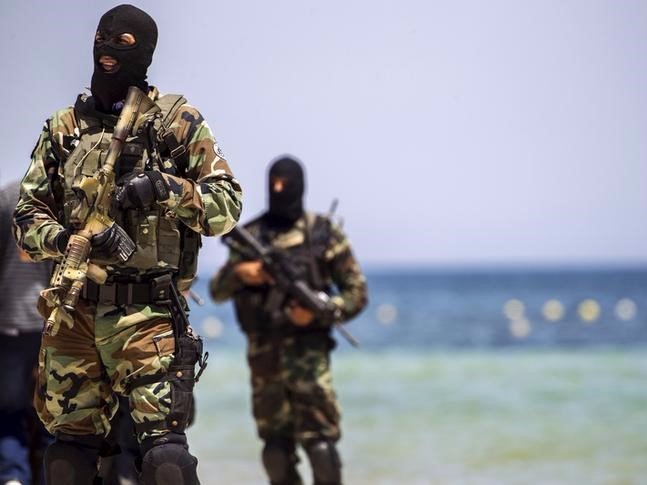
The prime suspect in the German Christmas market attack was from a north African country that has become a breeding ground for extremism and is one of the top exporters of jihadists. Tunisia was once thought to be an Arab Spring success story — it was called the "sole democratic success" of the uprisings that swept the Middle East starting in 2010.
But the country has been struggling with an extremism problem that was exacerbated with the arrival of the terrorist group ISIS, which has attracted thousands of Tunisian recruits. A 2015 study by The Soufan Group, a strategic security firm, found that Tunisia supplied more foreign fighters to ISIS than any other country, between 6,000 and 7,000 as of October of that year.
One Tunisian ISIS supporter drove a truck through a Christmas market in Berlin earlier this week, killing 12 people and injuring dozens more, according to authorities. Tunisia native Anis Amri, who was killed in a Friday shootout with police, was German authorities' prime suspect in the attack. Officials had been investigating Amri, but after surveilling him for months, they couldn't find any evidence of a specific plot.

By Nazeer Rida
Beirut – The Lebanese Cabinet approved on Saturday the Ministerial Statement for the new government to be presented to the parliament to gain the vote of confidence the upcoming week. Minister Michel Pharaon as well as ministers of the Lebanese Forces objected to the paragraph pertaining to the right of Lebanese citizens to form a resistance, considering that resistance was the sole right of the State. After lengthy deliberations, the Cabinet approved the ministerial statement.
In this context, parliament Speaker Nabih Berri set the confidence vote sessions for next Tuesday, Wednesday and Thursday. The Lebanese government approved the statement during the session that was convened on Saturday in Baabda presidential palace and chaired by President Michel Aoun. President Aoun underscored the importance of the work of the government to be productive and fast.
He added: “after gaining confidence, we will be working on issuing a new electoral law and preparing necessary measures to hold the elections on due date.” For his part, Prime Minister Saad Hariri hoped that the new government would gain confidence between Christmas and New Year so it would “focus on issuing a new electoral law and taking care of daily life issues.”




Population Movements to Keserwan - The Khazens and The Maans
ما جاء عن الثورة في المقاطعة الكسروانية
ثورة أهالي كسروان على المشايخ الخوازنة وأسبابها
Origins of the "Prince of Maronite" Title
Growing diversity: the Khazin sheiks and the clergy in the first decades of the 18th century
Historical Members:
Barbar Beik El Khazen [English]
Patriach Toubia Kaiss El Khazen(Biography & Life Part1 Part2) (Arabic)
Patriach Youssef Dargham El Khazen (Cont'd)
Cheikh Bishara Jafal El Khazen
Patriarch Youssef Raji El Khazen
The Martyrs Cheikh Philippe & Cheikh Farid El Khazen
Cheikh Nawfal El Khazen (Consul De France)
Cheikh Hossun El Khazen (Consul De France)
Cheikh Abou-Nawfal El Khazen (Consul De France)
Cheikh Francis Abee Nader & his son Yousef
Cheikh Abou-Kanso El Khazen (Consul De France)
Cheikh Abou Nader El Khazen
Cheikh Chafic El Khazen
Cheikh Keserwan El Khazen
Cheikh Serhal El Khazen [English]
Cheikh Rafiq El Khazen [English]
Cheikh Hanna El Khazen
Cheikha Arzi El Khazen
Marie El Khazen