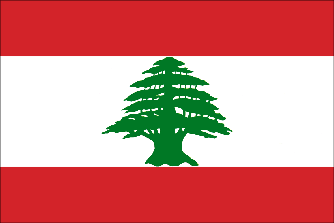
Politics in Modern Lebanon, after french Independence.
Lebanon is a parliamentary democratic republic.The Lebanese constitution states: "Lebanon is a parliamentary democratic republic based on respect for public liberties, especially the freedom of opinion and belief, and respect for social justice and equality of rights and duties among all citizens without discrimination."
From Wikipedia: A parliamentary system is a system of democratic governance of a state where the executive branch derives its democratic legitimacy from the legislature (parliament) and is also held accountable to that legislature. In a parliamentary system, the head of state is normally a different person from the head of government. This is in contrast to a presidential system in a democracy, where the head of state often is also the head of government, and most importantly, the executive branch does not derive its democratic legitimacy from the legislature.
In addition to the Lebanese Constitution, under the National Pact an unwritten agreement between Shi'ite, Sunni, and Maronite leadership in 1943, laid the foundation of Lebanon as a multi-confessional state, having shaped the country to this day.
Lebanon is part of the Arab League but is NOT an Islamic state. When the Lebanese State’s
geographical boundaries were set by the French Mandate back in the
1920’s, the Maronite Christians (who follow the Catholic Church in Rome)
were meant to form the majority of the Lebanese Population (60%). Thus,
the President of the Republic, who is intended to be the representative
of the Maronites in the government, has been granted wide powers in
order to reflect the Maronites’ demographical dominance, this has been modified slightly after the ta'ef accord.
The president of the country must be a Maronite, the Prime Minister must be a Sunnite, and the Speaker of Parliament must be a Shiite. Then most recent amendment of the Constitution was the Charter of Lebanese National Reconciliation (Ta'if Accord), in October, 1989.within the overall framework of confessionalism, a form of consociationalism in which some of the powers were amended inn the constitution.
The constitution grants the people the right to change their government. However, from the mid-1970s until the parliamentary elections in 1992, civil war precluded the exercise of political rights. According to the constitution, direct elections must be held for the parliament every 4 years. The last parliamentary election was in 2009.[1] The Parliament, in turn, elects a President every 6 years to a single term. The President is not eligible for re-election. The last presidential election was in 2008. The president and parliament choose the Prime Minister. Political parties may be formed; most are based on sectarian interests. 2008 saw a new twist to Lebanese politics when the Doha Agreement set a new trend where the opposition is allowed a veto power in the Lebanese Council of Ministers and confirmed religious Confessionalism in the distribution of political power.
The Lebanese legal system is based on and inspired by the French legal system. Just like France, which occupied Lebanon until 1943, Lebanon is considered to be a civil law country and possesses its own set of codes. The most notable code is the “Code of Obligations and Contracts” promulgated in 1932 during the French Mandate. The COC, as it is known among law students, is the equivalent of the French Civil Code except for matters related to personal status (heritage, marriage, divorce, etc.), which are governed by a separate set of laws designed for the different sectarian communities. For instance, the Islamic personal status laws are inspired by the Islamic Sharia’a, some of which were promulgated during the Ottoman rule (ending in 1918)
Lebanese individuals are also known to be natural-born entrepreneurs. The Lebanese community living abroad consists of approximately 15 million people, almost four times the Lebanese population living in the homeland, and is considered in its respective host countries as an economic force to be reckoned with.

by Nick Miriello and Kathleen Caulderwood, VICE News
If you want to know how the Islamic State group is doing, you don’t have to follow the Mosul offensive. Just take a look at the recent output of the terrorist organization’s propaganda machine. A 34-minute audio recording from Islamic State leader Abu Bakr al-Baghdadi released Thursday — the first message from Baghdadi in nearly a year — emphasized violence and war, themes that have become increasingly common in the group’s messages as its attempts at statehood falter.
From its very inception, IS has built its legend through its robust propaganda arm. But as the terrorist group loses ground on its caliphate (its interpretation of an Islamic state) and the territory in Iraq and Syria it spent the last two years conquering, IS is running out of clear, tangible successes to promote. The once-feared propaganda operation has suffered as a result, showing a dramatic dip in production and a telling shift in content since January, according to two recent analyses by U.S. counterterrorism researchers .
“Statehood is essential to the IS brand,” said Mara Revkin, a resident fellow at Yale Law School’s Center for the Study of Islamic Law and Civilization who studies Islamic legal systems and governance by militant groups. “But as IS prepares to lose Mosul, the question is whether this brand will remain attractive to potential recruits and financiers now that the group has failed to live up to its slogan of ‘remaining and expanding.’”
A study published in early October by the Combating Terrorism Center at West Point gives some insight into how these ground losses have already affected IS propaganda exercises. Researchers focused on “official” visual media produced by IS and distributed through its official online channels since January 2015, analyzing roughly 9,000 images and videos. What they observed in that period paints a stark decline for the once expanding caliphate.

Emile Simpson, Foreign Policy
In his masterful account Strategy: A History, Sir Lawrence Freedman defines strategy as “the art of creating power.” This is a useful lens through which to consider one of this year’s key geopolitical trends: Russia’s return to the Middle East.
Apart from its close ties to the Syrian regime, which date back to the 1970s, Moscow has had no substantial role in the Middle East since 1972, when President Anwar Sadat kicked Soviet advisors out of Egypt.
Why return now? At a general level, it’s clear that Russian President Vladimir Putin wants to challenge the notion of a U.S.-led world order and encourage the return to a multipolar one, though there are certain self-imposed constraints on his ambitions.
Although he has intervened in Georgia and Ukraine, he doesn’t seem willing to start a wider war by attacking any Eastern European states that are already members of NATO. In the Middle East, however, Putin has a theater to undermine Western influence, and to create power for himself, without the risk of triggering a war with the West.
As any demagogue knows, one way to create power out of nothing is to find a division and then exploit it. In the Middle East, the fundamental division Russia has exploited is the one between the West’s aversion to Islamists, on the one hand, and human rights abuses on the other. The conflict between these aims often produces equivocation in Western foreign policy. It also opens up political space where Russia can operate by investing in repression and discounting democracy.

PESHAWAR, Pakistan (AP) — A Pakistani prosecutor says a court in Peshawar has ordered that National Geographic's famed green-eyed 'Afghan Girl' be deported. Sharbat Gulla was arrested 10 days ago over having allegedly forged ID papers and staying in Pakistan illegally.
Gulla gained international fame in 1984 as an Afghan refugee girl, after war photographer Steve McCurry's photograph of her, with piercing green eyes, was published on National Geographic's cover. He found her again in 2002.
Prosecutor Mohsin Dawar said on Friday that she faces deportation after five days, when her 15-day jail term is to expire. He says the court also fined Gulla a sum of 110,000 rupees, which is about $1,100. Gulla gained international fame in 1984 as an Afghan refugee girl, after war photographer Steve McCurry's photograph of her, with piercing green eyes, was published on National Geographic's cover. He found her again in 2002.
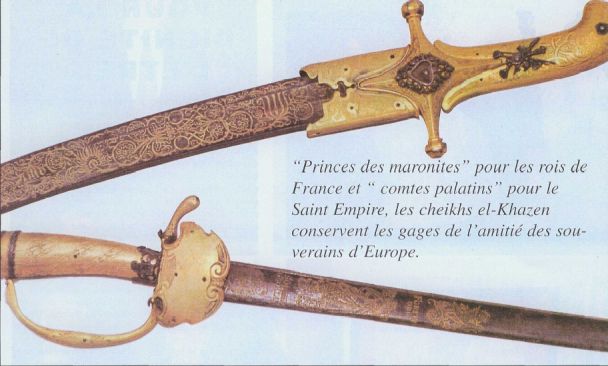
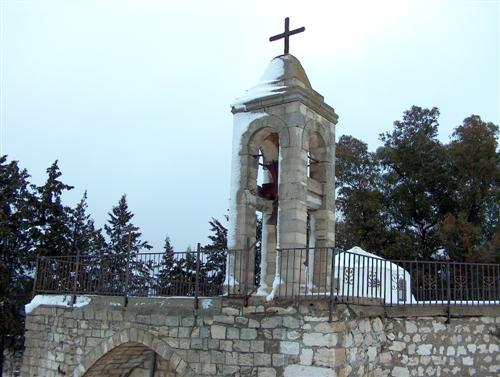
Population Movements to Keserwan - The Khazens and The Maans
ما جاء عن الثورة في المقاطعة الكسروانية
ثورة أهالي كسروان على المشايخ الخوازنة وأسبابها
Origins of the "Prince of Maronite" Title
Growing diversity: the Khazin sheiks and the clergy in the first decades of the 18th century
Historical Members:
Barbar Beik El Khazen [English]
Patriach Toubia Kaiss El Khazen(Biography & Life Part1 Part2) (Arabic)
Patriach Youssef Dargham El Khazen (Cont'd)
Cheikh Bishara Jafal El Khazen
Patriarch Youssef Raji El Khazen
The Martyrs Cheikh Philippe & Cheikh Farid El Khazen
Cheikh Nawfal El Khazen (Consul De France)
Cheikh Hossun El Khazen (Consul De France)
Cheikh Abou-Nawfal El Khazen (Consul De France)
Cheikh Francis Abee Nader & his son Yousef
Cheikh Abou-Kanso El Khazen (Consul De France)
Cheikh Abou Nader El Khazen
Cheikh Chafic El Khazen
Cheikh Keserwan El Khazen
Cheikh Serhal El Khazen [English]
Cheikh Rafiq El Khazen [English]
Cheikh Hanna El Khazen
Cheikha Arzi El Khazen
Marie El Khazen