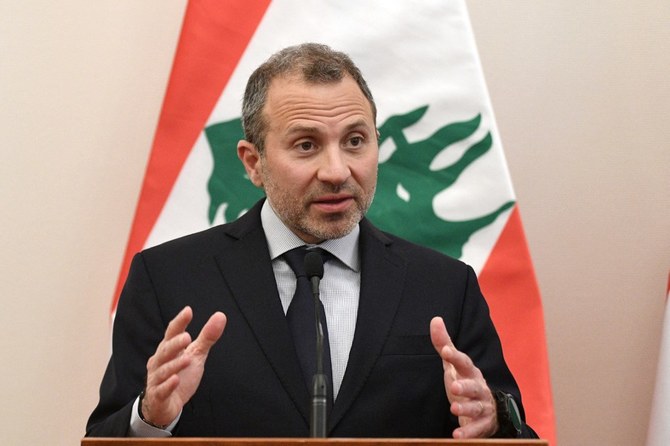
PARIS, (Reuters) By John Irish --- Senior Lebanese politician Gebran Bassil said on Thursday he was working to find a compromise candidate for the presidency who would be able to push through crucial reforms, but that he would run for the post himself if he deemed a chosen candidate a bad option. Lebanon has had neither a head of state nor a fully empowered Cabinet since Michel Aoun's term as president ended on Oct. 31 - an unprecedented vacuum even by the standards of a country that has enjoyed little stability since independence. The vacuum marks a new phase in the crisis that has hit Lebanon since its financial system collapsed in 2019, impoverishing a large swath of people, paralysing banks and fuelling the biggest wave of emigration since the 1975-1990 civil war.
The presidential post is reserved for Christians, but part of the standoff reflects rivalries among the community as well as crucial political and religious balances in the country. "I am the head of the biggest parliamentarian bloc and it is my total right to be the candidate and promote myself but I see that the existence of Lebanon is much more important than this and it's now the existence of Lebanon that is at stake," Bassil, a Maronite Christian, who is one Lebanon's most influential politicians, told Reuters in an interview. "I took the decision not to present myself in order to avoid the vacancy and facilitate the process of ensuring a good profile with a high possibility of success. I did not do this to have the vacancy and a bad person to fill the void," he said. "I will not accept to have a bad president and in that case of course I would run." With politicians showing no compromise in a tussle over state power, some political sources and analysts say a compromise on the presidency may demand the type of foreign mediation that has saved Lebanon from such standoffs previously.
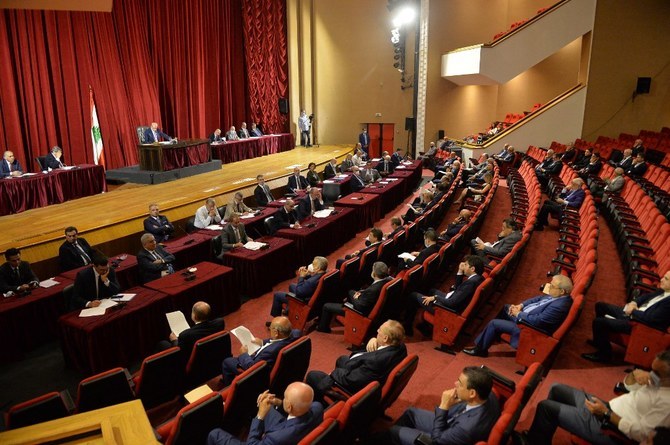
By Najia Houssari - arabnews.com -- BEIRUT: Lebanon’s parliamentary blocs are pushing conflicting views over what should top the priority list of the crisis-hit country, with one MP warning of a “social explosion” if a policy of “patchwork solutions” remains unchanged. Some blocs believe that electing a president is the most pressing issue, while others say that legislation should be prioritized. This divergence reflects the depth of the political crisis that Lebanon is facing more than two weeks after President Michel Aoun’s departure from the presidential palace. Repeated failures to elect a successor have raised fears of a “power vacuum” in the country. In a meeting on Tuesday, 19 MPs representing 32 independent and reformist MPs in the Kataeb Party, the Democratic Renewal Movement, Project Watan, and the Independent Parliamentary Coalition said that “electing a president remains the priority.” The MPs said they will refuse to take part in legislative sessions, claiming these will “consolidate a presidential vacuum.”
A parliamentary source said this stance would be viewed as problematic by Speaker Nabih Berri and other blocs that support “legislation of necessity.” Some deputies who voted for presidential candidate Michel Moawad during the fifth parliamentary session said that “electing a president immediately is the key to realign the work of institutions, in accordance with the constitution and to save Lebanon.” Two other blocs, the Lebanese Forces and the Progressive Socialist Party, share the same position, but failed to attend the meeting on Tuesday. According to those present, the meeting was “an attempt to shape a significant opposition bloc in parliament that coordinates with other opposition blocs on presidential elections and future matters.”
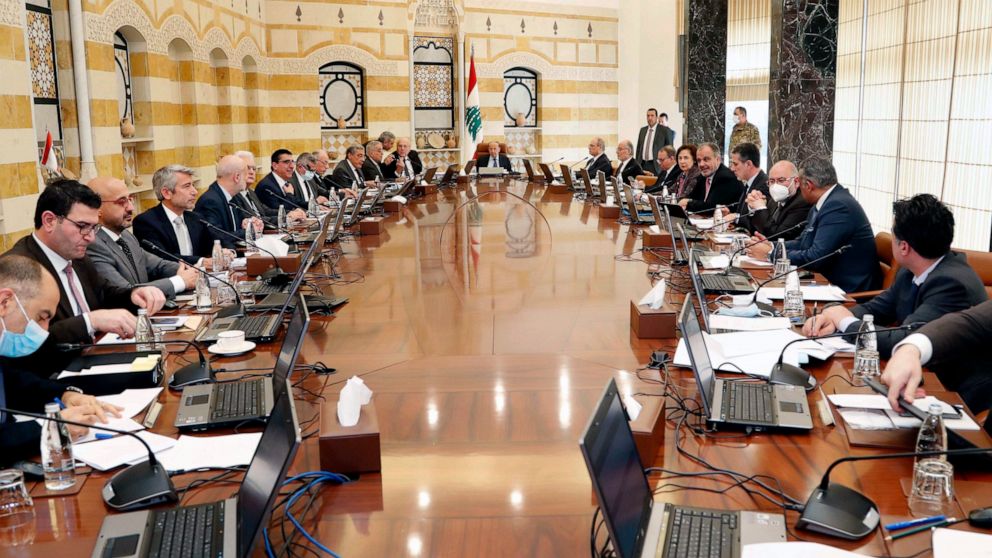
Nada Atallah -- thenationalnews -- Cash-strapped Lebanon is hoping to fill state coffers by raising the exchange rate for taxes, fees and customs duties, Caretaker Finance Minister Youssef Khalil told The National, as the country reels from three years of economic collapse. Lebanon will abandon the official rate of 1,507 pounds to the US dollar and introduce a combination of higher exchange mechanisms in accordance with the currency’s market value. Government revenue has shrunk dramatically, with the Lebanese pound’s market rate value sinking to about 40,000 to the dollar. A number of official exchange rates have sprung up since Lebanon’s economy collapsed in 2019 and unifying them is one of the main reforms demanded by international lenders for Beirut to access billions of dollars in loans.
Lebanon's financial crisis explained: what happened and why is the country stuck? “We do not have any other choice,” Mr Khalil said. "The fiscal situation has become unsustainable: we collect at the official rate but we spend at the parallel one." Taxes and fees will be paid based on the flexible rate set by Sayrafa, an official platform managed by the Central Bank, currently trading at about 30 000. The change comes as part of the 2022 budget voted in September by Parliament, which should be applied on Tuesday after weeks of delay. “Tax policies will be adjusted to limit the impact on vulnerable households,” Mr Khalil said. Customs duties will be calculated based on another rate of 15,000 per dollar. The minister said the switch, which should take place in mid-December, was expected to benefit public finances greatly.
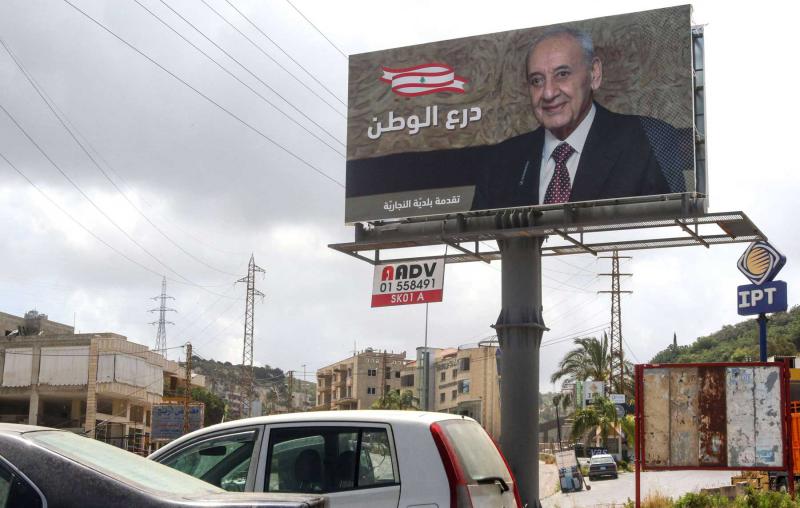
By Najia Houssari -- arabnews.com -- BEIRUT: Lebanon’s prosecutor general Judge Ghassan Oueidat charged Mount Lebanon Public Prosecutor Judge Ghada Aoun on Monday with “spreading false news, violating job duties, inciting sectarian strife, inciting conflict between the nation’s components, humiliation, slander and abuse of power.” It is the first allegation of its kind made by the judiciary against a member of the judicial body in Lebanon. Aoun’s opponents accuse her of showing bias in favor of the Free Patriotic Movement and former president Michel Aoun, and following the faction’s orders to prosecute Banque du Liban Gov. Riad Salameh and officials in the banking sector on corruption charges.
The lawsuit filed by Oueidat comes two weeks after the end of former president Michel Aoun’s term. The controversial judge posted a photo on Twitter last week of a list of politicians, businessmen and banking figures including Parliament Speaker Nabih Berri, his wife Randa Berri and former prime minister Fouad Siniora. She claimed that the figures smuggled tens of billions of dollars combined into Swiss bank accounts. She captioned the photo: “I do not know how valid this information is, but why don’t the people whose names appear on this list reveal their accounts with Swiss banks for the sake of transparency only?” The list did not include the name of any individual in the faction to which she is affiliated — the FPM.
Aoun’s tweet provoked angry reactions, with activists revealing that the list had previously been published by WikiLeaks but did not contain factual information. Activists accused Aoun of undermining the legal profession by publishing information without fact-checking. Aoun deleted the post the same day, tweeting: “I did not accuse anyone. The list had been shared in the media; I was not the first to post about it. “In any case, if any public prosecution receives this information, it is its duty to open an investigation. No investigation was conducted in this regard, although everyone knows that many did transfer money abroad, regardless of the amounts.” Aoun’s initial tweet, however, prompted Berri and his wife to file a legal complaint against the judge. Oueidat listened to the testimony of Berri’s attorney, Ali Rahal, who reiterated his complaint against Aoun. But Aoun did not appear before Oueidat and quickly filed a complaint against him before the Civil Court of Cassation. Oueidat referred a copy of the claim to the Judicial Inspection Board.




Population Movements to Keserwan - The Khazens and The Maans
ما جاء عن الثورة في المقاطعة الكسروانية
ثورة أهالي كسروان على المشايخ الخوازنة وأسبابها
Origins of the "Prince of Maronite" Title
Growing diversity: the Khazin sheiks and the clergy in the first decades of the 18th century
Historical Members:
Barbar Beik El Khazen [English]
Patriach Toubia Kaiss El Khazen(Biography & Life Part1 Part2) (Arabic)
Patriach Youssef Dargham El Khazen (Cont'd)
Cheikh Bishara Jafal El Khazen
Patriarch Youssef Raji El Khazen
The Martyrs Cheikh Philippe & Cheikh Farid El Khazen
Cheikh Nawfal El Khazen (Consul De France)
Cheikh Hossun El Khazen (Consul De France)
Cheikh Abou-Nawfal El Khazen (Consul De France)
Cheikh Francis Abee Nader & his son Yousef
Cheikh Abou-Kanso El Khazen (Consul De France)
Cheikh Abou Nader El Khazen
Cheikh Chafic El Khazen
Cheikh Keserwan El Khazen
Cheikh Serhal El Khazen [English]
Cheikh Rafiq El Khazen [English]
Cheikh Hanna El Khazen
Cheikha Arzi El Khazen
Marie El Khazen