A new Lebanese
protest movement said on Tuesday it had won 40 percent of the vote in
weekend municipal elections and hailed the result as a blow against the
political establishment even though it failed to win any council seats. Beirut
Madinati (Arabic for 'Beirut is my city') built its support on public
discontent with a failing government and presented itself as an
alternative to long-dominant sectarian parties. Its
main opponents, the Beirutis list, backed by established groups
including the Future Movement of Sunni Muslim former prime minister Saad
al-Hariri, won all 24 seats on the municipal council in Sunday's
election with just under 60 percent, or more than 47,000 votes.

Joseph A. Kechichian, Senior Writer
Beirut: Typical of Lebanese who seldom await official results to boast achievements, Hezbollah deputy chief Shaikh Naim Qasim called a press conference and announced the success of the party’s lists in Baalbek and Brital. No official results were released as of Monday afternoon.
Qasim, however, declared that these elections “succeeded in breaking the obstruction that plagued the state and that [the government was] able to successfully complete the electoral process”, which was an interesting avowal since few party members backed the state.
At 2am on Monday, the Head of the “Beirutis” municipal electoral list, Jamal Itani, also announced that his list won the capital’s municipal elections, while Interior Minister Nouhad Al Mashnouq was jubilant that “the Lebanese proved that they deserve freedom and democracy”.
Bassam Za'za', Legal and Court Correspondent
Dubai: Football player Lionel Messi is Argentinian, and Cristiano Ronaldo is Portuguese, but despite these facts a Lebanese voter decided otherwise as he cast his ballot for the Barcelona superstar to represent him in Lebanon’s municipal election.
As results of polling stations in Lebanese capital, Beirut, started rolling out around 9pm, an image of an anonymous voter’s ballot favouring Messi over Ronaldo started going viral on social media networks.
Mockingly expressing disgust and desperation and distrust of the credibility of the municipal election, the voter crossed off Ronaldo’s name and ticked yes on Messi’s.
The image contained the footballers’ names inked on a white piece of paper on its top half, while the bottom half was partly slid into a brown beige envelope that had the 2016 municipal election’s logo and the name of Lebanon’s Ministry of Interior and Municipalities.

Saudi Arabia is desperately trying to diversify its economy away from oil, and the person pulling the strings is 30-year-old Deputy Crown Prince Mohammed bin Salman.
King Salman is technically the ruler, but Prince Mohammed is the
favoured son, and he is increasingly calling the shots on some pretty
important events.And his power over one of the world's most important economies was made abundantly clear on Saturday when he replaced 20-year veteran oil minister Ali al-Naimi with someone who he directly controls the actions of — Khalid al-Falih, chairman of the state-owned oil company Saudi Aramco.
It probably doesn't come as a huge surprise to people watching Saudi Arabia closely. After all, he is driving forward Vision 2030 — Saudi Arabia's plan to curtail the kingdom's "addiction" to oil.
Population Movements to Keserwan - The Khazens and The Maans
ما جاء عن الثورة في المقاطعة الكسروانية
ثورة أهالي كسروان على المشايخ الخوازنة وأسبابها
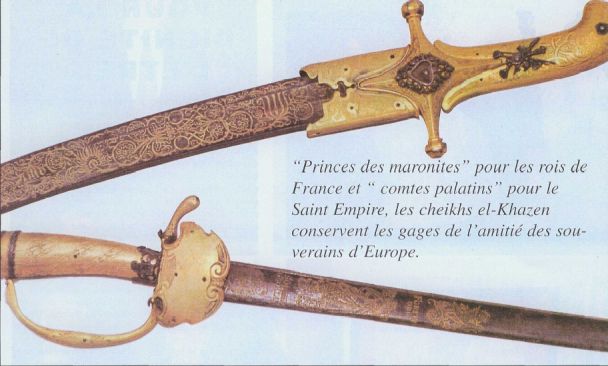
Origins of the "Prince of Maronite" Title
Growing diversity: the Khazin sheiks and the clergy in the first decades of the 18th century
Historical Members:
Barbar Beik El Khazen [English]
Patriach Toubia Kaiss El Khazen(Biography & Life Part1 Part2) (Arabic)
Patriach Youssef Dargham El Khazen (Cont'd)
Cheikh Bishara Jafal El Khazen
Patriarch Youssef Raji El Khazen
The Martyrs Cheikh Philippe & Cheikh Farid El Khazen
Cheikh Nawfal El Khazen (Consul De France)
Cheikh Hossun El Khazen (Consul De France)
Cheikh Abou-Nawfal El Khazen (Consul De France)
Cheikh Francis Abee Nader & his son Yousef
Cheikh Abou-Kanso El Khazen (Consul De France)
Cheikh Abou Nader El Khazen
Cheikh Chafic El Khazen
Cheikh Keserwan El Khazen
Cheikh Serhal El Khazen [English]
Cheikh Rafiq El Khazen [English]
Cheikh Hanna El Khazen
Cheikha Arzi El Khazen
Marie El Khazen