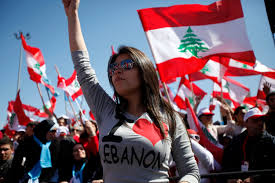
Dubai: Lebanese residents in the UAE say they were surprised by the announcement of Lebanese Forces leader Samir Geagea when he gave his backing to his rival Michael Aoun for the presidency on Monday night.
Suzanna Mounzer, 25, who works in public relations, told Gulf News the move will unite the largest Christian parties in Lebanon.
“Personally, I don’t follow Lebanese politics because it is shameful. It is a shame we couldn’t even agree on a president. [The issue] has been dragging the country down and making it’s citizens’ lives more difficult,” she said.
“I have been away from Lebanon for so long, its politics don’t affect me much,” she said, adding that she was against sectarianism.
catholicherald.co.uk/
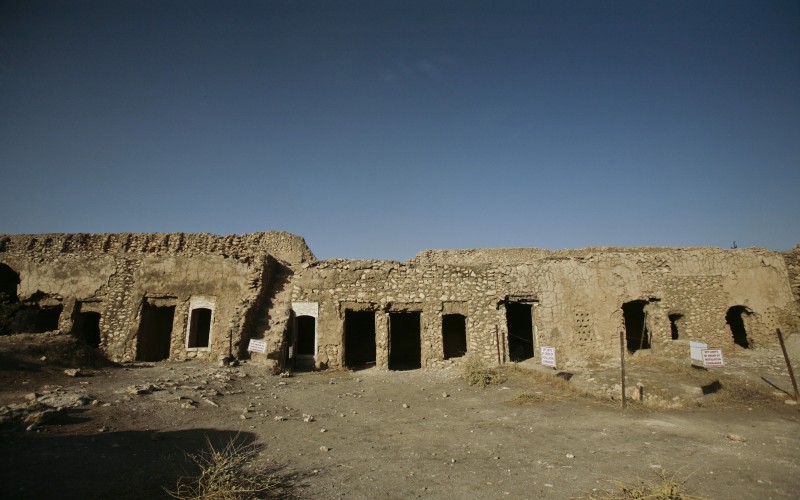
The oldest monastery in Iraq has been destroyed by ISIS, according to reports.
St Elijah’s Monastery of Mosul had stood for 1,400 years and had recently been used as a place of worship by US troops. However, satellite photos obtained by Associated Press (AP) show that the monastery has been razed.
Fr Paul Thabit Habib, 39, a priest exiled in Irbil, Iraq, said: “I can’t describe my sadness. Our Christian history in Mosul is being barbarically leveled. We see it as an attempt to expel us from Iraq, eliminating and finishing our existence in this land.”
After reviewing the satellite images, imagery expert Stephen Wood, CEO of Allsource Analysis, told AP that the destruction of the monastery took place between August 27 and September 28, 2014.
Ya Libnan
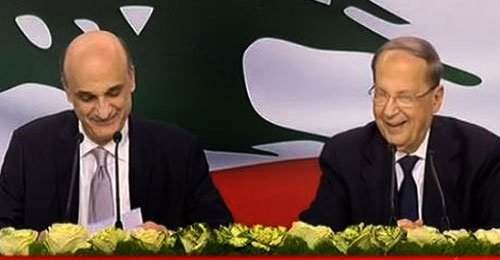
Speaker Nabih Berri has said that he would not announce his stance with regards to Lebanese Forces chief Samir Geagea’s endorsement of Change and Reform bloc leader MP Michel Aoun for the presidency before the picture becomes clear.
In remarks to his visitors, Berri said: “As the head of Amal Movement, I will bring together the leadership council and the Politburo when the picture becomes clearer to take the final stance from the presidency.”
Huffington Post-
Back in August 2014, the al-Qaida affiliate in Syria, the Nusra Front, and Islamic State group (IS) forces attacked the Lebanese town of Arsal. The fighting concluded with the capture of 30 Lebanese policemen and soldiers. Immediately after the battle, the Nusra Front and IS executed two soldiers each. One died from wounds sustained from fighting in Arsal, while 16 soldiers remained in the custody of the Nusra Front, and nine remained imprisoned by IS. Sixteen months later, an exchange of captives took place between Lebanon and the Nusra Front. The deal was brokered by Qatar, who has over the last decade been playing somewhat controversial, but often crucial roles in conflict mediation throughout the region. At the time, December 1, 2015, the event attracted substantial public attention, but it quickly faded into the background of the news cycle. At first glance, the return of 16 Lebanese policemen and soldiers--held by the Nusra Front since August 2014--seemed like a routine swap between belligerents as a result of successful local level negotiations--most of which took place recently as a result of the stalemate felt by all sides on the ground. Yet, this exchange differs because it took place between a non-state actor--in this case, an internationally agreed upon terrorist organization--and a neighboring state, Lebanon; with the blessing of the Syrian and Saudi governments.
Population Movements to Keserwan - The Khazens and The Maans
ما جاء عن الثورة في المقاطعة الكسروانية
ثورة أهالي كسروان على المشايخ الخوازنة وأسبابها
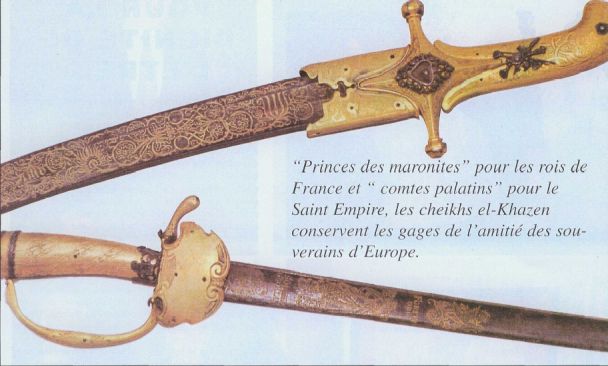
Origins of the "Prince of Maronite" Title
Growing diversity: the Khazin sheiks and the clergy in the first decades of the 18th century
Historical Members:
Barbar Beik El Khazen [English]
Patriach Toubia Kaiss El Khazen(Biography & Life Part1 Part2) (Arabic)
Patriach Youssef Dargham El Khazen (Cont'd)
Cheikh Bishara Jafal El Khazen
Patriarch Youssef Raji El Khazen
The Martyrs Cheikh Philippe & Cheikh Farid El Khazen
Cheikh Nawfal El Khazen (Consul De France)
Cheikh Hossun El Khazen (Consul De France)
Cheikh Abou-Nawfal El Khazen (Consul De France)
Cheikh Francis Abee Nader & his son Yousef
Cheikh Abou-Kanso El Khazen (Consul De France)
Cheikh Abou Nader El Khazen
Cheikh Chafic El Khazen
Cheikh Keserwan El Khazen
Cheikh Serhal El Khazen [English]
Cheikh Rafiq El Khazen [English]
Cheikh Hanna El Khazen
Cheikha Arzi El Khazen
Marie El Khazen