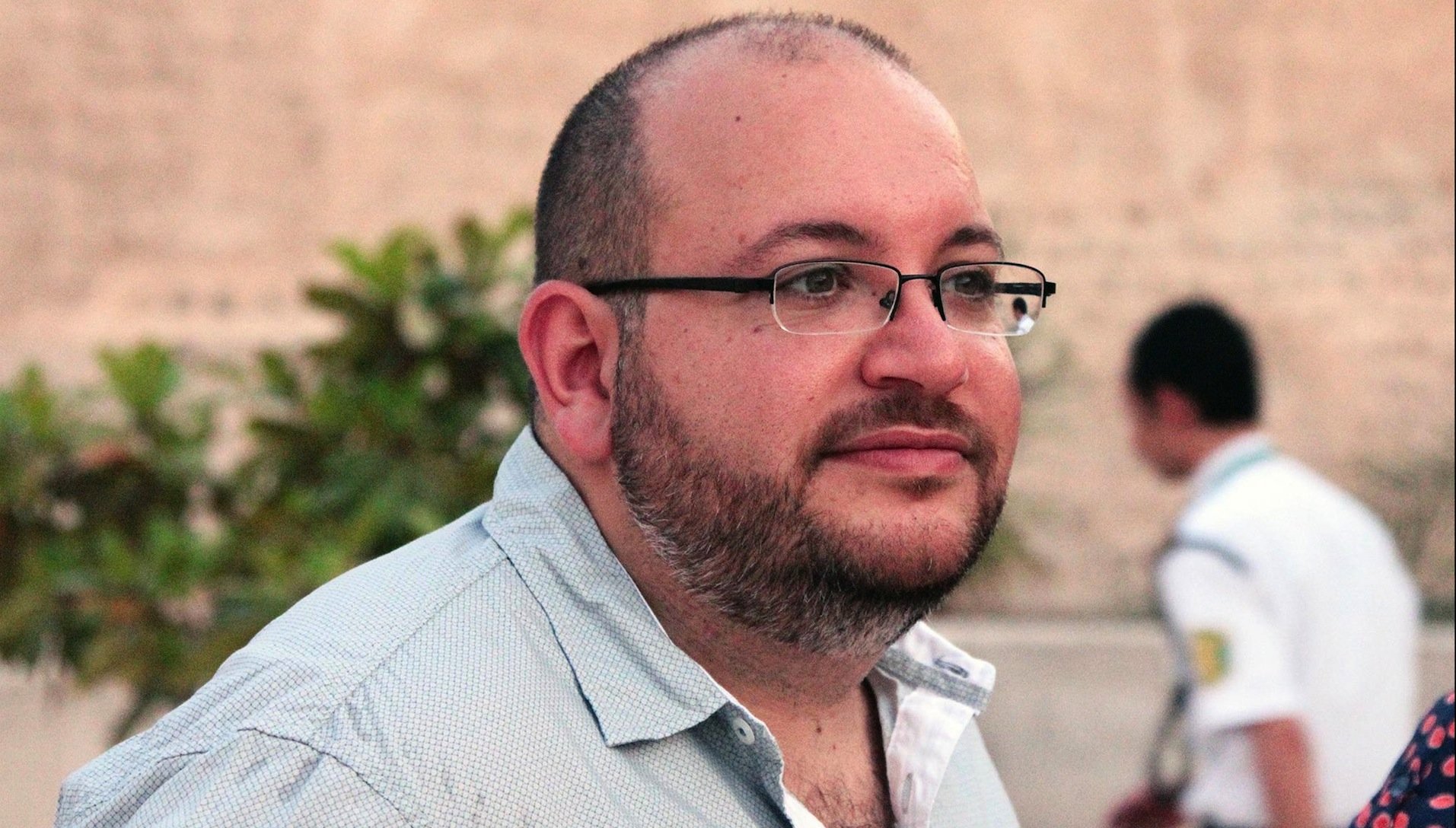
Amid contentious US-Iranian relations, Iranian state television announced the release of four dual-nationality prisoners on Saturday as part of a swap, including Washington Post reporter Jason Rezaian.
According to The Washington Post, Rezaian "was to be promptly flown out of the country with the three other released detainees, one of whom was not previously known to be held."
"Also scheduled to be on the Swiss plane were Rezaian’s Iranian wife, his mother and accompanying doctors," the paper reported.
In return, the US is scheduled to release seven people charged with violating sanctions against Iran, The Associated Press reports.
A report by the semi-official ISNA news agency quoted a statement from the Tehran prosecutor's office as saying the inmates were freed "within the framework of exchanging prisoners," without elaborating. The US did not immediately confirm the Iranian report.
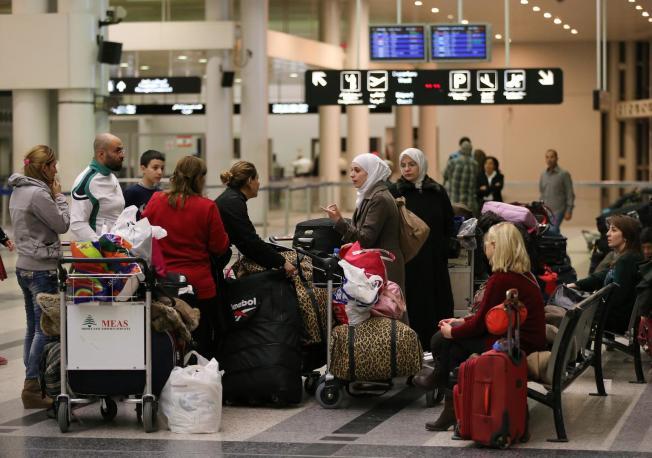
BEIRUT (AP) — A Lebanese official on Friday acknowledged European concerns about safety regulations at the Beirut airport, saying the facility needs improvement but adding that recent reports that the airport does not meet international safety standards are "exaggerated."
Mohamad Kabbani, head of Parliament's public works and transport committee, also said that Lebanon will use part of a $25 million Saudi grant to buy scanners and other new inspection machines to ensure more security in and around the airport.
His comments follow reports that France and Britain are considering boycotting the Beirut airport due to safety concerns. Kabbani also called on the Lebanese government to appoint a new administration of civil aviation.
"The airport needs improvement, this is something we know and this is something we acknowledge," he told The Associated Press.
By Daily Star Lebanon
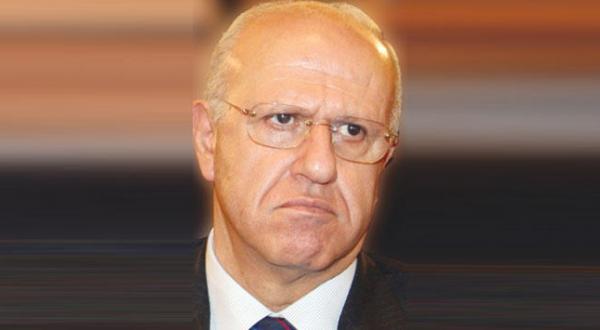
Prime Minister Tammam Salam Friday demanded a speedy retrial for former Information Minister Michel Samaha because of the "delicate" nature of the case, a day after angry protesters blocked roads across Beirut over Samaha's release on bail.
“I look forward, like all Lebanese, to have a judicial authority that only bows to the power of right and works to serve justice and implements laws to protect the individual and society,” Salam said in a statement after meeting with General Prosecutor Samir Hammoud, who is also the deputy head of the Higher Judicial Council.
Hammoud briefed the premier during their meeting on the Military Court's decision Thursday to grant bail to Samaha, who was convicted last year on terrorism charges and sentenced to four and a half years in jail.
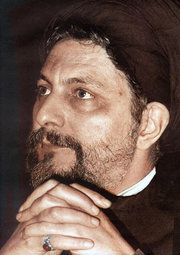
Even by today’s standards, the Middle East in the 1970s was chaotic. Bombings, hijackings and assassinations were daily headlines. In the midst of the mayhem, one of the most revered clerics in the Shiite branch of Islam vanished while visiting Libya.
Criminal inquiries, books and speculation have abounded over the fate of the cleric, Imam Moussa al-Sadr, the charismatic Iranian-born scion of a powerful religious family who had made his home in Lebanon for nearly two decades and had become an ardent advocate of its impoverished Shiites. He and two colleagues have not been seen since Aug. 31, 1978, when they were reportedly spotted at the airport in Tripoli, the Libyan capital. Many have blamed agents of Libya’s former leader, Col. Muammar el-Qaddafi, though a motive remains unclear.
Yet a coming book about the fall of Shah Mohammed Reza Pahlavi of Iran in 1979 has helped cast the disappearance in a new light. It suggests that the Iranian revolutionary clerics who overthrew the shah — commanded by their leader-in-exile, Ayatollah Ruhollah Khomeini — may have seen Mr. Sadr as a threat.
The book, “The Fall of Heaven: The Pahlavis and the Final Days of Imperial Iran,” asserts not only that the shah and Mr. Sadr had secret contacts despite public tensions, but also that the shah may have wanted Mr. Sadr to return to Iran to thwart Ayatollah Khomeini’s ambitions in the months before the revolution.
That idea, had it been carried out, could have altered history.
The book provides evidence of Mr. Sadr’s deep distrust of Ayatollah Khomeini, whom he apparently regarded as a dangerous lunatic, belying their outwardly cordial dealings and family ties through marriage. Mr. Sadr privately shared this distrust with the shah, according to the book.
Population Movements to Keserwan - The Khazens and The Maans
ما جاء عن الثورة في المقاطعة الكسروانية
ثورة أهالي كسروان على المشايخ الخوازنة وأسبابها
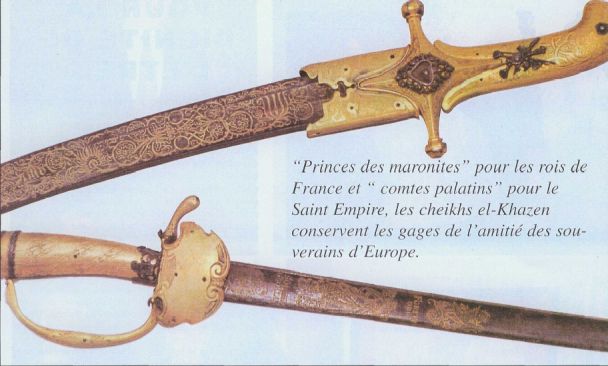
Origins of the "Prince of Maronite" Title
Growing diversity: the Khazin sheiks and the clergy in the first decades of the 18th century
Historical Members:
Barbar Beik El Khazen [English]
Patriach Toubia Kaiss El Khazen(Biography & Life Part1 Part2) (Arabic)
Patriach Youssef Dargham El Khazen (Cont'd)
Cheikh Bishara Jafal El Khazen
Patriarch Youssef Raji El Khazen
The Martyrs Cheikh Philippe & Cheikh Farid El Khazen
Cheikh Nawfal El Khazen (Consul De France)
Cheikh Hossun El Khazen (Consul De France)
Cheikh Abou-Nawfal El Khazen (Consul De France)
Cheikh Francis Abee Nader & his son Yousef
Cheikh Abou-Kanso El Khazen (Consul De France)
Cheikh Abou Nader El Khazen
Cheikh Chafic El Khazen
Cheikh Keserwan El Khazen
Cheikh Serhal El Khazen [English]
Cheikh Rafiq El Khazen [English]
Cheikh Hanna El Khazen
Cheikha Arzi El Khazen
Marie El Khazen