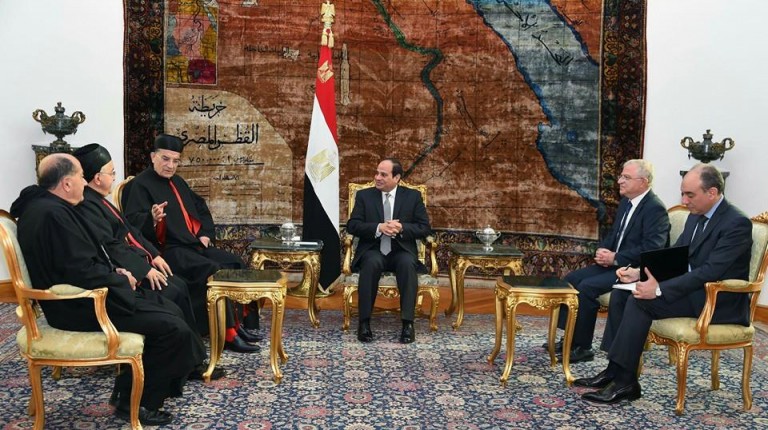
President Abdel Fattah Al-Sisi met the head of Lebanon’s Maronite Church on Sunday, stressing the importance of continuing efforts to achieve national unity and select a president for Lebanon.
Al-Sisi’s meeting in Cairo with Patriarch Bechara Boutros al-Rahi was also attended by the Lebanese ambassador to Egypt, Khalid Zaiada, according to a presidency statement.
According to the statement, the two sides affirmed the good bilateral relations between Egypt and Lebanon, while Al-Sisi expressed Egypt’s interest in maintaining the stability and the security of Lebanon. He said there was a need to resolve divisions and unite around a president.
Fabrice Balanche, The Washington Institute For Near East Policy
A population shortfall
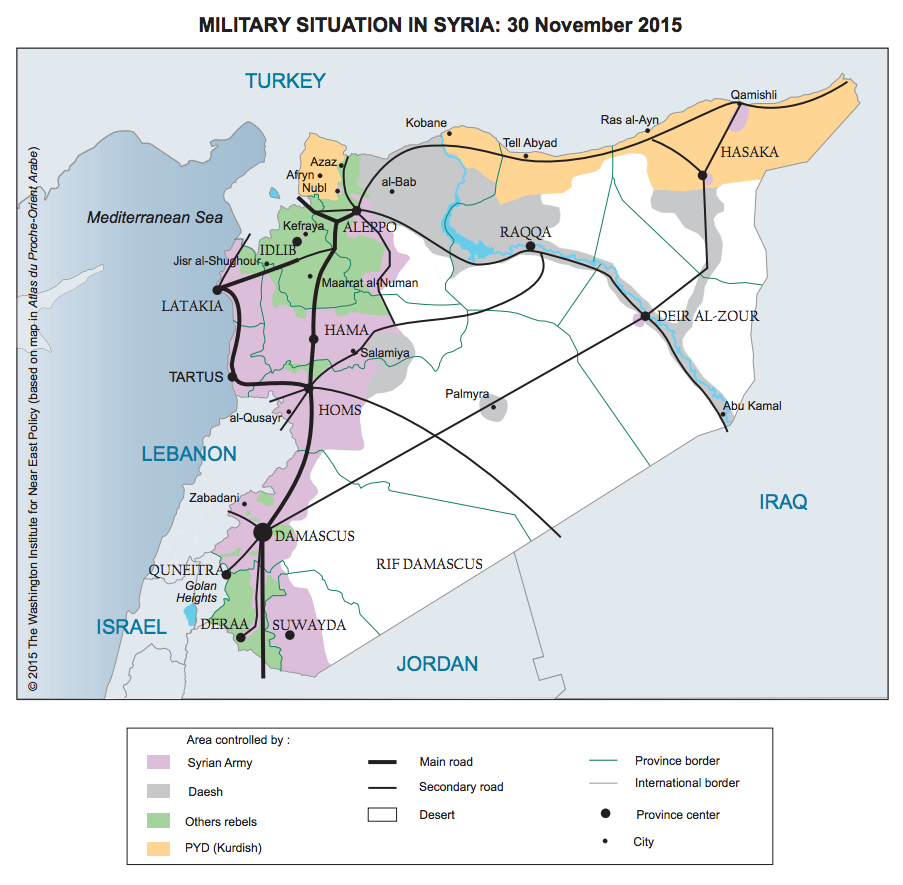
Syria currently has around 16 million residents — a far cry from the 2010 UN projection that the population would reach 22.6 million by the end of 2015. The birth deficit and excess mortality (violent and natural) have reduced the natural population growth by half since 2011. Even if refugees are added to the current population figure, the total would be only 21.3 million, or 1.3 million less than the prewar projection.
The Office of the UN High Commissioner for Refugees (UNHCR) has registered 4.2 million Syrians thus far, but that figure undervalues the actual number of refugees by at least 20%. Some refugees refuse to register for fear of being arrested and taken back to Syria (as is happening in Lebanon), while many wealthy refugees do not see the point of registering. So a more realistic estimate of total refugees is 5.3 million.
NPR news
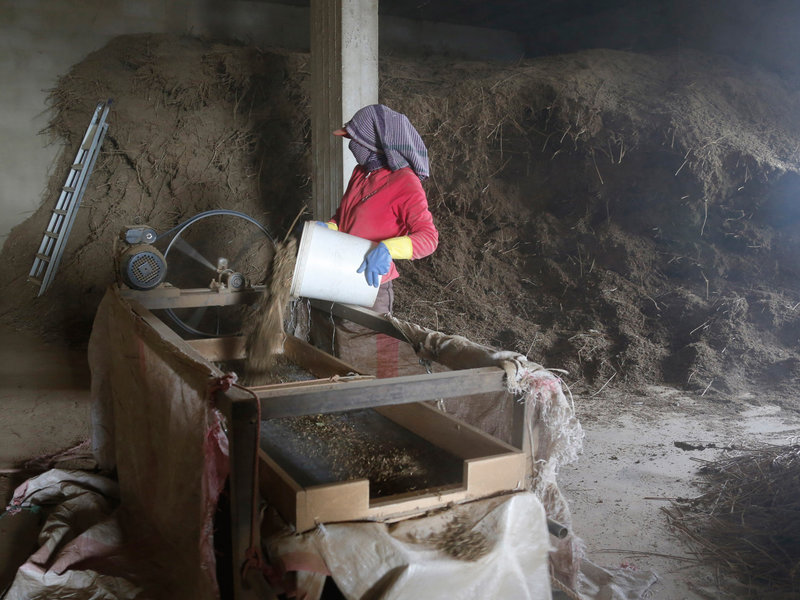
In a village in Lebanon's Bekaa Valley, Syrians from Raqqa have been coming to harvest cannabis for almost a decade. Now, Raqqa is under Islamic State control and the border crossing is more difficult than ever.
One woman recently risked her life for work in Lebanon. Like the hundreds of harvesters in the village, she's not simply a migrant from Syria — she's from the ISIS capital of Raqqa, some 300 miles away.
NPR met her during hashish production time in a dimly lit shed on a winding village street. Inside, the smell of the cannabis derivative was pungent, and clouds of olive-green dust filled the air. Um Muhammad used her nickname, meaning Mother of Mohammed, for fear of what Raqqa's puritanical rulers might do to her family back home if they knew she was working in drugs.
By
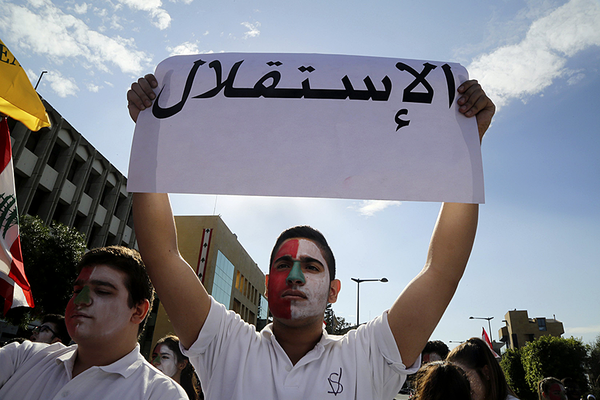
Beirut, Lebanon — A paralyzing impasse has left Lebanon without a president for 18 months.
It has crippled the government’s ability to function, and many analysts believe Lebanon faces economic collapse unless a president can be elected and state institutions once again allowed to operate properly.
Now a power-sharing agreement between bitter political rivals – both sons of murdered fathers – could end the impasse.
That’s the easy part of this story. The rest is Shakespearean, with a touch of “The Godfather” thrown in.
The proposed pact, which would install the scion of one dynasty as president, with another becoming prime minister, has reawakened ghosts of murder, assassination, and revenge from Lebanon's blood-soaked past. It asks a universal political question, one that is felt acutely here: Can the past be put aside for the sake of the future?




Population Movements to Keserwan - The Khazens and The Maans
ما جاء عن الثورة في المقاطعة الكسروانية
ثورة أهالي كسروان على المشايخ الخوازنة وأسبابها
Origins of the "Prince of Maronite" Title
Growing diversity: the Khazin sheiks and the clergy in the first decades of the 18th century
Historical Members:
Barbar Beik El Khazen [English]
Patriach Toubia Kaiss El Khazen(Biography & Life Part1 Part2) (Arabic)
Patriach Youssef Dargham El Khazen (Cont'd)
Cheikh Bishara Jafal El Khazen
Patriarch Youssef Raji El Khazen
The Martyrs Cheikh Philippe & Cheikh Farid El Khazen
Cheikh Nawfal El Khazen (Consul De France)
Cheikh Hossun El Khazen (Consul De France)
Cheikh Abou-Nawfal El Khazen (Consul De France)
Cheikh Francis Abee Nader & his son Yousef
Cheikh Abou-Kanso El Khazen (Consul De France)
Cheikh Abou Nader El Khazen
Cheikh Chafic El Khazen
Cheikh Keserwan El Khazen
Cheikh Serhal El Khazen [English]
Cheikh Rafiq El Khazen [English]
Cheikh Hanna El Khazen
Cheikha Arzi El Khazen
Marie El Khazen