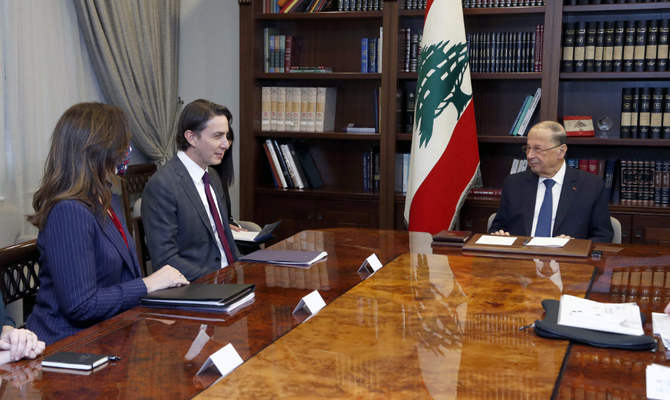
BEIRUT (Reuters) - Lebanon's parliament speaker said a draft, U.S.-brokered deal demarcating a disputed maritime border with Israel was "positive" but must be studied before a final reply is given, according to comments distributed by his office. Earlier on Saturday the Lebanese presidency said Beirut had received a letter from U.S. mediator Amos Hochstein regarding proposals for the maritime boundary demarcation between Lebanon and Israel, enemy states with a history of conflict. Hochstein has been shuttling between Lebanon and Israel in an effort to seal a deal that would pave the way for offshore energy exploration and defuse one potential source of conflict between Israel and the Iran-backed Lebanese group Hezbollah. In a tweet, the U.S. embassy in Beirut said Ambassador Dorothy Shea had met President Michel Aoun, Parliament Speaker Nabih Berri and Prime Minister Najib Mikati "to provide the U.S proposal for a final agreement on the maritime boundary line".
Lebanon's Berri sees draft maritime deal as 'positive'
Berri, a Hezbollah ally and one of Lebanon's most influential politicians, told Asharq al-Awsat newspaper the draft of the final agreement was "positive", according a statement circulated by his office. Berri considered that the draft "meets in principle the Lebanese demands" which reject the maritime boundary deal having any impact on the land border between the two countries, it said. Berri noted however that the agreement was 10 pages and in English and "would require study before the final response to it is given".
NNA – Maronite Patriarch, Cardinal Bechara Boutros al-Rahi, hoped Saturday for having a new president of the republic, a new government and …
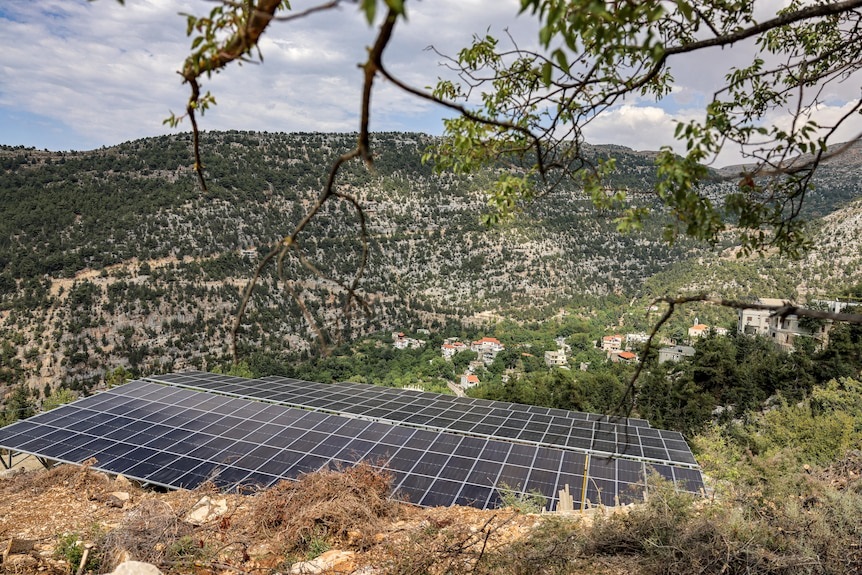
by english.alaraby.co.uk -- Rodayna Raydan -- For decades, paying two electricity bills in Lebanon has been the norm: one for state-provided electricity and another for a subscription to a private electricity generator. Since 2019, Lebanon has been facing a severe financial crisis that the World Bank has called one of the worst in modern history. The country’s already struggling electricity sector has felt the impact of the economic downturn, and has become notoriously dysfunctional. Today, residents of Beirut only receive two to three hours of state electricity per day. A few years ago, many would rely instead on private electricity generators. But with rising inflation, many were forced to reprioritize needs, laying aside their generator subscriptions. Instead, solar panels now dot rooftops, parking lots, and balconies, allowing for a return to normalcy.
"The soaring demand for solar installations, according to Khoury, explains where the country could potentially be heading in terms of renewable and clean energy" “Lebanese are increasingly turning to the sun to meet electricity needs, and solar power has become a must to secure a supply of sustainable electricity,” Ramzi Salmen, an environmental engineer, told The New Arab. “The positive environmental outcome is the production of clean, renewable, and emission-free power,” Salmen emphasised. According to the IMF, electricity accounts for almost half of Lebanon’s USD 85 billion of public debt. The government has been subsidising Electricite du Liban, the national electric company, for years, accumulating to USD 35 billion.
Sustainable electricity experts say that the Lebanese government needs to build new power plants, shut down inefficient old ones, and utilise renewable energy to provide 24-hour electricity at lower costs, reducing public spending and debt and increasing productivity. This, in turn, would generate “green jobs” in the renewable energy sector and contribute to economic growth. “People are switching to solar for two main reasons: one is the security of the power supply as it is one of the most convenient options, but also because it is the cheapest source of electricity now compared to conventional energy sources that use diesel fuel,” Pierre Khoury, president of the Lebanese Centre for Energy Conservation (LCEC), told The New Arab.
by naharnet — MP Paula Yacoubian of the Change parliamentary bloc has accused the other opposition forces of “turning against the understanding” …




Population Movements to Keserwan - The Khazens and The Maans
ما جاء عن الثورة في المقاطعة الكسروانية
ثورة أهالي كسروان على المشايخ الخوازنة وأسبابها
Origins of the "Prince of Maronite" Title
Growing diversity: the Khazin sheiks and the clergy in the first decades of the 18th century
Historical Members:
Barbar Beik El Khazen [English]
Patriach Toubia Kaiss El Khazen(Biography & Life Part1 Part2) (Arabic)
Patriach Youssef Dargham El Khazen (Cont'd)
Cheikh Bishara Jafal El Khazen
Patriarch Youssef Raji El Khazen
The Martyrs Cheikh Philippe & Cheikh Farid El Khazen
Cheikh Nawfal El Khazen (Consul De France)
Cheikh Hossun El Khazen (Consul De France)
Cheikh Abou-Nawfal El Khazen (Consul De France)
Cheikh Francis Abee Nader & his son Yousef
Cheikh Abou-Kanso El Khazen (Consul De France)
Cheikh Abou Nader El Khazen
Cheikh Chafic El Khazen
Cheikh Keserwan El Khazen
Cheikh Serhal El Khazen [English]
Cheikh Rafiq El Khazen [English]
Cheikh Hanna El Khazen
Cheikha Arzi El Khazen
Marie El Khazen