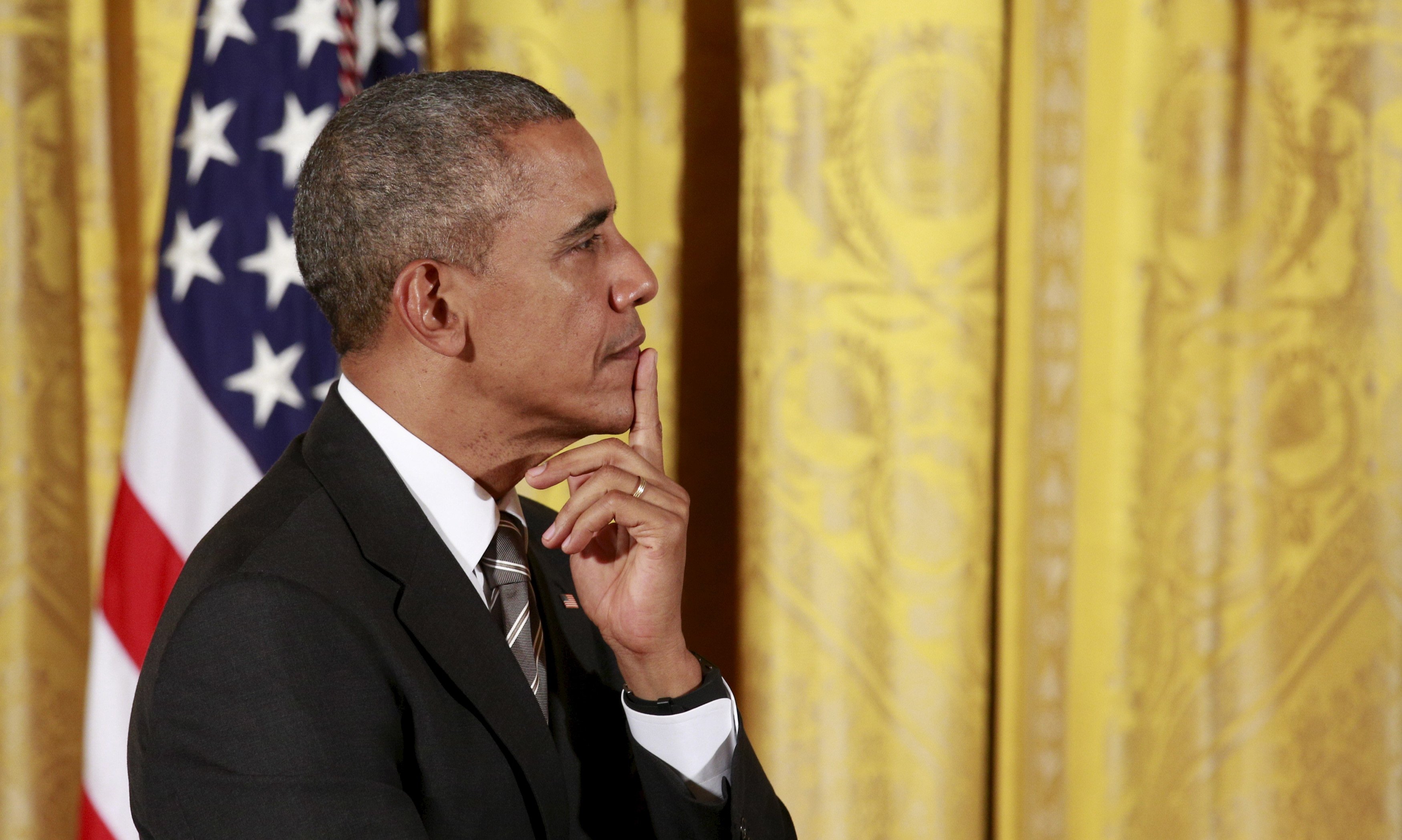
President Barack Obama's stance of calling on Syrian President Bashar Assad to transition out of power while maintaining basic government functions after he's ousted is a "fantasy" in the context of how the country works, according to Tony Badran, a researcher at the Foundation for the Defense of Democracies.
"The biggest myth out there is the existence of 'state institutions' separate from Assad," Badran said in an interview.
"The reality is, once you concede the regime, you inevitably concede Assad."
Months after the Syrian civil war erupted in 2011, Obama called for Assad to step down to hasten an end to the violence.
v\:* {behavior:url(#default#VML);} o\:* {behavior:url(#default#VML);} w\:* {behavior:url(#default#VML);} .shape {behavior:url(#default#VML);}
Normal 0 false false false false EN-US X-NONE X-NONE /* Style Definitions */ table.MsoNormalTable {mso-style-name:"Table Normal"; mso-tstyle-rowband-size:0; mso-tstyle-colband-size:0; mso-style-noshow:yes; mso-style-priority:99; mso-style-parent:""; mso-padding-alt:0in 5.4pt 0in 5.4pt; mso-para-margin-top:0in; mso-para-margin-right:0in; mso-para-margin-bottom:10.0pt; mso-para-margin-left:0in; line-height:115%; mso-pagination:widow-orphan; font-size:11.0pt; font-family:"Calibri","sans-serif"; mso-ascii-font-family:Calibri; mso-ascii-theme-font:minor-latin; mso-hansi-font-family:Calibri; mso-hansi-theme-font:minor-latin; mso-bidi-font-family:"Times New Roman"; mso-bidi-theme-font:minor-bidi;}
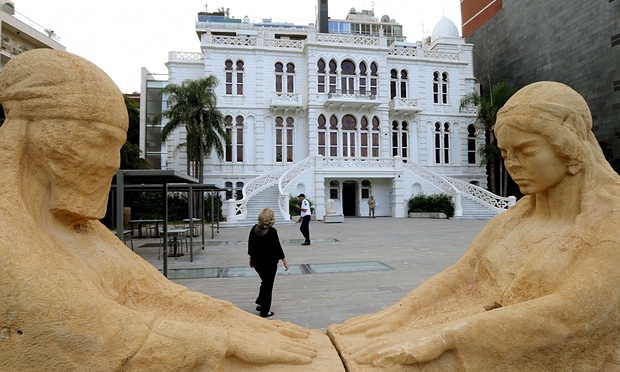
The Lebanese civil war, which began in 1975 and ended in 1990, claimed an estimated 150,000 lives, left 200,000 wounded and displaced almost a million civilians. It also ravaged visual arts in the country, cutting the capital, Beirut, in two, destroying entire archives and driving many artists into exile. The art scene still hasn’t fully recovered. It will get a much-needed boost this month, however, when Beirut’s historic Sursock Museum reopens after a seven-year renovation.
The Sursock mansion, completed in 1912, is an ornate, white wedding cake of a building, at the top of a hill in the capital’s swanky Achrafieh neighbourhood. Combining Venetian and Ottoman architectural styles, the building is a melange of influences, much like Beirut. Originally the residence of aristocratic art-lover Nicolas Sursock, it was bequeathed to the city on his death in 1952. President Camille Chamoun subsequently used it as a showpiece in which to host visiting dignitaries.
Thursday, 8 October 2015
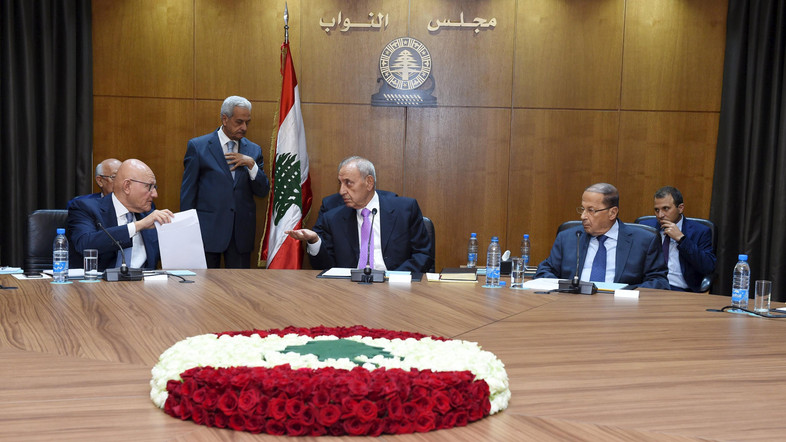
Lebanon’s parliament speaker cancelled the last day of this week’s meeting aimed at discussing ways out of a political crisis after politicians made no progress on issues including high-level security appointments, the National News Agency said.
The three-day “national dialogue” called by Nabih Berri started on Tuesday and was aimed at finding solutions to a stalemate that has paralysed government and helped fuel weeks of street protests.The talks were set to run into Thursday but Berri postponed the next session until Oct. 26.
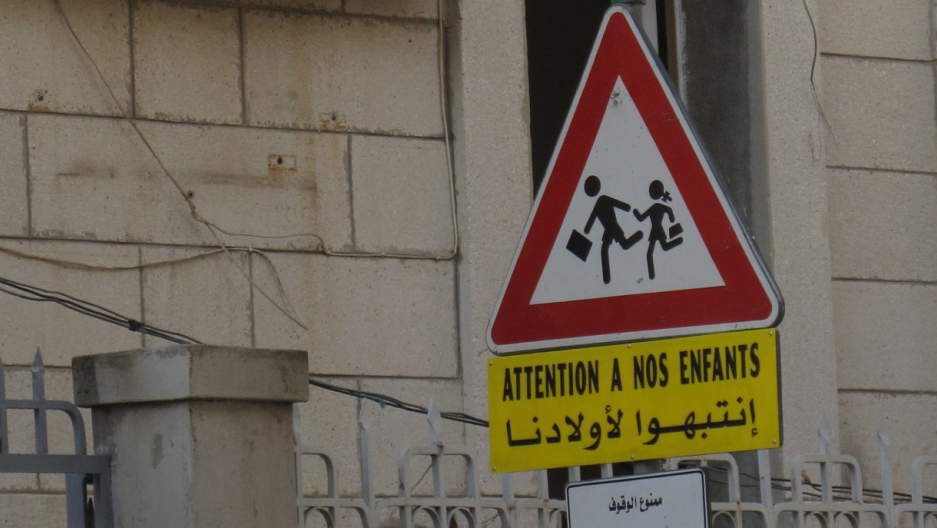
Just trying to pay for juice I have to switch back and forth from English to Arabic. The stand clerk starts in Arabic, “Here you go,” before switching in English, “these two [juices]?”
Pia Bou Khater is at the market with me. At the juice stand, she switches too. “Oh, I think I have change,” she says in English, before she continues in Arabic, “3000.”
Codeswitching this way is one of the characteristics that defines life in Beirut for visitors and for many Lebanese.
“When I'm interacting with people, like buying things or trying to bargain, I rarely switch,” Pia explains. “I do try to often figure out what the green leafy thing in question is, like, oh, is this the same as that in English? And then the word in French comes up,” she laughs, “and I'm like oh no I don't know it in French, please stop making this difficult.”
Population Movements to Keserwan - The Khazens and The Maans
ما جاء عن الثورة في المقاطعة الكسروانية
ثورة أهالي كسروان على المشايخ الخوازنة وأسبابها
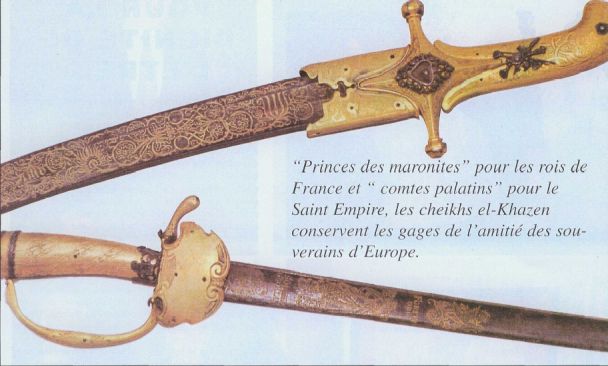
Origins of the "Prince of Maronite" Title
Growing diversity: the Khazin sheiks and the clergy in the first decades of the 18th century
Historical Members:
Barbar Beik El Khazen [English]
Patriach Toubia Kaiss El Khazen(Biography & Life Part1 Part2) (Arabic)
Patriach Youssef Dargham El Khazen (Cont'd)
Cheikh Bishara Jafal El Khazen
Patriarch Youssef Raji El Khazen
The Martyrs Cheikh Philippe & Cheikh Farid El Khazen
Cheikh Nawfal El Khazen (Consul De France)
Cheikh Hossun El Khazen (Consul De France)
Cheikh Abou-Nawfal El Khazen (Consul De France)
Cheikh Francis Abee Nader & his son Yousef
Cheikh Abou-Kanso El Khazen (Consul De France)
Cheikh Abou Nader El Khazen
Cheikh Chafic El Khazen
Cheikh Keserwan El Khazen
Cheikh Serhal El Khazen [English]
Cheikh Rafiq El Khazen [English]
Cheikh Hanna El Khazen
Cheikha Arzi El Khazen
Marie El Khazen