
by techcrunch.com -- Ingrid Lunden, Ron Miller -- The world is still coming to terms with Hamas’ deadly attacks on Israelis last weekend — and everything else that has unfolded so far in the aftermath, including the barrage of retaliation strikes on Gaza. A look at how the situation is playing out in the startup ecosystem sheds light on its impact to the country as a whole. In such a small country, just about everyone knows someone who was directly affected by the attacks, or someone involved in the subsequent defense and retaliation — and often all three. Technology is, without question, a giant part of Israel’s economy. In 2022, it contributed more than 18% of the country’s GDP, the most of any single sector, according to the latest annual report from the Israel Innovation Authority.
A total of 14% of Israeli citizens work in high tech, which in a country of just 9.2 million people works out to about 1.3 million. The active number of startups in the country is 9,000 (third-highest in the world after the Bay Area and NYC) and these startups have collectively, in the last five years, brought $95 billion into the country by way of venture capital. Combining the business development of startups with larger tech companies in the country — Intel, Microsoft, Nvidia, Google and many others have operations in Israel — they collectively exported $71 billion last year, 48.3% of the total amount exported across all industries. Undoubtedly, those numbers are all going to be significantly lower this year, not least because the disruptions of this war are coming directly on the heels of a major protest movement.
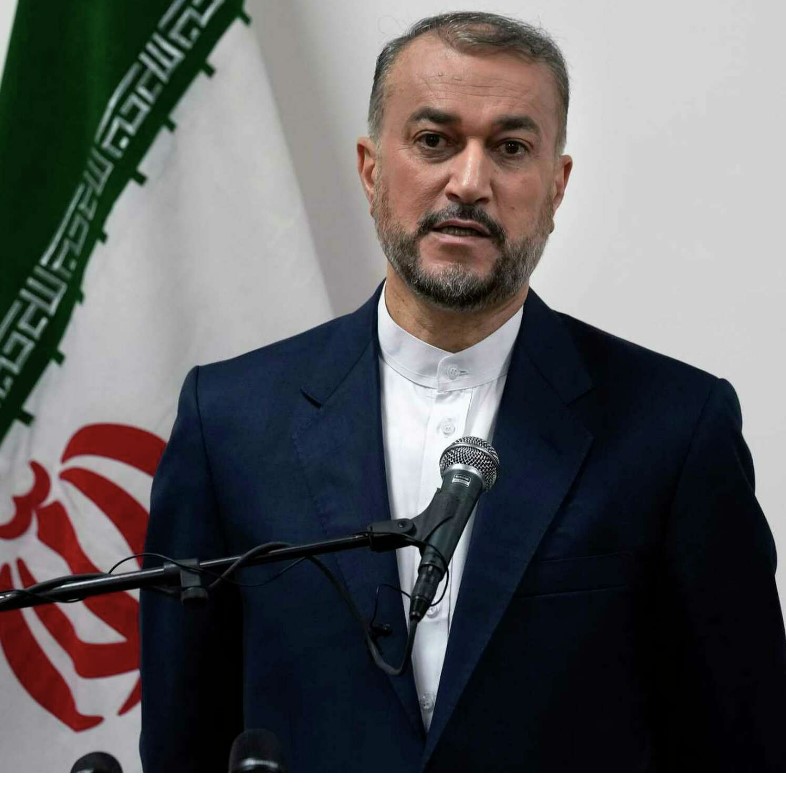
by National Review -- There’s still much that we don’t know about the Hamas massacre. But what we do know is as outrageous as it is unsurprising: Iran is also responsible. The Islamic dictatorship has armed, funded to the tune of tens of millions of dollars, and otherwise assisted Hamas over many years. That is a universally recognized fact, acknowledged by the U.S. State Department and by the regime itself. Now, at least 25 American citizens are dead: murdered, brutally, by Iran’s terrorist force on the Gaza Strip. Others have been taken hostage. America must now respond: to restore deterrence, neutralize the Iranian terror threat, and prevent further carnage.
The latest report on Iran’s involvement, via the Wall Street Journal, says that U.S. intelligence analysts believe that while the regime knew about Hamas’s plan to carry out attacks against Israel, it was not briefed on their timing or scope. That follows another report from the paper quoting Hezbollah and Hamas leaders as saying that Iran was so deeply involved in the planning that its foreign minister took part in coordinating meetings in Lebanon and ultimately gave the green light for the operation to move forward. The Washington Post reported Monday that intelligence sources believe the attack “bore hallmarks of Iranian support” including training, funding, logistical support, and technical assistance in manufacturing weapons from Iran’s Islamic Revolutionary Guard Corps and Hezbollah. But the Biden administration and the Israeli government have avoided linking Tehran too directly to the terrorist plot. The line out of the White House, pushed by national-security adviser Jake Sullivan, is that Iran is “complicit” but that the U.S. does not have evidence of a direct Iranian hand in the plots.
BY ISSIE LAPOWSKY5 MINUTE READ Yitzy -- Fastcompany -- Hammer was itching to get back to work. For the last two weeks, Hammer, a lawyer who works with emerging tech companies in Israel, had been home with his four kids who weren’t in school during the Jewish high holidays. This week was supposed to be their first back, and Hammer had a packed schedule planned for the days ahead. But since Saturday—when Hammer and his wife awoke to the sound of bombs falling and spent part of the day huddled with their family in a shelter inside their home in the central Israeli city of Modi’in—Hammer says, “Work has been the last thing on my mind.” Instead, on Sunday, Hammer, who is a reservist with the Israeli Defense Forces, left his home and headed about an hour south to a military base on the Gaza border, where he is now spending 12-hour shifts working out of what he describes as a “fortified caravan,” serving as a legal advisor to the IDF. Hammer is not alone. “Everybody here with me is part of the tech industry in some way or another,” he tells Fast Company.
In a country where the tech sector accounts for roughly one-fifth of the annual GDP and 10% of of the labor force, Hammer is just one of many business leaders, investors, and workers in Israel’s booming tech industry who have been drawn into the conflict since Hamas launched an attack on civilians near the Gaza border Saturday morning, killing some 1,200 people in Israel, most of them civilians, and taking at least 150 people hostage. The attacks have prompted a declaration of war by the Israeli government, which has since pounded the Gaza strip with its own series of air strikes in what Israel’s defense minister has warned will be a “complete siege” of the Palestinian region. Already, the death toll from Israel’s strikes in the Gaza Strip has climbed to at least 950 people, with another 5,000 wounded, 60% of whom include women and children, according to the Gaza Ministry of Health. In addition to volunteers, the Israeli military has since called up more than 300,000 reservists, many of whom are executives, founders, or employees who make up Israel’s so-called “startup nation,” or who work at the Israeli headquarters of some of the world’s biggest tech firms. For Dor Serero, Monday was supposed to be his first day working for Microsoft, but he was called into the reserves before he had a chance to start. “[A]s I am writing this post, sirens are going on and off, and I can hear rockets exploding in the distance,” Serero wrote on LinkedIn.
By MIT Technology Review by Abdullahi Tsanni -- Gene editing could help prevent chickens from catching and spreading bird flu, according to a proof-of-concept study.| Researchers used the gene-editing tool CRISPR to alter the DNA of 10 chickens to resist the bird flu virus and then exposed all of them to a low dose of it. Only one of the 10 chickens caught the virus, and that chicken did not pass it on to any others. “What this shows is that there’s a proof of concept that we can use to move toward making chickens resistant to the virus. But we’re not there yet,” Wendy Barclay, a virologist and professor at Imperial College London, who co-led the research, said on a press conference call. The study was published today in Nature Communications. Bird flu has killed millions of both wild and farmed birds across the world in recent years. It has increasingly affected mammals as well, raising fears among virologists that the virus could adapt to infect humans.
For the chicken study, the team made changes to a protein gene in the birds’ sperm and eggs. This protein, called ANP32A, helps flu viruses attack chickens’ systems. By rearranging the DNA letters of the ANP32A protein, the researchers were able to restrict the flu virus from infecting the chickens. “The genetic changes that we made were changes we knew will stop the growth of the virus in the chicken cells,” Alewo Idoko-Akoh, a research fellow at the University of Edinburgh’s Roslin Institute, who was part of the study, explained. To further test the resilience of the gene-edited birds, the researchers exposed them to a second, higher dose of the bird flu virus. Of the 10, five became infected. Still, the gene edit did provide some level of protection. The researchers also found that the intervention limited spread of the virus: only one of four non-gene-edited chickens placed in the same incubator got infected, and there was no transmission to gene-edited chickens. However, the research team found that in the gene-edited birds, the virus adapted to enlist the support of two related proteins—ANP32B and ANP32E—to replicate.




Population Movements to Keserwan - The Khazens and The Maans
ما جاء عن الثورة في المقاطعة الكسروانية
ثورة أهالي كسروان على المشايخ الخوازنة وأسبابها
Origins of the "Prince of Maronite" Title
Growing diversity: the Khazin sheiks and the clergy in the first decades of the 18th century
Historical Members:
Barbar Beik El Khazen [English]
Patriach Toubia Kaiss El Khazen(Biography & Life Part1 Part2) (Arabic)
Patriach Youssef Dargham El Khazen (Cont'd)
Cheikh Bishara Jafal El Khazen
Patriarch Youssef Raji El Khazen
The Martyrs Cheikh Philippe & Cheikh Farid El Khazen
Cheikh Nawfal El Khazen (Consul De France)
Cheikh Hossun El Khazen (Consul De France)
Cheikh Abou-Nawfal El Khazen (Consul De France)
Cheikh Francis Abee Nader & his son Yousef
Cheikh Abou-Kanso El Khazen (Consul De France)
Cheikh Abou Nader El Khazen
Cheikh Chafic El Khazen
Cheikh Keserwan El Khazen
Cheikh Serhal El Khazen [English]
Cheikh Rafiq El Khazen [English]
Cheikh Hanna El Khazen
Cheikha Arzi El Khazen
Marie El Khazen