middleeasteye.net - Paul Cochrane
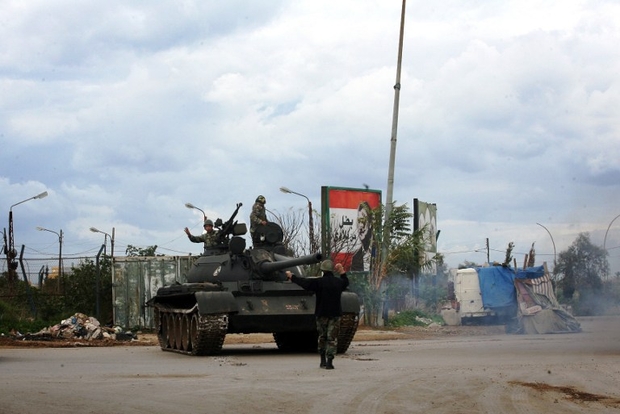
BEIRUT - Lebanon is not a military state like Egypt, Jordan or Syria. There is no military-industrial complex like in Egypt, where it is estimated to account for about 30 percent of the gross domestic product (GDP). There is also no clear national leader capable of doing publicity stunts with parachute regiments like in Jordan, and there is no military service.
The last two Lebanese presidents aside - who switched their general's uniforms for suits once in office - Lebanese politics has been dominated more by former militia leaders and technocrats than by an elite officer corps with the potential to carry out a coup.
Josh Wood
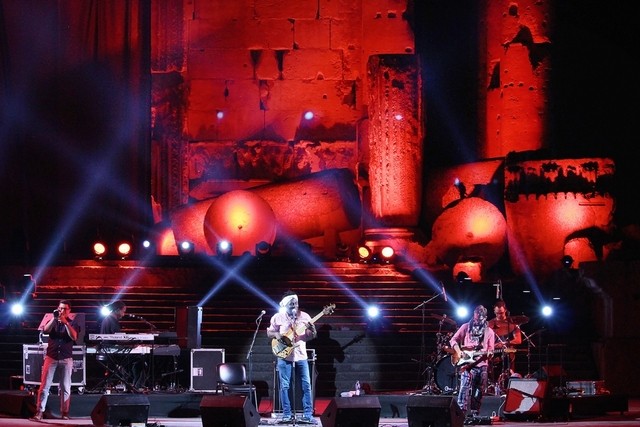
BAALBEK, LEBANON // Not long after the sun fades from the fields of the Bekaa Valley, Cameroonian-born jazz bassist Richard Bona and his band launch into their set on the steps of the Temple of Bacchus. As thousands gyrate, clap and sing along to the music that skips between cultures, rhythms, genres and eras, the anxieties of present-day Lebanon melt away.
The Baalbek International Festival, at which Bona was performing on Sunday evening, was established in 1966 to bring top musicians, dancers and actors to the well-preserved ruins of the ancient city that the Romans called Heliopolis. The festival’s early years coincided with Lebanon’s golden age – the two decades leading up to 1975 – and saw greats such as American trumpeter Miles Davis, folk singer Joan Baez and queen of jazz Ella Fitzgerald play against the stunning backdrop of the Roman temples.
By: Tamsyn Burgmann, The Canadian Press

Visual artist Jad El Khoury, 27, planned five months to make his "art attack" on this derelict apartment building in downtown Beirut. In this composite image, the photo on the left show the apartment building as it stands in Beirut, and the right is a computer-generated artist's concept of what his "Potato Nose" characters in his signature humourous style would look like adorned on the same building. El Khoury incorporated missile and bullet holes blasted into the 11-storey facade during Lebanon's 15-year civil war. He hopes the giant display will unite the religiously divided society with a shared laugh. THE CANADIAN PRESS/HO-Jad El Khoury
BEIRUT - We're driving the highway through downtown Beirut, just a stone's throw from the former "Green Line" that split the Middle East capital in two during Lebanon's 15-year civil war and, with it, its people.
One hand on the wheel, visual artist Jad El Khoury gestures at a bombed-out 11-storey building somehow still planted on its foundation. A constellation of missile and bullet holes mar its exterior.
El Khoury has big plans for this urban eyesore. They're also illegal.
The 27-year-old has spent five months plotting to scale the derelict apartments and subversively spray upon it a sky-high mural, transforming scars of war into one giant joke.
BEIRUT — Lebanon’s health minister says the country is on the brink of a "major health disaster" unless an immediate solution is …




Population Movements to Keserwan - The Khazens and The Maans
ما جاء عن الثورة في المقاطعة الكسروانية
ثورة أهالي كسروان على المشايخ الخوازنة وأسبابها
Origins of the "Prince of Maronite" Title
Growing diversity: the Khazin sheiks and the clergy in the first decades of the 18th century
Historical Members:
Barbar Beik El Khazen [English]
Patriach Toubia Kaiss El Khazen(Biography & Life Part1 Part2) (Arabic)
Patriach Youssef Dargham El Khazen (Cont'd)
Cheikh Bishara Jafal El Khazen
Patriarch Youssef Raji El Khazen
The Martyrs Cheikh Philippe & Cheikh Farid El Khazen
Cheikh Nawfal El Khazen (Consul De France)
Cheikh Hossun El Khazen (Consul De France)
Cheikh Abou-Nawfal El Khazen (Consul De France)
Cheikh Francis Abee Nader & his son Yousef
Cheikh Abou-Kanso El Khazen (Consul De France)
Cheikh Abou Nader El Khazen
Cheikh Chafic El Khazen
Cheikh Keserwan El Khazen
Cheikh Serhal El Khazen [English]
Cheikh Rafiq El Khazen [English]
Cheikh Hanna El Khazen
Cheikha Arzi El Khazen
Marie El Khazen