By: Joseph A. Kechichian,Senior Writer
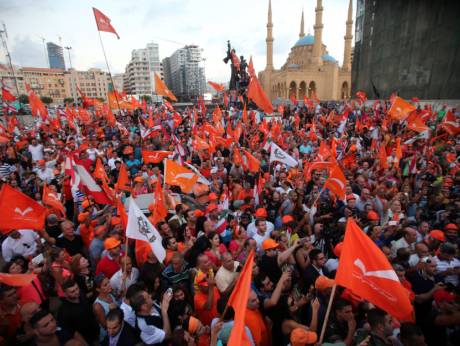
Beirut: A few thousand Lebanese supporters of presidential hopeful Michel Aoun gathered Wednesday night in Martyrs’ Square in downtoan Beirut following his call on Saturday to protest against the extension of terms of top security posts.
However, conspicuously missing from the rally were Hezbollah supporters, traditional allies of the FPM.
Their lack of presence could be explained by a recent meeting between Iranian foreign minister Mohammad Zarif with Hezbollah leader Hassan Nasrallah, of which the details were not revealed.
However during a meeting with Lebanese foreign minister Gebran Bassil (also Aoun’s son-in-law), Zarif stressed his support for the current government, in a move that signaled a possible change in tactics by Iran from instagator to mediator.
A survey conducted by the U.S.-based opinion polling think tank Pew Research Center found that 53 percent of Lebanese consider the current economic situation in Lebanon “very bad” and 36 percent see it as “bad,’ compared to 9 percent who believe it is “good” and 1 percent who say it is “very good.” The responses indicate an improvement since 2014, when 56 percent of Lebanese respondents believed that the economic situation was “very bad,” and 2013, when 57 percent of respondents said the economy was “very bad.”
The survey was conducted between April 7 and May 5, 2015, through face-to-face interviews with 1,000 Lebanese residents who are 18 years or older.
By Joseph A. KechichianSenior Writer
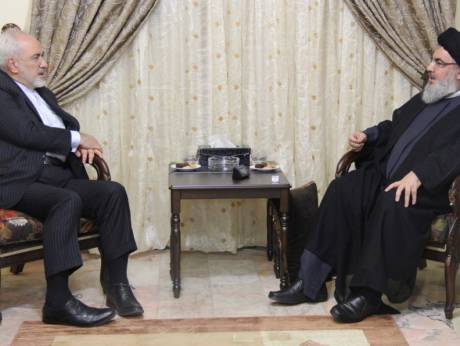
Beirut: In what was a surprising declaration, Iranian Foreign Minister Javad Zarif started his two-day visit to Lebanon on Tuesday with an extraordinary meeting with Prime Minister Tammam Salam, whom he praised for his “major role” to “provide security, fight extremism and terror, and find cooperation among the various Lebanese parties.”
Observers were stunned at the tenor used by Zarif, who also met with Hezbollah leader Sayyed Hassan Nasrallah on Tuesday night, although no public declarations followed that meeting.
By: Al-Araby al-Jadeed & agencies

In Beirut, Michel Aoun, former army chief, current MP and leader of the largest Christian faction in parliament the Free Patriotic Movement (FPM) has instructed his supporters to take to the streets on Wednesday. The new protests are taking place on the back of a dispute over top military appointments - and what Aoun sees as a drive to marginalize Christian representation in the Lebanese state.
The protests follow Defence Minister Samir Moqbel's decision last week to extend the terms of army commander Gen. Jean Kahwaji and other top generals by an additional year, after they expire in September. Aoun is strongly opposed to the move, and wants new officers - including his son in law Gen. Shamel Roukoz - to be appointed.
After a meeting of the Change and Reform parliamentary bloc that he heads, Aoun told his supporters: "There is no longer a constitution respected in Lebanon." He added: "I call on the Lebanese to take to the streets; we want a country governed by law and a constitution rather than garbage, theft and corruption."
Population Movements to Keserwan - The Khazens and The Maans
ما جاء عن الثورة في المقاطعة الكسروانية
ثورة أهالي كسروان على المشايخ الخوازنة وأسبابها
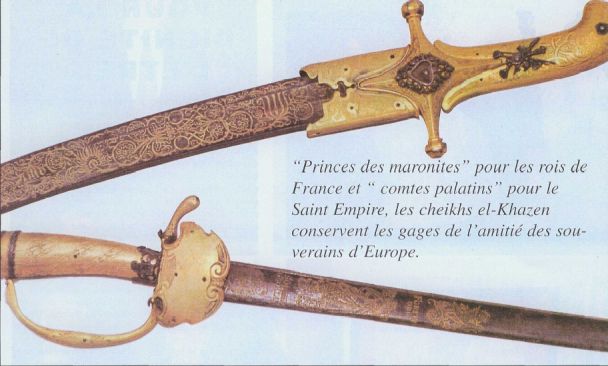
Origins of the "Prince of Maronite" Title
Growing diversity: the Khazin sheiks and the clergy in the first decades of the 18th century
Historical Members:
Barbar Beik El Khazen [English]
Patriach Toubia Kaiss El Khazen(Biography & Life Part1 Part2) (Arabic)
Patriach Youssef Dargham El Khazen (Cont'd)
Cheikh Bishara Jafal El Khazen
Patriarch Youssef Raji El Khazen
The Martyrs Cheikh Philippe & Cheikh Farid El Khazen
Cheikh Nawfal El Khazen (Consul De France)
Cheikh Hossun El Khazen (Consul De France)
Cheikh Abou-Nawfal El Khazen (Consul De France)
Cheikh Francis Abee Nader & his son Yousef
Cheikh Abou-Kanso El Khazen (Consul De France)
Cheikh Abou Nader El Khazen
Cheikh Chafic El Khazen
Cheikh Keserwan El Khazen
Cheikh Serhal El Khazen [English]
Cheikh Rafiq El Khazen [English]
Cheikh Hanna El Khazen
Cheikha Arzi El Khazen
Marie El Khazen