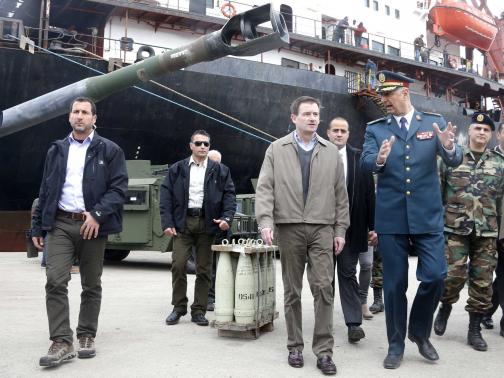
(Reuters) - The United States delivered more than $25 million worth of military aid including heavy artillery to the Lebanese army on Sunday to help it fight jihadist groups which have repeatedly battled with security forces near the Syrian border. The U.S. ambassador to Beirut, David Hale, said in a statement the weapons would be used to "defeat the terrorist and extremist threat from Syria". "We are fighting the same enemy, so our support for you has been swift and continuous," Hale said at an event marking the delivery of the weapons in Beirut. The Lebanese army has fought regular battles with armed groups including militants linked to Islamic State and the al Qaeda-affiliated Nusra Front in areas near the Syrian border, most recently late last month when six soldiers were killed.
By Armin Rosen, Business Insider
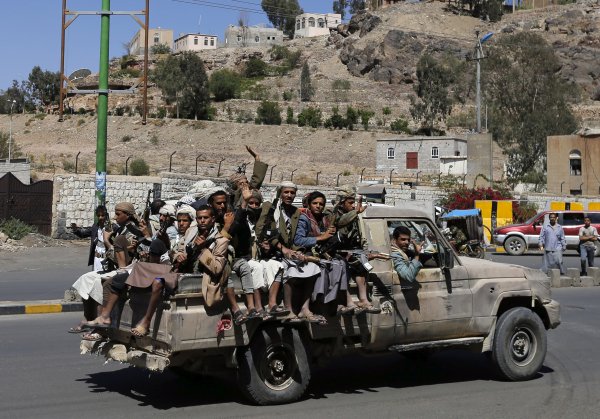
Friday marked the death knell of the internationally-backed post-Arab Spring order in Yemen, whose parliament and government were finally dissolved by the Iranian-allied Houthi rebels who took over Sa'ana in late 2014.
The ousted president, Abd-Rabbouh Mansour Hadi, was a highly cooperative US counter-terror partner, and the UN had dispatched a special envoy entrusted with shepherding the country's fragile transitional process. These efforts failed to prevent the full-on state collapse that Iranian-backed Houthi rebels finally completed on Friday.
But the biggest loser from the Yemeni government's fall is Sa'ana's wealthy, powerful, and perpetually insecure neighbor to the north: Saudi Arabia. In recent years, Saudi policy towards Yemen has been built around the need to stabilize the government in Sa'ana while sealing off the two countries' over 1,000-long and minimally policed frontier.
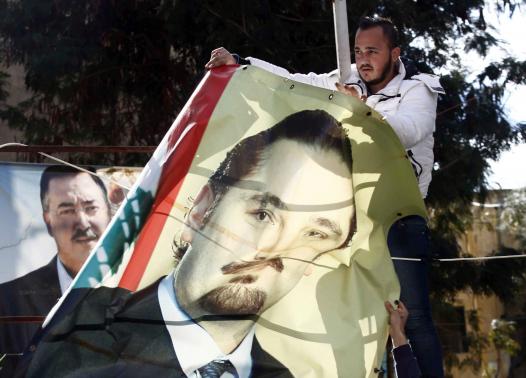
(Reuters) - Lebanon has begun removing political posters and party banners from neighborhoods of the capital in a move to unify a country still divided from a civil war, following an agreement between the militant and political group Hezbollah and its rivals. Beirut is fragmented into fiefdoms where political banners and photographs of dead fighters and warlords have marked territory controlled by various groups since the start of the civil war that raged from 1975 to 1990. The poster ban was agreed by Lebanon's main political groupings after gun battles, car bombs and skirmishes on the border with Syria highlighted the need for reconciliation.
The Governor of Beirut ordered on Thursday the closure of the fish market in Karantina for not meeting health standards, three …




Population Movements to Keserwan - The Khazens and The Maans
ما جاء عن الثورة في المقاطعة الكسروانية
ثورة أهالي كسروان على المشايخ الخوازنة وأسبابها
Origins of the "Prince of Maronite" Title
Growing diversity: the Khazin sheiks and the clergy in the first decades of the 18th century
Historical Members:
Barbar Beik El Khazen [English]
Patriach Toubia Kaiss El Khazen(Biography & Life Part1 Part2) (Arabic)
Patriach Youssef Dargham El Khazen (Cont'd)
Cheikh Bishara Jafal El Khazen
Patriarch Youssef Raji El Khazen
The Martyrs Cheikh Philippe & Cheikh Farid El Khazen
Cheikh Nawfal El Khazen (Consul De France)
Cheikh Hossun El Khazen (Consul De France)
Cheikh Abou-Nawfal El Khazen (Consul De France)
Cheikh Francis Abee Nader & his son Yousef
Cheikh Abou-Kanso El Khazen (Consul De France)
Cheikh Abou Nader El Khazen
Cheikh Chafic El Khazen
Cheikh Keserwan El Khazen
Cheikh Serhal El Khazen [English]
Cheikh Rafiq El Khazen [English]
Cheikh Hanna El Khazen
Cheikha Arzi El Khazen
Marie El Khazen