Security forces said on Monday that they arrested a man suspected of murdering a young woman in the coastal town of …
By Abigail James (NEWS CONSORTIUM)
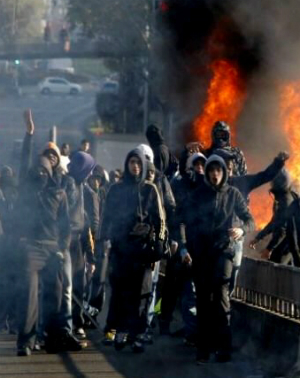
LOS ANGELES, CA (Catholic Online) - The "no-go" zones, officially called Zones Urbaines Sensibles (ZUS), or Sensitive Urban Zones range in size and quantity. According to reports, there is hardly a town if France that does not have at least one ZUS.
ZUS formations began in late 1996, and more than 5 million people live in them; that's 8 percent of France's population. Area locations include the heavily Muslim parts of Paris, Marseilles, Strasbourg, Lille and Amiens. Seine-Saint-Denis, a northern suburb of Paris is home to an estimated 500,000 Muslims and 36 of the 40 districts in the area are "no-go" zones.
French rulings and law enforcement hold no bar in the no-go zones. They aren't even allowed in. The host-countries have lost control over the "no-go" zones. Public aid can't even infiltrate to help when needed.
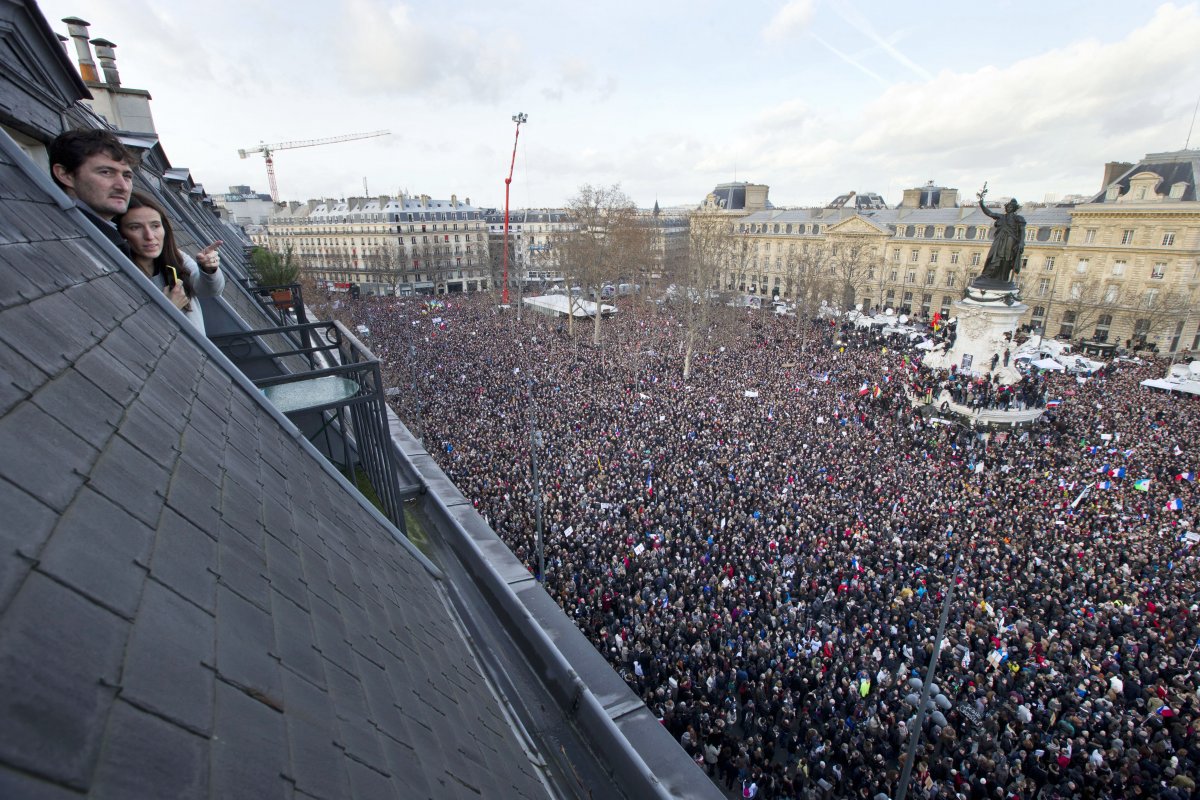
On Sunday, Paris's streets brimmed with an estimated 1 million people in a march of national unity.
The moving spectacle comes in the wake of multiple acts of terror this week, including one on the satirical magazine Charlie Hebdo. The attacks left 17 dead.
The march, known as the Marche Republicaine, drew countless French citizens, as well as over 40 foreign leaders.
"Today, Paris is the capital of the world," French President Francois Hollande told the Associated Press. "Our entire country will rise up toward something better."
For pictures please click READ MORE

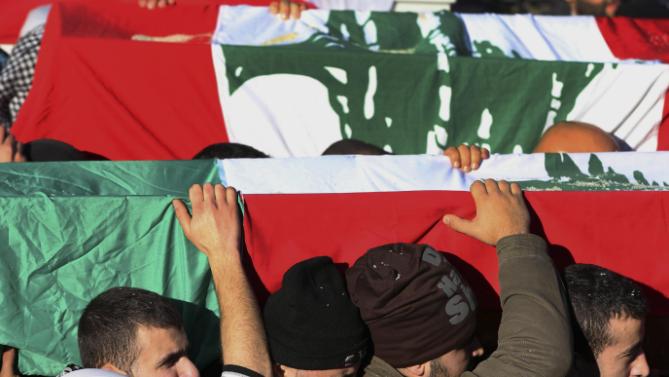
Alawite mourners carry coffins wrapped by Lebanese flags of those who were killed at a coffee shop where a suicide bombing struck it Saturday night, during their funeral procession in a predominantly Alawite neighborhood of the northern port city of Tripoli, Lebanon, Sunday, Jan. 11,
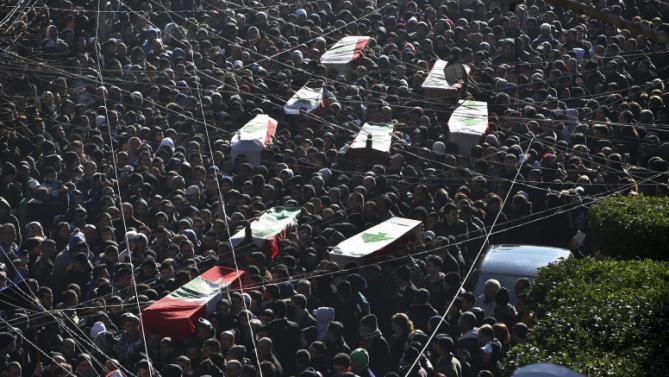
Alawite mourners carry the coffins of the nine men who were killed at a coffee shop where a suicide bombing struck it Saturday night, during their funeral procession in a predominantly Alawite neighborhood of the northern port city of Tripoli, Lebanon, Sunday, Jan. 11, 2015
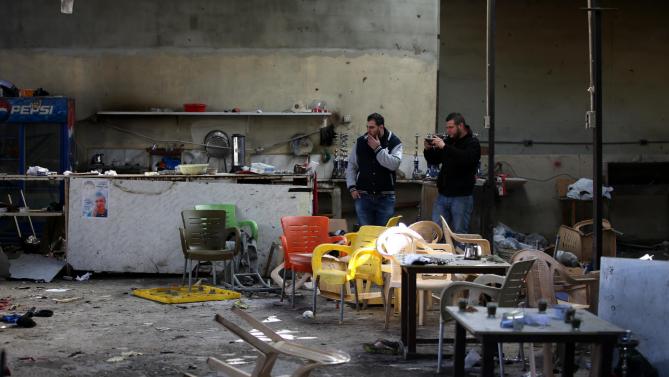
Two Lebanese men check a coffee shop that was damaged in a suicide bombing Saturday night, in a predominantly Alawite neighborhood of the northern port city of Tripoli, Lebanon, Sunday, Jan. 11, 2015
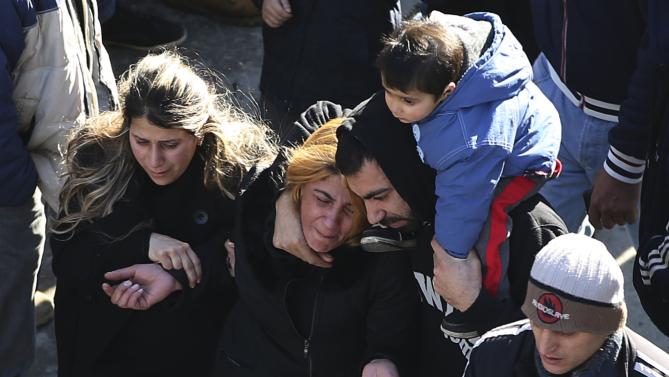
An Alawite woman, center, mourns over the death of her relative who was killed at a coffee shop where a suicide bombing struck it Saturday night, during their funeral procession in a predominantly Alawite neighborhood of the northern port city of Tripoli, Lebanon, Sunday, Jan. 11, 2015.
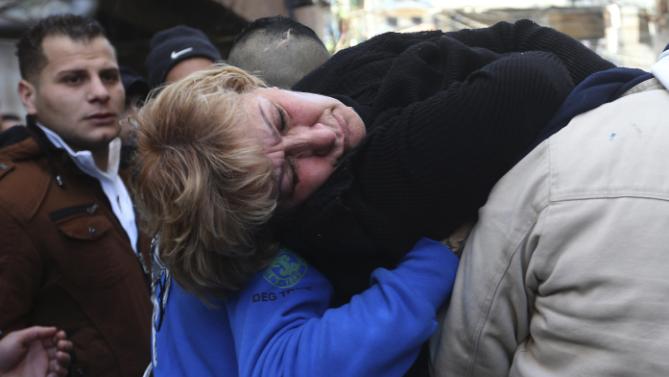
Men carry an Alawite woman after she falls during the funeral procession of her relative who was killed at a coffee shop where a suicide bombing struck it Saturday night, during their funeral procession in a predominantly Alawite neighborhood of the northern port city of Tripoli, Lebanon, Sunday, Jan. 11, 2015.
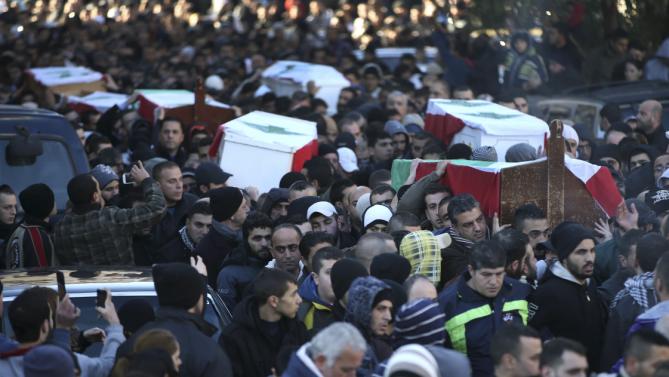
Alawite mourners carry coffins of those who were killed at a coffee shop where a suicide bombing struck it Saturday night, during their funeral procession in a predominantly Alawite neighborhood of the northern port city of Tripoli, Lebanon, Sunday, Jan. 11, 2015
By Tom Perry - Reuters
BEIRUT (Reuters) - A double suicide attack that killed eight people at a cafe in the Lebanese city of Tripoli was carried out by the Islamic State group, the interior minister said on Sunday, contradicting a claim of responsibility by the al Qaeda-linked Nusra Front.
Nohad Machnouk also said he expected more instability linked to the Syrian civil war that has been at the heart of repeated violence in Lebanon over the last four years.
The Nusra Front said on Saturday it was behind the bombing in the Alawite neighborhood of Jabal Mohsen - an attack Lebanese leaders said aimed to ignite communal strife in a predominantly Sunni Muslim city where long-standing sectarian tensions have been inflamed by the Syrian conflict.
Machnouk said investigators were questioning men who belonged to the same organization as the two bombers, both of whom have been identified as men from Tripoli.
"The initial information so far says that criminal state of Daesh was the one behind the bombing," Machnouk told journalists in Tripoli, using an pejorative Arabic acronym for the group that has seized wide areas of Syria and Iraq.
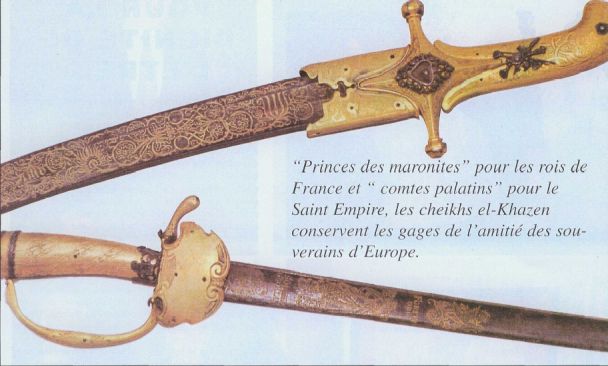
Population Movements to Keserwan - The Khazens and The Maans
ما جاء عن الثورة في المقاطعة الكسروانية
ثورة أهالي كسروان على المشايخ الخوازنة وأسبابها
Origins of the "Prince of Maronite" Title
Growing diversity: the Khazin sheiks and the clergy in the first decades of the 18th century
Historical Members:
Barbar Beik El Khazen [English]
Patriach Toubia Kaiss El Khazen(Biography & Life Part1 Part2) (Arabic)
Patriach Youssef Dargham El Khazen (Cont'd)
Cheikh Bishara Jafal El Khazen
Patriarch Youssef Raji El Khazen
The Martyrs Cheikh Philippe & Cheikh Farid El Khazen
Cheikh Nawfal El Khazen (Consul De France)
Cheikh Hossun El Khazen (Consul De France)
Cheikh Abou-Nawfal El Khazen (Consul De France)
Cheikh Francis Abee Nader & his son Yousef
Cheikh Abou-Kanso El Khazen (Consul De France)
Cheikh Abou Nader El Khazen
Cheikh Chafic El Khazen
Cheikh Keserwan El Khazen
Cheikh Serhal El Khazen [English]
Cheikh Rafiq El Khazen [English]
Cheikh Hanna El Khazen
Cheikha Arzi El Khazen
Marie El Khazen