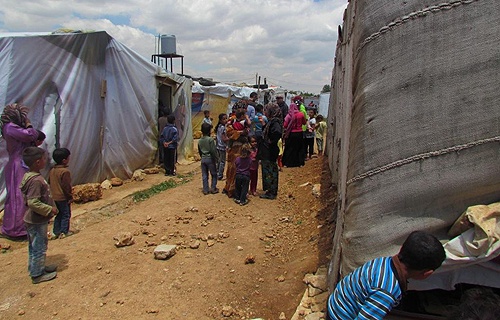
.- As today marks the third anniversary of uprisings which led to civil war in Syria, Catholic leaders there and in neighboring Lebanon have reflected on its devastating effect on both countries. “It creates a huge impact on (the Lebanese) in all aspects, and in terms of security issues…it's had a huge impact,” Wadih Daher, assistant to Archbishop Issam John Darwish, told CNA in a March 13 interview. Daher spoke on behalf of the bishop, who leads the Melkite Greek Archeparchy of Furzol, Zahle and the Bekaa, on Lebanon's border with Syria.
Conflict began March 15, 2011, when demonstrations protesting the rule of president Bashar al-Assad and his Ba'ath Party sprang up nationwide. The following month, the Syrian army began to deploy to put down the uprisings, firing on protesters. Now, three years on, an estimated 140,000 persons have died in what has become a civil war. The U.N. quit counting the bodies last July, leaving its estimates at 100,000, saying it could no longer verify its sources.
Because of the civil war, half of Syria's population have fled their homes. 6.5 million Syrians are believed to have been internally displaced by the war, and there are 2.5 million Syrian refugees living in nearby countries, most of them in Lebanon, Turkey, and Jordan. Of those 2.5 million, more than 1 million are in Lebanon, a country whose population, three years ago, was slightly over 4 million. Now, one in every five residents of Lebanon is a refugee from Syria.
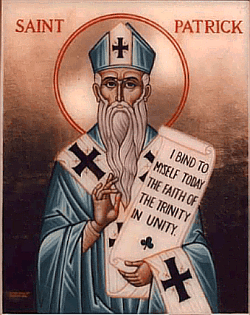
Saint Patrick is a saint of the Catholic Church, and his holy day is the day of his death, and subsequent entrance to heaven, rather than the day of his physical birth. After spending most of his adult life converting the pagans of Ireland to Christianity, St. Patrick went to his reward on March 17, 461 AD.
9. St. Patrick wasn't Irish.
St. Patrick wasn't Irish, and he wasn't born in Ireland. Patrick's parents were Roman citizens living in modern-day England, or more precisely in Scotland or Wales (scholars cannot agree on which). He was born in 385 AD. By that time, most Romans were Christians and the Christian religion was spreading rapidly across Europe.
Lebanon slipped into the 10th place among 11 Arab countries in terms of macroeconomic risks in 2014, Cairo-based investment bank EFG …
Lebanon’s new government agreed to a compromise policy statement on Friday that fell short of explicitly enshrining the militant group Hezbollah’s …
Population Movements to Keserwan - The Khazens and The Maans
ما جاء عن الثورة في المقاطعة الكسروانية
ثورة أهالي كسروان على المشايخ الخوازنة وأسبابها
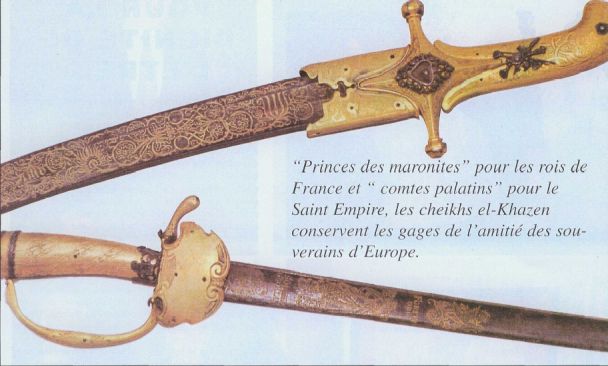
Origins of the "Prince of Maronite" Title
Growing diversity: the Khazin sheiks and the clergy in the first decades of the 18th century
Historical Members:
Barbar Beik El Khazen [English]
Patriach Toubia Kaiss El Khazen(Biography & Life Part1 Part2) (Arabic)
Patriach Youssef Dargham El Khazen (Cont'd)
Cheikh Bishara Jafal El Khazen
Patriarch Youssef Raji El Khazen
The Martyrs Cheikh Philippe & Cheikh Farid El Khazen
Cheikh Nawfal El Khazen (Consul De France)
Cheikh Hossun El Khazen (Consul De France)
Cheikh Abou-Nawfal El Khazen (Consul De France)
Cheikh Francis Abee Nader & his son Yousef
Cheikh Abou-Kanso El Khazen (Consul De France)
Cheikh Abou Nader El Khazen
Cheikh Chafic El Khazen
Cheikh Keserwan El Khazen
Cheikh Serhal El Khazen [English]
Cheikh Rafiq El Khazen [English]
Cheikh Hanna El Khazen
Cheikha Arzi El Khazen
Marie El Khazen