A series of bombings have rocked Beirut in the past couple of weeks, killing dozens and injuring many more, and now …
TRIPOLI, Lebanon – It took Father Ibrahim Surouj around half an hour to enter his bookstore on Tuesday morning. The recent fire …
By ANNE BARNARD, New York Times.
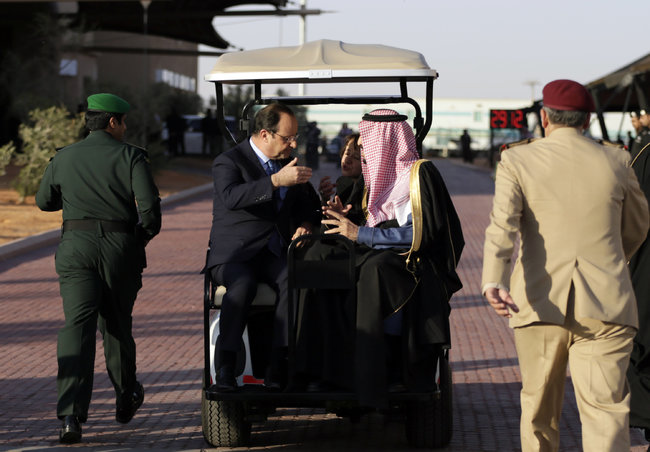
BEIRUT, Lebanon — If a wealthy patron were all the Lebanese Army needed to counter the Shiite militant group Hezbollah as the dominant force in the country, the recent $3 billion grant from Saudi Arabia might make a decisive difference in the country’s complex political landscape.
But the Saudi aid package — nearly twice Lebanon’s $1.7 billion annual defense budget — is earmarked to buy French arms and is unlikely to give the army what it needs most, say supporters and opponents of Hezbollah here. And even if it does, they say, it will take years to make an impact.
And while the Saudis are clearly alarmed at Hezbollah’s staying power and its intervention in Syria’s civil war, analysts say the gift announced last week was intended as much to send a message to the United States as to shift the military balance.
Yezid Sayigh, a scholar of Arab militaries at the Carnegie Middle East Center in Beirut, said the Saudis were declaring a “tactical divorce” from the Obama administration over their frustrations with what they see as America’s indecisiveness on Syria and its attempts at reconciliation with Iran, Saudi Arabia’s regional rival and Hezbollah’s patron.
“They’re on the warpath, angry, and that doesn’t make for good policy,” Mr. Sayigh said.
Analysts on both sides agree that if Lebanon’s government, under Saudi pressure, pushed the army to confront Hezbollah, it would risk fracturing the force along political and sectarian lines and destroying the closest thing the country has to a broad-based national institution. Mr. Sayigh said that not even the United States had tried to link aid to Lebanon’s army with action against Hezbollah.
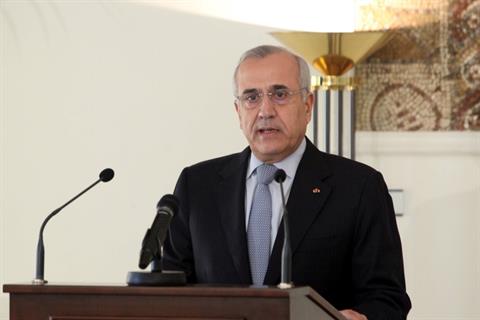
Daily Star Lebanon - BEIRUT: President Michel Sleiman hinted Monday he could move ahead with the formation of a fait accompli Cabinet if a consensus over a new government is not reached soon, in a challenge to Hezbollah which insists on a national unity government. “In case there isn’t a consensus on a [national] unity Cabinet, do we stay without a government? Would a consensus on a government necessarily reflect national consensus?” Sleiman asked. “How long can a president keep on rejecting Cabinet formulas and how long can the delay go on?” the president asked.
Sleiman hinted that non-political partisans should be given a chance to form the next government in the country. “Are not the Lebanese who do not belong to any [political group] allowed to take part in reviving the country? Do such people harm the consensus in Lebanon?” he asked.
However, the president said the political rivals still had a chance to reach a consensus over the next Cabinet.
“Anyway, the door for consultations is still open and political rivals still have a chance to reach a unifying [Cabinet] formula with Prime Minister-designate Tammam Salam,” he said.
Lebanon’s Cabinet formation process has been stalled for over nine months due to conditions and counter conditions set by the March 8 and March 14 rivals groups.




Population Movements to Keserwan - The Khazens and The Maans
ما جاء عن الثورة في المقاطعة الكسروانية
ثورة أهالي كسروان على المشايخ الخوازنة وأسبابها
Origins of the "Prince of Maronite" Title
Growing diversity: the Khazin sheiks and the clergy in the first decades of the 18th century
Historical Members:
Barbar Beik El Khazen [English]
Patriach Toubia Kaiss El Khazen(Biography & Life Part1 Part2) (Arabic)
Patriach Youssef Dargham El Khazen (Cont'd)
Cheikh Bishara Jafal El Khazen
Patriarch Youssef Raji El Khazen
The Martyrs Cheikh Philippe & Cheikh Farid El Khazen
Cheikh Nawfal El Khazen (Consul De France)
Cheikh Hossun El Khazen (Consul De France)
Cheikh Abou-Nawfal El Khazen (Consul De France)
Cheikh Francis Abee Nader & his son Yousef
Cheikh Abou-Kanso El Khazen (Consul De France)
Cheikh Abou Nader El Khazen
Cheikh Chafic El Khazen
Cheikh Keserwan El Khazen
Cheikh Serhal El Khazen [English]
Cheikh Rafiq El Khazen [English]
Cheikh Hanna El Khazen
Cheikha Arzi El Khazen
Marie El Khazen