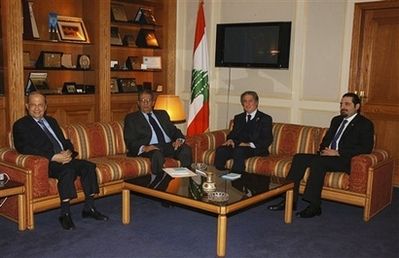
 Top leaders from Lebanon's parliament majority and the opposition met for the first time in three months Thursday as part of efforts by the head of the Arab League to end Lebanon's 15-month-old political crisis. Majority leader Saad Hariri and opposition leader Michel Aoun met Thursday at the parliament building in downtown Beirut. They were joined by Arab League Secretary-General Amr Moussa and former Lebanese President Amin Gemayel. Hariri and Aoun held several meetings last year, including one in Paris in October. The opposition recently named Aoun as its representative in any meetings with the majority - a move that was rejected by the anti-syrian group for weeks.
The two leaders met in Parliament Thursday afternoon in the presence of Phalange Party president Amine Gemayel and Moussa himself. "I am optimistic. Holding the meeting is a success. There is still room for agreement, but there are some issues that need to be discussed extensively," Moussa said after the meeting which lasted for almost three hours. "We will meet again when I return from Damascus," he added. Moussa is expected in Damascus on Friday. The Arab chief league refused to discuss the details of the meeting, saying "the crisis will not be solved on newspaper pages," adding: "I will not speak in detail now. The crisis is very complicated and requires more discussions."
Asked about differences over interpreting the second item of the Arab initiative, Moussa said "the second item, relating to the formation of a unity government, is clear. It denies the opposition veto power, while denying the ruling coalition absolute majority in the Cabinet." Asked about his view on internationalizing the Lebanese crisis, Moussa said he preferred "solving the Lebanese crisis on the Arab level."
The three-point Arab plan adopted by Arab foreign ministers during a meeting in Cairo earlier this month calls for the election of the commander of the Lebanese Armed Forces (LAF) General Michel Suleiman as president, the formation of a national unity government, and the drafting of a new electoral law for the 2009 parliamentary elections. The ruling coalition and the opposition are at odds over the interpretation of the Arab plan, namely the item on the formation of a unity government. The plan said the government should be formed in such a way that prevents any party from imposing or blocking Cabinet decisions.
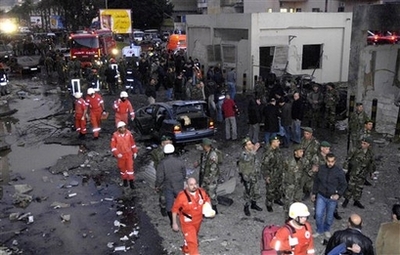 The U.S. State Department says a bomb blast that struck a U.S. Embassy vehicle in Lebanon's capital, Beirut, has killed four people. Lebanese security officials put the death toll lower, at four. Speaking in the Saudi capital, Riyadh, Secretary of State Condoleezza Rice expressed outrage at the blast and called it a terrorist attack. She said the U.S. will not be deterred in its efforts to help the Lebanese people and the democratic process in that country.
State Department spokesman Sean McCormack says no American diplomats were in the U.S. Embassy vehicle at the time of the blast, but that the Lebanese driver was slightly injured. At least 16 people were wounded in the blast. McCormack says an American was among those injured but was not in the U.S. embassy car. There has been no claim of responsibility. Television footage showed damaged cars on streets in a mainly Christian suburb of north Beirut (Qarantina), and smoke rising over the city.
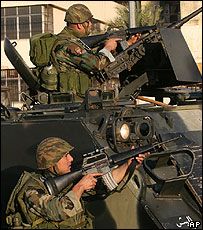 Nicholas Blanford in Beirut , Wearing tatty green Israeli army webbing over his black leather jacket, Walid shoulders an M16 rifle and squints down the barrel.
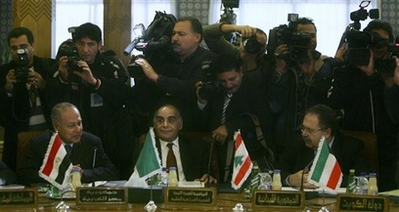 Lebanon's politicians on Sunday welcomed the decision by Arab nations, including Syria, to back the head of Lebanon's army as the next president, expressing hope the move would help end the country's political crisis. Arab foreign ministers issued the endorsement of Gen. Michel Suleiman on Saturday after meeting in the Egyptian capital of Cairo. The opposition requested that it receive representation in the governement porportionally to the distrubution of the parliamentr before allowing Suleiman to be elected.
Parliament Speaker Nabih Berri, who is allied with the opposition, thanked the Arab ministers for their call, saying "we hope that it will be translated on the ground to ward off any strife and end the current crisis.""I tell the Lebanese that we can start with the Arab resolution to ... confirm our unity," Berri added in a statement released by his office.
Saad Hariri, head of the parliamentary majority, echoed Berri's endorsement, describing the resolution as a "historic stance that expresses the real Arab will in rejecting all kinds of pressure on our country." "It also gives the Lebanese people moral, political and national support that will enable them, God willing, to overcome the current period," he added.
The ruling coalition has accused the opposition of obstructing the election of a new president under orders from Syria and Iran. In turn, the opposition has claimed pro-government groups in the parliament majority follow U.S. policies.
Population Movements to Keserwan - The Khazens and The Maans
ما جاء عن الثورة في المقاطعة الكسروانية
ثورة أهالي كسروان على المشايخ الخوازنة وأسبابها
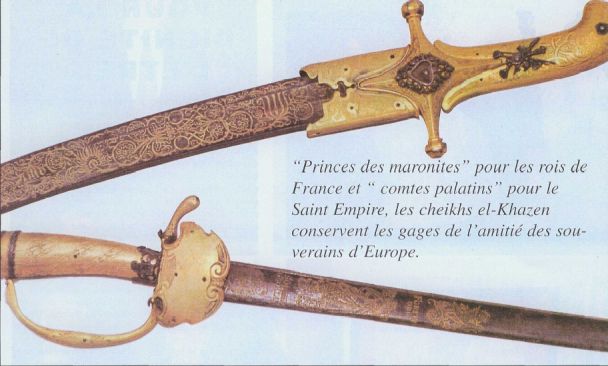
Origins of the "Prince of Maronite" Title
Growing diversity: the Khazin sheiks and the clergy in the first decades of the 18th century
Historical Members:
Barbar Beik El Khazen [English]
Patriach Toubia Kaiss El Khazen(Biography & Life Part1 Part2) (Arabic)
Patriach Youssef Dargham El Khazen (Cont'd)
Cheikh Bishara Jafal El Khazen
Patriarch Youssef Raji El Khazen
The Martyrs Cheikh Philippe & Cheikh Farid El Khazen
Cheikh Nawfal El Khazen (Consul De France)
Cheikh Hossun El Khazen (Consul De France)
Cheikh Abou-Nawfal El Khazen (Consul De France)
Cheikh Francis Abee Nader & his son Yousef
Cheikh Abou-Kanso El Khazen (Consul De France)
Cheikh Abou Nader El Khazen
Cheikh Chafic El Khazen
Cheikh Keserwan El Khazen
Cheikh Serhal El Khazen [English]
Cheikh Rafiq El Khazen [English]
Cheikh Hanna El Khazen
Cheikha Arzi El Khazen
Marie El Khazen