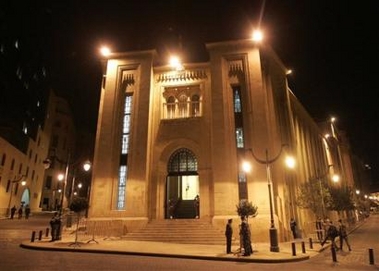
 New York, 3 March (AKI) - United Nations secretary general Kofi Annan has welcomed the national dialogue officially initiated by the Lebanese speaker of parliament on issues critical for the country, expressing hope that it will contribute to political stability there. Last month, the UN Security Council said "a broad national dialogue" was needed in Lebanon to make more progress in satisfying its resolution 1559, which called for an end to foreign influence in Lebanon.
While the withdrawal of Syrian forces and the holding of credible parliamentary elections in May and June 2005 had been accomplished, the security council
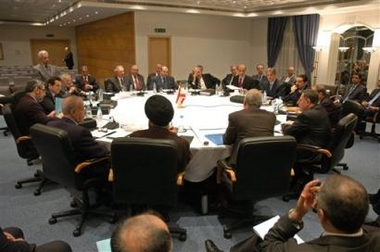 By Alaa Shahine, BEIRUT (Reuters) - Lebanon's rival politicians met on Thursday for their broadest gathering since the 1975-90 civil war to tackle a political crisis over the role of Syria and its Lebanese allies that has paralyzed the government. The fate of President Emile Lahoud, who is under growing pressure to resign, will be among the most divisive issues on the table at so-called national dialogue talks that are expected to last up to a week.
Also on the agenda is a U.N. resolution demanding Lebanon's Hizbollah to disarm -- a perennially thorny issue among those Lebanese who believe the Shi'ite group should stick to politics and those who see it as resistance against Israel. While not attending himself, Lahoud welcomed the talks but warned in the strongest terms against foreign pressure to disarm Hizbollah, highlighting just how split the country is."Calls by foreign powers to disarm the resistance would only serve Israel's interests and weaken Lebanon," Lahoud said in a statement. "Any attempt on their part to disarm the resistance by force would certainly lead to another civil war." TO VIEW MORE PICTURES PLS CLICK "READ MORE"
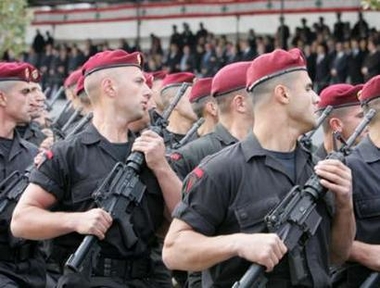 By Christine Spolar, CAIRO -- U.S. military officials have been quietly assessing Lebanon's military capability, making a general inventory of its army, air and naval forces, and suggesting reforms following a request last year from top Lebanese government officials. Brig. Gen. Mark Kimmitt, a top military planner, confirmed the review this week but would not elaborate on recommended reforms. The review was initiated after a request was made directly through the U.S. Embassy in Beirut, military and political sources said, and is part of a continuing process to help democratic forces in Lebanon.
"We're looking for stability," said Kimmitt, deputy director for strategy and plans at U.S. Central Command. "An unstable Lebanon is a danger to itself, to its immediate neighbors and the region. This is part of our overall strategy." About a dozen U.S. military officers traveled to Beirut in November and December for the review, military sources said, and visited bases to produce three reports. The inventory was described as a comprehensive assessment of the condition of U.S.-made equipment in the Lebanon armed forces.
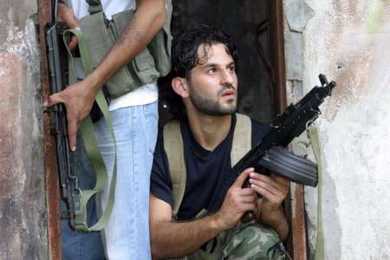 BEIRUT, 1 March (IRIN) - Young Lebanese, Palestinians and Sudanese want tougher gun control regulations, a survey by a group of NGOs revealed. The findings of the study, which was conducted over the last six months by the Middle East North Africa Network on Small Arms (MENSAA), an umbrella group of Arab NGOs concerned with the misuse and proliferation of illicit small arms and light weapons, were released on Tuesday in Beirut.




Population Movements to Keserwan - The Khazens and The Maans
ما جاء عن الثورة في المقاطعة الكسروانية
ثورة أهالي كسروان على المشايخ الخوازنة وأسبابها
Origins of the "Prince of Maronite" Title
Growing diversity: the Khazin sheiks and the clergy in the first decades of the 18th century
Historical Members:
Barbar Beik El Khazen [English]
Patriach Toubia Kaiss El Khazen(Biography & Life Part1 Part2) (Arabic)
Patriach Youssef Dargham El Khazen (Cont'd)
Cheikh Bishara Jafal El Khazen
Patriarch Youssef Raji El Khazen
The Martyrs Cheikh Philippe & Cheikh Farid El Khazen
Cheikh Nawfal El Khazen (Consul De France)
Cheikh Hossun El Khazen (Consul De France)
Cheikh Abou-Nawfal El Khazen (Consul De France)
Cheikh Francis Abee Nader & his son Yousef
Cheikh Abou-Kanso El Khazen (Consul De France)
Cheikh Abou Nader El Khazen
Cheikh Chafic El Khazen
Cheikh Keserwan El Khazen
Cheikh Serhal El Khazen [English]
Cheikh Rafiq El Khazen [English]
Cheikh Hanna El Khazen
Cheikha Arzi El Khazen
Marie El Khazen