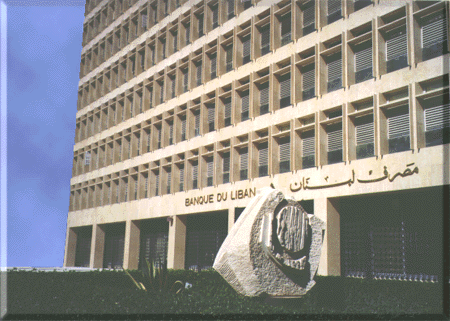
 BEIRUT -Once a sleepy backwater where a whole day could pass without a single share changing hands, the Beirut bourse has shaken off political turmoil to approach new highs, as petrodollars flow in from the booming Arab Gulf.Beirut
BEIRUT, Dec 12 (Reuters) - Five pro-Syrian Lebanese Shi'ite Muslim ministers and an ally of the president said on Monday they were suspending participation in the cabinet after it voted to call for a U.N. inquiry into a series of political killings.
Prime Minister Fouad Siniora had called for the urgent session hours after the killing of anti-Syrian lawmaker and newspaper magnate Gebran Tueni in a car bomb in Beirut. "This is not a resignation from the government but a suspension of membership in the cabinet while awaiting a decision from our political leadership," Hizbollah Energy Minister Mohammed Fneish told reporters. "We object to the principle of internationalising all Lebanese files ... and abandoning (Lebanon's) sovereignty," he added. BEIRUT, Dec 13 (Reuters) - It has become all too familiar in Lebanon. An anti-Syrian politician or journalist is killed, condemnations pour in from friends and foes alike, the funeral attracts thousands, while officials urge unity. Yet the longer a U.N. inquiry into the murder of ex-Prime Minister Rafik al-Hariri drags on, the more every assassination threatens to rekindle sectarian divisions between the mostly Shi'ite Muslim supporters of Damascus and its Christian, Sunni and Druze opponents.
On Monday, Gebran Tueni, a newspaper magnate and staunch critic of Syria's erstwhile domination of Lebanon, became the third Lebanese to be killed in a car bombing since the truck bombing that killed Hariri and 22 others on Feb. 14.Three others, including Tueni's uncle the Druze Telecoms Minister Marwan Hamadeh, have barely escaped with their lives.
All of those killed since Hariri have been Christians who helped lead popular protests and lobby international pressure for Syria to withdraw its troops from Lebanon in April.
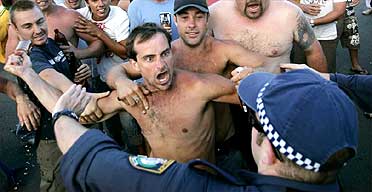 SYDNEY, Australia -- Australian Prime Minister John Howard on Monday condemned a day and night of race riots in Sydney's beachside suburbs, but said he did not believe Australian society had an undercurrent of racism. Howard was speaking as police formed a strike force to track down the instigators of the running battles that involved drunken mobs of white men yelling racial slurs, young men of Lebanese descent and hundreds of police.
The fighting left 31 people injured, including police and paramedics. One was hospitalized after being stabbed in the back by a man police said was Middle eastern in appearance. There were 16 arrests. "What we have seen yesterday is something I thought I would never see in Australia, and perhaps we have not seen in Australia in any of our lifetimes, and that is a mass call to violence based on race," Community Relations Commission chairman Stepan Kerkyasharian told Sky News.Police chief Ken Moroney called the rioting among "the worst violence that I have ever seen in my policing service of 40 years."




Population Movements to Keserwan - The Khazens and The Maans
ما جاء عن الثورة في المقاطعة الكسروانية
ثورة أهالي كسروان على المشايخ الخوازنة وأسبابها
Origins of the "Prince of Maronite" Title
Growing diversity: the Khazin sheiks and the clergy in the first decades of the 18th century
Historical Members:
Barbar Beik El Khazen [English]
Patriach Toubia Kaiss El Khazen(Biography & Life Part1 Part2) (Arabic)
Patriach Youssef Dargham El Khazen (Cont'd)
Cheikh Bishara Jafal El Khazen
Patriarch Youssef Raji El Khazen
The Martyrs Cheikh Philippe & Cheikh Farid El Khazen
Cheikh Nawfal El Khazen (Consul De France)
Cheikh Hossun El Khazen (Consul De France)
Cheikh Abou-Nawfal El Khazen (Consul De France)
Cheikh Francis Abee Nader & his son Yousef
Cheikh Abou-Kanso El Khazen (Consul De France)
Cheikh Abou Nader El Khazen
Cheikh Chafic El Khazen
Cheikh Keserwan El Khazen
Cheikh Serhal El Khazen [English]
Cheikh Rafiq El Khazen [English]
Cheikh Hanna El Khazen
Cheikha Arzi El Khazen
Marie El Khazen