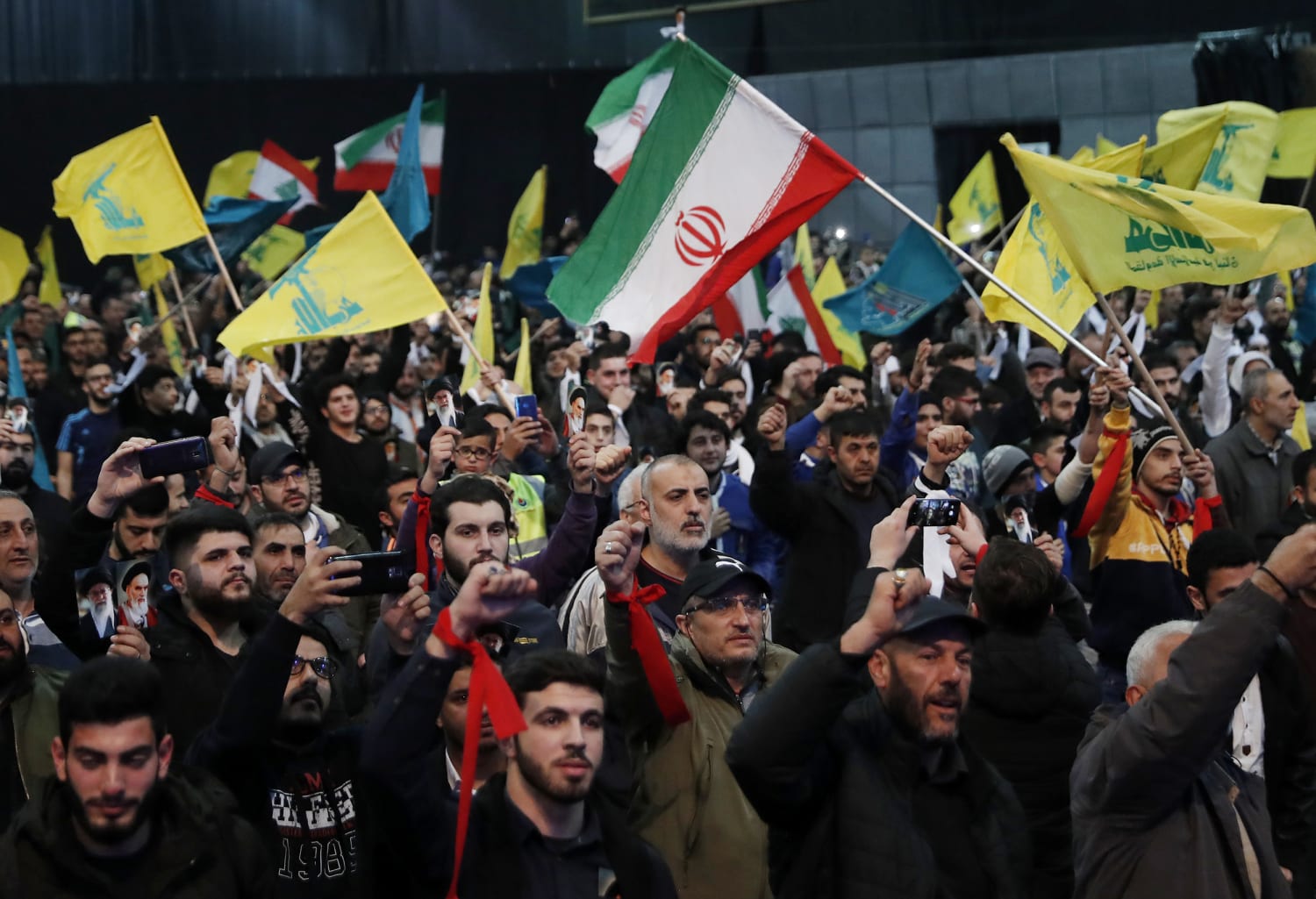
by brookings.edu -- Lebanese Hezbollah’s role as an Iranian proxy and its provision of significant assistance to its allies in Syria, Yemen, and Iraq has been an area of justified focus for policymakers in many capitals but the organization’s evolving role inside Lebanon merits equal attention. While it is customary to characterize Hezbollah as a “state within a state,” it is more accurate now to define it as a “state within a non-state,” in view of the sheer inability of the Lebanese government to deliver even the most basic services to a desperate population plunged into its worst economic crisis in over a century. In the past, Hezbollah was able to distinguish itself from Lebanon’s ruling circles, capitalizing on its nonstate status and role as the “resistance” to Israel. However, in recent years, Hezbollah has become ever more entangled with the country’s kleptocratic ruling elites and status quo defenders, an association that has alienated many of their compatriots. It is this mutation in Hezbollah’s role which poses risks for the organization and opportunities to support efforts aimed at bolstering institution building and the return of the state as well as the injection into Lebanese politics of more independent and technocratic individuals via national elections organized for the spring of next year.
Iran’s investment in Hezbollah proved successful for many years after Tehran, with the assistance of Damascus, oversaw the establishment of the organization in 1982. It was exempted from the Taif arrangements in 1989 which forced the demobilization of Lebanon’s other sectarian militias and therefore benefited greatly from this “last man standing” status. Hezbollah served a useful purpose as the tip of the Iranian spear in the Levant against Israel, with its most celebrated achievement being the Israeli withdrawal from southern Lebanon in 2000, for which Hezbollah took full credit. Lebanese citizens and many in the Arab world rallied around Hezbollah during its destructive 2006 war with Israel. From that time until today, the south has remained relatively quiet, with an uneasy unofficial truce established between Israel and Hezbollah.
By FRANCESCO BONGARRÀ — arabnews.com — ROME: Lebanese Prime Minister Najib Mikati will visit the Vatican on Wednesday to meet the Pope, …
المشكلة الاقتصادية ليست تقنية بل هي سياسية والعلة الاساسية في الفساد الاكبر المتمثل بخرق الدستور والشغور الرئاسي المتكرر وامتداد فترات تصريف …

by thearabweekly.com -- KUWAIT CITY--Kuwait continues to up its punitive measures against Lebanese nationals on its soil in a way that shows that this escalation is directly backed by Saudi Arabia. The kingdom, informed sources told The Arab Weekly, wants the Lebanese political class to realise that their coordination with the Shia Hezbollah movement will carry a heavy cost. Saudi Arabia, the sources added, will increase pressure and is ready to deal painful blows in its diplomatic crisis with Lebanon, starting with punitive measures taken by Kuwait, which hosts a Lebanese community of more than 50,000. Kuwaiti newspapers Al-Qabas and Al-Rai reported on Thursday that prosecutors in the country have detained 18 people suspected of financing Lebanon’s Hezbollah group. Al-Qabas said the prosecutor ordered the detainees to be held at the central prison for 21 days while investigations continue into alleged “membership in a prohibited party, money-laundering and spying.”
Local media reports also said that Kuwait had asked 100 residents and their families to leave the country because of their links with Hezbollah. Most of these asked to leave, the reports noted, are of Lebanese nationality, with some of them hailing from Iran and Iraq. Informed Kuwaiti sources also said that the targeted group is limited, with all individuals known to the Kuwaiti security apparatus. The next move, however, will include another list of those linked to Hezbollah’s support networks, based on discoveries by Kuwaiti security probes carried out in full coordination with the Gulf security services, particularly those of Saudi Arabia. A Kuwaiti source told The Arab Weekly that the next phase will be marked by stiffer restrictions on the activities of Hezbollah sympathisers. The source added that Kuwait is serious about dismantling the support networks of the Lebanese Shia group, whether in the form of direct donations or funds transferred by charities that succeeded in deceiving Kuwaitis, especially from the Shia sect, using religious and humanitarian campaigning to cover up Hezbollah’s secret agenda.




Population Movements to Keserwan - The Khazens and The Maans
ما جاء عن الثورة في المقاطعة الكسروانية
ثورة أهالي كسروان على المشايخ الخوازنة وأسبابها
Origins of the "Prince of Maronite" Title
Growing diversity: the Khazin sheiks and the clergy in the first decades of the 18th century
Historical Members:
Barbar Beik El Khazen [English]
Patriach Toubia Kaiss El Khazen(Biography & Life Part1 Part2) (Arabic)
Patriach Youssef Dargham El Khazen (Cont'd)
Cheikh Bishara Jafal El Khazen
Patriarch Youssef Raji El Khazen
The Martyrs Cheikh Philippe & Cheikh Farid El Khazen
Cheikh Nawfal El Khazen (Consul De France)
Cheikh Hossun El Khazen (Consul De France)
Cheikh Abou-Nawfal El Khazen (Consul De France)
Cheikh Francis Abee Nader & his son Yousef
Cheikh Abou-Kanso El Khazen (Consul De France)
Cheikh Abou Nader El Khazen
Cheikh Chafic El Khazen
Cheikh Keserwan El Khazen
Cheikh Serhal El Khazen [English]
Cheikh Rafiq El Khazen [English]
Cheikh Hanna El Khazen
Cheikha Arzi El Khazen
Marie El Khazen