
By By David Leonhardt and Sanam Yar -- NYT - Weekly grocery bills can equal months of a typical family’s income. Banks are refusing to let people withdraw money. Basic medicines are often unavailable, and gas-station lines can last hours. Every day, many homes lack electricity. Lebanon is enduring a humanitarian catastrophe created by a financial meltdown. The World Bank has called it one of the worst financial crises in centuries. “It really feels like the country is melting down,” Ben Hubbard, a Times reporter who has spent much of the past decade in Lebanon, told us. “People have watched an entire way of living disappear.” It’s a shocking turnaround for a country that was one of the Middle East’s economic success stories in the 1990s. Given the scale of the suffering and the modest media attention it has received while the rest of the world remains focused on Covid-19, we are devoting today’s newsletter to explaining what has happened in Lebanon, with Ben’s help.
How did this happen?

By US Embassy in Lebanon -- Under Secretary Nuland: Good afternoon, everyone, thank you for coming. I want to start today by expressing condolences on behalf of the American people for the tragic loss of life this morning outside the Palace of Justice. We join the Lebanese authorities in their call for calm and de-escalation of tensions. The health and future of Lebanon’s democracy depends on the ability of its citizens to address the difficult issues ahead for their country — peacefully, and through dialogue, and with confidence in the rule of law.
We came to Lebanon today at the request of President Biden and Secretaries Blinken and Yellen with an interagency delegation that includes the State Department and the Treasury, in order to meet with government leaders and civil society just weeks after the formation of a new government, in order to express our support for the aspirations of the Lebanese people for security, for economic stability and for transparent and accountable governance. Terrorists and thieves have robbed them of hope for far too long. After years of suffering, all Lebanese deserve better. The task ahead is daunting, but we stand with Lebanon as it does the hard work to restore economic stability and basic services, including reliable electricity, health care, and education to get this country on a sustainable path and back to prosperity.
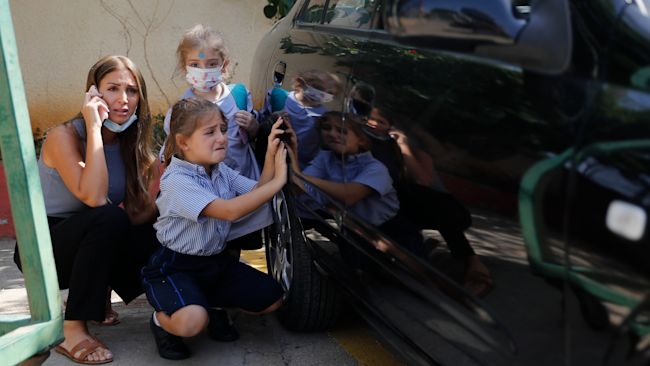
A Lebanese mother with her children hide behind a car from sniper fire outside a school, in the Christian neighborhood of Ain el-Remaneh.Credit: AP
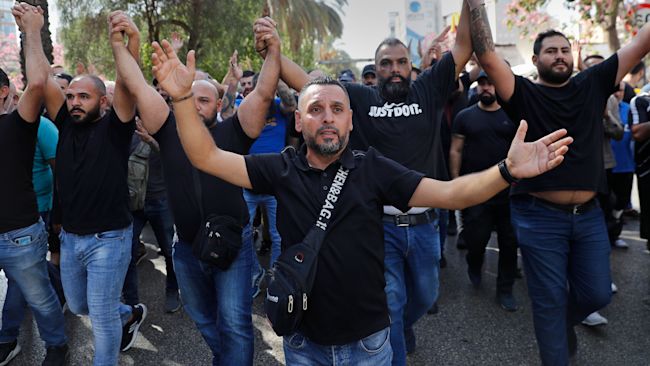
Supporters of the Shiite Hezbollah and Amal groups chant slogans against Judge Tarek Bitar.Credit: AP
by itv.com -- At least six people have been killed and dozens more injured by gunfire in the Lebanese capital, Beirut. The deaths occurred as armed clashes broke out during a protest demanding an end to a judicial investigation into last year’s massive blast in the city’s port. The demonstration was led by the Shia Muslim groups Hezbollah and Amal, who protested outside the Justice Palace to demand the removal of Judge Tarek Bitar. Lebanon’s interior minister, Bassam Mawlawi, said many of those injured were shot by snipers from buildings. He described the events as "a very dangerous sign". The protest also saw exchanges of fire involving, pistols, rifles and rocket-propelled grenades. Amid the chaos, four projectiles fell near a private French school, causing panic, a security official said. The students huddled in the central corridors with the windows open to avoid major impact.
لا نعيشُ في لبنان تداولَ سلطةٍ بين موالاةٍ ومعارضَةٍ لكي يَقتنعَ الشعبُ بحكمِ الأكثريّةِ. الحاصِلُ منذ سنواتٍ هو سيطرةُ تحالفٍ سياسيٍّ وطائفيٍّ وعسكريٍّ على الدولةِ بالقوّةِ والترهيبِ، أو ببِدعةِ "الديمقراطيّةِ التوافقيّةِ"، أو بتسوياتِ "لا حولَ ولا قوة"، أو بتعطيلِ الاستحقاقاتِ الديمقراطيّةِ. وليتَ سيطرةَ هذا التحالفِ على السلطةِ والشرعيّةِ تَهدِفُ إلى أن يَحكُمَ على أساسِ دستورِ البلادِ وتقاليدِها وأعرافِها؛ فغايةُ السيطرةِ هي نَقضُ ما هو قائمٌ وإقامةُ ما هو مُنافٍ مفهومَ لبنان.
لذلك، وما لم نُقرِّر المواجهةَ الوطنيّةَ، يُخشى أن يكونَ الاستحقاقُ الانتخابيُّ المقبلُ، أيًّا تَكُن نتائجُه، من دونِ مفعولٍ تَغييريّ. فالقِوى المهيمِنةُ ــــ حزبُ الله وحلفاؤه ـــ ستتَخطّى، كعادتِها، نتائجَ الانتخاباتِ النيابيّةِ وستَلتَفُّ عليها، إنْ لم تكن لمصلحتِها، بألفِ طريقةٍ وطريقة ٍكما فَعلت إِثْرَ انتخاباتِ 2005 و 2009 و 2018. مَن لا يَتذكّرُ كيفَ ضَغطَت الأقليّةُ النيابيّةُ لإعادةِ انتخابِ نبيه برّي رئيسًا للمجلسِ النيابي، وأخّرَت تشكيلَ الحكومات، وفَرضَت حكوماتٍ توافقيّةً، وأغْلقت البرلمان، وأحْدثَت شُغورًا رئاسيًّا حتى كان لها ما تريد، إلخ... إنّه جُبنُ بعضِ قِوى 14 أذار.




Population Movements to Keserwan - The Khazens and The Maans
ما جاء عن الثورة في المقاطعة الكسروانية
ثورة أهالي كسروان على المشايخ الخوازنة وأسبابها
Origins of the "Prince of Maronite" Title
Growing diversity: the Khazin sheiks and the clergy in the first decades of the 18th century
Historical Members:
Barbar Beik El Khazen [English]
Patriach Toubia Kaiss El Khazen(Biography & Life Part1 Part2) (Arabic)
Patriach Youssef Dargham El Khazen (Cont'd)
Cheikh Bishara Jafal El Khazen
Patriarch Youssef Raji El Khazen
The Martyrs Cheikh Philippe & Cheikh Farid El Khazen
Cheikh Nawfal El Khazen (Consul De France)
Cheikh Hossun El Khazen (Consul De France)
Cheikh Abou-Nawfal El Khazen (Consul De France)
Cheikh Francis Abee Nader & his son Yousef
Cheikh Abou-Kanso El Khazen (Consul De France)
Cheikh Abou Nader El Khazen
Cheikh Chafic El Khazen
Cheikh Keserwan El Khazen
Cheikh Serhal El Khazen [English]
Cheikh Rafiq El Khazen [English]
Cheikh Hanna El Khazen
Cheikha Arzi El Khazen
Marie El Khazen