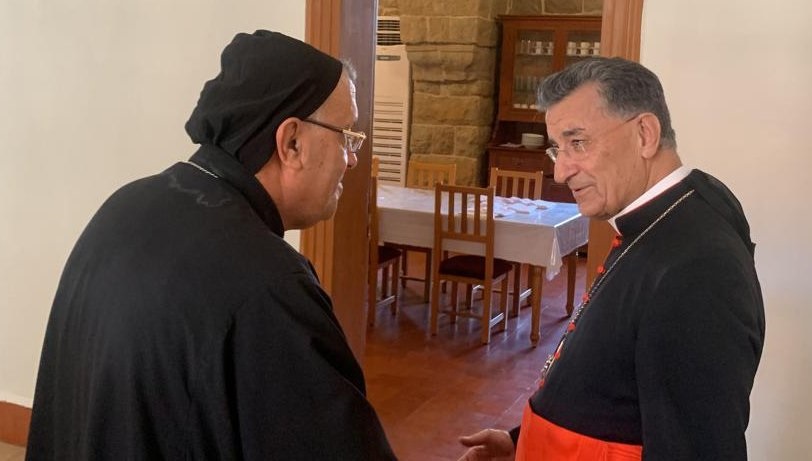
by Vanessa Boumelhem -- catholicweekly.com -- Some of my earliest memories are of Our Lady of Lebanon in Harris Park, where I would attend 9:30am English-language Mass with my family every Sunday, Fersan Al Adra (parish ministry for school aged children which translates to “Knights of Mary”) every Saturday, and visit for a quick prayer every morning before school, where staff and students were predominantly Maronite. Having grown up in this bubble of mine, stepping out of my Maronite world and into the real world was a stark change—one I hadn’t expected, despite all the warnings I received. Going into university, it took only days for me to realise just how much my Maronite identity had made me who I am, and how important it is to me. But what is Maronite identity? I argue that the answer is entirely subjective.
In Australia, I am only one of thousands of Maronites who have each had unique experiences making them into the people they are. It is difficult to define Maronite identity when it is something that runs deep, something our grandparents passed onto our parents—which has now been given to us and will continue to live on. Maronite identity is embedded into the core of each one of us, and is sometimes as simple as the actions we do almost absentmindedly. My Maronite identity is doing the Sign of the Cross before every meal and car ride, or before putting food in the oven. It is deliberately taking longer routes so I can pass by whichever Maronite church is on my way and say a quick prayer as I drive by. It is as simple as saying “esmesalib” (in the name of the Cross) every time I see lightning, or every time something startles me. It is the rosary hanging off the rear-view mirror in my car and the miraculous medal I wear every day. My Maronite identity is knowing that no challenge I face can’t be made easier by a visit to Our Lady of Lebanon, the church I grew up in, which has been a constant in my life from birth until now.
by Nada Homsi -- .thenationalnews.com -- Armed with bottles of petrol, two depositors held up a bank in Beirut on Thursday, attempting to forcibly recover about $30,000 of their own money. In a rare failure, the two did not manage to recover their savings. It was at least the fourth such bank raid this week as the nationwide phenomenon of angry depositors, desperate to access their own savings, continues. The depositors are often aided and abetted by a network calling themselves the Depositors’ Outcry and a legal coalition called Moutahidoun that in most cases act as the legal council of the depositors. “Depositors should not have to go to the banks and demand their own money,” Alaa Khourchid, president and founder of the Depositors' Outcry Association that helps people reclaim their savings – often by force – told The National. “But every action has a reaction.”
Inside the planning of a Beirut citizen bank heist
Man recovers $15,000 of savings in Lebanon bank holdup For two decades, Mr Khourchid lived in the West African country of Guinea, working and placing his savings in a Lebanese bank account. But his money became trapped, along with hundreds of thousands of other people’s, in 2019 at the onset of Lebanon’s prolonged and severe financial crisis. With the nation’s foreign reserves severely depleted and dollars scarce, its banks swiftly imposed illegal capital controls to avoid folding – preventing the outflow of money from the country and severely restricting the public’s access to their savings.
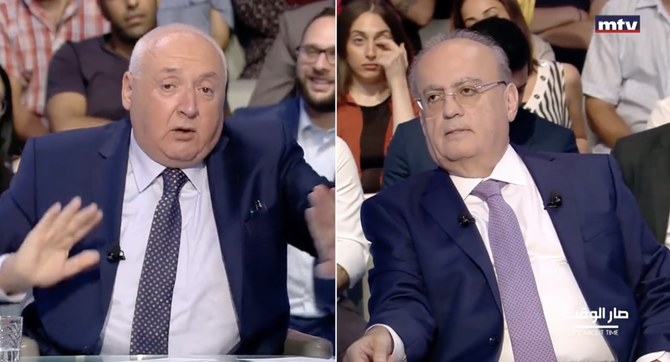
By Najia Houssari -- arabnews.com -- BEIRUT: The brawl that erupted on air Thursday night between a former minister and a journalist sparked widespread condemnation on Friday across Lebanon. The talk show, “Sar El-Wa’et” (It’s About Time) on MTV hosted by Marcel Ghanem, brought together former government minister Wiam Wahab, known for his close ties to Hezbollah and its allies, and journalist Simon Abou Fadel, whose stances are often aligned with the Lebanese Forces party. The dispute began when the discussion turned to US sanctions imposed on Wahab, and escalated when Abou Fadel remarked that “the US disciplines the Lebanese.” Wahab then assaulted Abou Fadel, and Wahab’s bodyguards also intervened. Abou Fadel fell to the ground, being continuously hit until the broadcast was cut off.
Lebanese Armed Forces personnel arrived at the station’s premises to take control of the situation. The broadcast later resumed, and Wahab apologized on air before he was asked to leave by Ghanem. Abou Fadel reappeared with bruises on his face and mouth, and said into a camera: “What happened to me just a while ago is nothing but a part of what has happened to some honorable people who paid the price for their stances.” He then mentioned political figures including the Lebanese Forces party leader, Samir Geagea, “who was imprisoned because of his stances.”
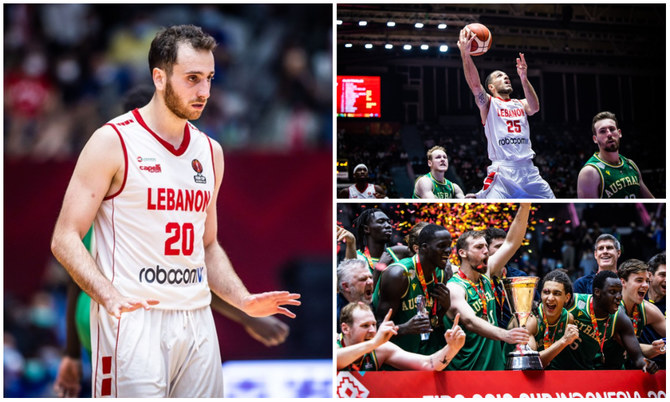
BEIRUT (Lebanon) -- By FIBA -- One of the best and most exciting players in Asia for the past several years, Lebanon's Wael Arakji, is poised to make his FIBA Basketball World Cup debut as well as several other veterans. The Cedars' 1.93m (6'4") point guard led the country to the FIBA Asia Cup 2022 Final in Jakarta and was named MVP of the tournament. Among his top performances was a 32-point effort against China in the Quarter-Finals. He averaged a team-high 26.0 points per game for the Lebanese.
Arakji is joined by several other leading players from that team: veteran center Ali Haidar, explosive guard Sergio El Darwich and power forward Hayk Gyokchian. Amir Saoud, the 32-year-old shooting guard who missed last summer's Asia Cup but played at the previous two editions, is in the squad. He featured in eight games in the Asian Qualifiers for the World Cup and excelled in several. He was especially good against other teams that clinched spots in the World Cup. In two games against the Philippines, Saoud averaged 22.0 points per game, and in one of the two games against Jordan, he poured in 24 points. In his one appearance against New Zealand, Saoud erupted for 28 points. In all, he was a solid 19 of 50 (38.0 percent) from behind the arc, and he made 22 of 24 (91.7 percent) of his free-throws.




Population Movements to Keserwan - The Khazens and The Maans
ما جاء عن الثورة في المقاطعة الكسروانية
ثورة أهالي كسروان على المشايخ الخوازنة وأسبابها
Origins of the "Prince of Maronite" Title
Growing diversity: the Khazin sheiks and the clergy in the first decades of the 18th century
Historical Members:
Barbar Beik El Khazen [English]
Patriach Toubia Kaiss El Khazen(Biography & Life Part1 Part2) (Arabic)
Patriach Youssef Dargham El Khazen (Cont'd)
Cheikh Bishara Jafal El Khazen
Patriarch Youssef Raji El Khazen
The Martyrs Cheikh Philippe & Cheikh Farid El Khazen
Cheikh Nawfal El Khazen (Consul De France)
Cheikh Hossun El Khazen (Consul De France)
Cheikh Abou-Nawfal El Khazen (Consul De France)
Cheikh Francis Abee Nader & his son Yousef
Cheikh Abou-Kanso El Khazen (Consul De France)
Cheikh Abou Nader El Khazen
Cheikh Chafic El Khazen
Cheikh Keserwan El Khazen
Cheikh Serhal El Khazen [English]
Cheikh Rafiq El Khazen [English]
Cheikh Hanna El Khazen
Cheikha Arzi El Khazen
Marie El Khazen