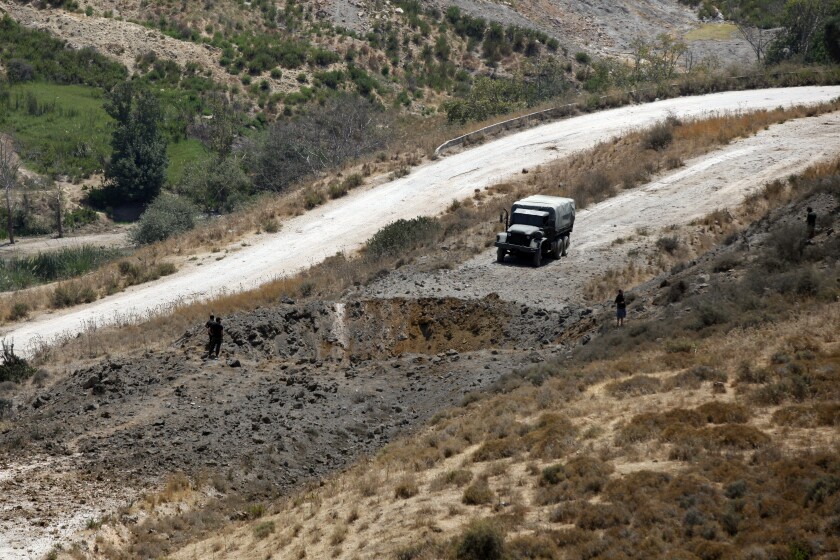
BY LAURIE KELLMAN AND ZEINA KARAM ASSOCIATED BEIRUT — The militant group Hezbollah fired a barrage of rockets toward Israel on Friday, and Israel hit back with artillery in a significant escalation between the two sides. It was the third day of attacks along the volatile border with Lebanon, a perennial focus of Middle East conflict where tensions between Israel and Iran, which backs Hezbollah, occasionally play out. But comments by Israeli officials and Hezbollah’s actions suggested the two were seeking to avoid a major conflict at this time. Israel said it fired back after 19 rockets were launched from Lebanon, and Prime Minister Naftali Bennett swiftly convened a meeting with the country’s top defense officials. No casualties were reported. “We do not wish to escalate to a full war, yet of course we are very prepared for that,” said Lt. Col. Amnon Shefler, spokesman for the Israel Defense Forces.
The attack sparked tensions between local residents and Hezbollah. Videos circulated on social media after the rocket attack showed two vehicles, including a mobile rocket launcher, being stopped by villagers in the southeastern village of Shwaya in Hasbaya region, near the border with the Golan Heights. The windshield of one vehicle was smashed. Some of the villagers could be heard saying: “Hezbollah is firing rockets from between homes so that Israel hits us back.” The Lebanese army said it arrested four people who were involved in the rocket firing and confiscated the rocket launcher. It said Lebanese troops and U.N. peacekeepers are taking all measures to restore calm. Hezbollah issued a statement saying that the rockets were fired from remote areas, adding that the fighters were stopped in Shwaya on their way back. “We lived a similar period in the 1970s, when Palestinian fighters were carrying out guerrilla attacks against Israel. We are now to the same status, and this is causing tension,” said Ajaj Mousa, a resident of nearby Kfarchouba.

سجعان قزي
اليومَ ليس يومًا جديدًا. منذُ انفجارِ المرفأ كلُّ أيّامِ السَنةِ 4 آب. لا اسِمَ لها آخَر. لا أشهرًا ولا أسابيعَ ولا أيامًا. اكتفَت بهُنيهةِ الانفجار. كانت الهنيهةُ دهرًا. بعدَها لم تتوالَ الأيّامُ. خَجِلَت أنْ تُطِلَّ فتَنتَحرَ فوقَ جثامينِ الشهداء. سنةَ 4 آب ما عاد سكّانُ لبنانَ أربعةَ ملايينِ نسمةٍ، بل مِئتي شهيدٍ وسِتّةَ آلافِ جريحٍ. سنةَ 4 آب ما عادت مساحةُ لبنان عشْرةَ آلافٍ وأربَعَمائةٍ واثنينِ وخمسينَ كلم²، بل مدى العالم والفضاء. شَخَصت الشعوبُ نحوَنا. رأت انفجارًا وسَمِعَت دُخانًا يُرشِدُها إلى "المغارة"، حيث وُلِدَ الشهداءُ الجُدد.
أتَوا جميعًا يَسجُدون أمام المرفأِ وبيروتَ والشهداءِ باستثناءِ أركانِ الدولةِ اللبنانيّةِ (أو غيرِ اللبنانيّة). سنةَ "4 آب" كان إيمانويل ماكرون رئيسَ جمهوريّةِ لبنان. وكانت حكوماتُ الدولِ العربيّةِ والأجنبيّةِ حكومةَ لبنان. وكان البطريركُ بشارة الراعي رمزَ الموقِفِ الوطنيِّ. وكان البابا فرنسيس مُحرِّكَ الديبلوماسيّةِ الدوليّةِ. يومَها برز التضامنُ بين اللبنانيّين. عَزفوا على وَترٍ كئيبٍ واحِد. كلُّ بيتٍ شَعَر أنَّ الانفجارَ في الدار. كلُّ لبنانيٍّ أحسَّ أنّه مصابٌ. بدا تبادلُ التعازي بين الناس حَرفًا زائدًا وكلمةً جوفاءَ ورديفَ صلاة. أما المسؤولون، فاعتَبروا أن تعازيَهم عَبرَ شاشاتِ التلفزيون إنجازٌ عظيمٌ يُغني عن العدالةِ والحقيقةِ وتأليفِ حكومة، وعن... رحيلِهم الآتي. قالها البطريركُ الراعي للجموعِ أمس: "حافِظوا على الوطنِ وغَيِّروا الباقي..."
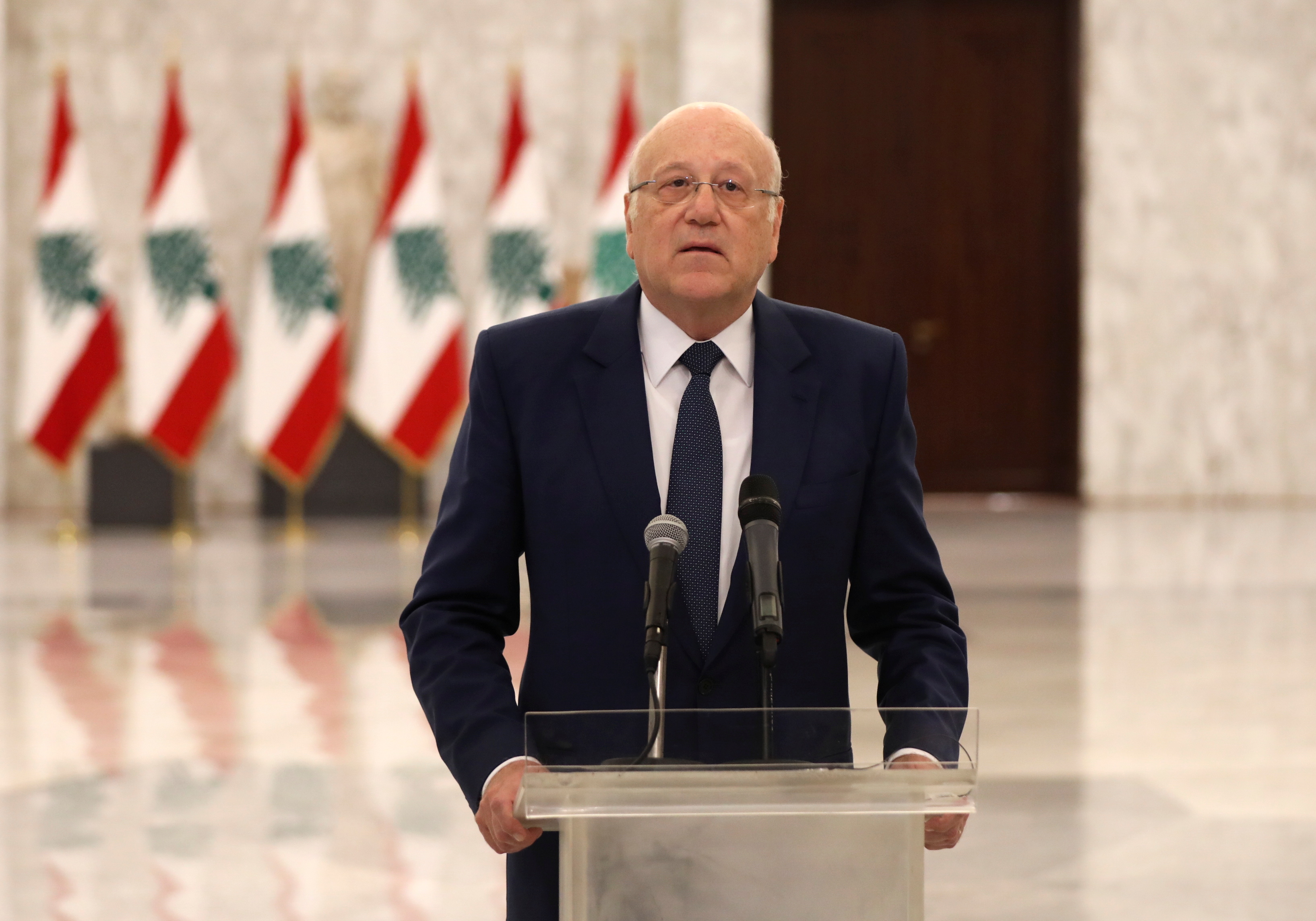
By Anchal Vohra -- foreignpolicy.com -- Lebanon’s ruling elite designated billionaire Najib Mikati to be prime minister at a time when Lebanon’s masses have fallen under poverty. He comes from Tripoli, the poorest city in Lebanon, but owns a yacht, a stake in Pepe Jeans, a South African telecom firm, and prime real estate in New York and London. According to Forbes, Mikati is one of the richest men in Lebanon with an estimated worth of $2.7 billion. But such wealth highlights the widening inequality, and political dysfunction, in a country where most people find it hard to imagine how they will ever again make ends meet. Nobody believes Mikati’s leadership is sustainable even in the medium term. It is Lebanon’s misfortune that its political class, and many of its international backers, believe he is worth supporting nevertheless. Mikati is seen by most Lebanese, by contrast, as a symbol of an old and corrupt order. In October 2019, the month Lebanon erupted in protests, he was charged with corruption for illegally profiting from housing loans meant for lower-income groups, but the case was buried. Most insulting to the suffering of the Lebanese is the fact that Mikati has previously served as prime minister—and last did so when a ship laden with thousands of tons of ammonium nitrate first docked at Beirut’s port. He now returns to power a year after the unsafely stored explosive caught fire, exploded, and fatally damaged some of the most glorious parts of the city.
Is Mikati the man to extract Lebanon from its myriad crises? Activists say he is a pawn of the political class, a stopgap prime minister tasked with preserving the status quo. But optimists believe that as an experienced businessperson, Mikati might strike the right compromises and find a way to keep the country afloat until elections next year. Lebanon’s backers in the West are clearly hoping that, through Mikati, a disruptive collapse of Lebanon’s political order can be avoided for now. Lebanese politics has been in dysfunctional stasis ever since Beirut was shaken by an explosion so strong it has been compared to the Chernobyl disaster. Around 200 innocent people were killed, thousands of people were injured, and hundreds of thousands of people were rendered homeless in an incident that could have been avoided. One week later, Hassan Diab was forced to resign as prime minister. But Diab has continued as caretaker prime minister as former Lebanese chief of staff Mustapha Adib and Lebanese Prime Minister Saad Hariri failed to form a government.
CAIRO, (Reuters) – Saudi Arabia’s foreign minister said on Wednesday the insistence of the Iran-backed Hezbollah group on imposing its will in …




Population Movements to Keserwan - The Khazens and The Maans
ما جاء عن الثورة في المقاطعة الكسروانية
ثورة أهالي كسروان على المشايخ الخوازنة وأسبابها
Origins of the "Prince of Maronite" Title
Growing diversity: the Khazin sheiks and the clergy in the first decades of the 18th century
Historical Members:
Barbar Beik El Khazen [English]
Patriach Toubia Kaiss El Khazen(Biography & Life Part1 Part2) (Arabic)
Patriach Youssef Dargham El Khazen (Cont'd)
Cheikh Bishara Jafal El Khazen
Patriarch Youssef Raji El Khazen
The Martyrs Cheikh Philippe & Cheikh Farid El Khazen
Cheikh Nawfal El Khazen (Consul De France)
Cheikh Hossun El Khazen (Consul De France)
Cheikh Abou-Nawfal El Khazen (Consul De France)
Cheikh Francis Abee Nader & his son Yousef
Cheikh Abou-Kanso El Khazen (Consul De France)
Cheikh Abou Nader El Khazen
Cheikh Chafic El Khazen
Cheikh Keserwan El Khazen
Cheikh Serhal El Khazen [English]
Cheikh Rafiq El Khazen [English]
Cheikh Hanna El Khazen
Cheikha Arzi El Khazen
Marie El Khazen