By Nadim Shehadi -- arabnews.com -- In the Latin American city of Bogota, a prosperous-looking lady goes to an ATM to withdraw cash and her card is rejected. This is how, in the fall of 2019, the widow of a Lebanese immigrant in Colombia first learned of Lebanon’s financial collapse and the bankruptcy of both its banking and public sectors. Financial collapse strikes like a thunderbolt. Those affected emerge confused and disoriented, hardly realizing what hit them. Economic problems can also have financial repercussions. Unsurprisingly, there is a chicken and egg debate about this among economists: Do real economic factors affect financial phenomena, or is it monetary and financial considerations that affect the real economy? Whatever the answer is, the fact remains that, behind financial phenomena, there exists real economic factors. For example, the 2008 collapse in the US was caused by a “real” economic factor: Bad loans, known as “subprime.” Bankers created complex instruments to reduce their risk and spread these globally. When the crisis hit, it dragged everyone down with it and people are still figuring out what struck them.
In Lebanon, the banking sector gave loans to the Banque du Liban (BDL) central bank that, in turn, lent the money to the government, which kept increasing its debt to pay the interest. Bankers are easy to blame, and probably deserve it; the other side of the story is what happens in the economy and drives the crisis. This is in a country that historically operated a budget surplus and had a sound monetary policy, with risk-averse bankers. What the BDL did is no different from what the Federal Reserve and the Treasury Department are now doing in the US, with the trillions of dollars being printed and buying their own bonds. In any other economy, what would follow would be a race between economic recovery and debt servicing to make the latter sustainable. But in the US the government can print dollars as it pleases and feed its own Ponzi scheme indefinitely, as long as the US dollar is the global reserve currency. There is no banking system that can survive a run and, once it happens, it is unstoppable. A run on a bank is when depositors rush to withdraw their money at the same time. It is caused by a sudden loss of confidence. This is what happened in Lebanon after November 2017.
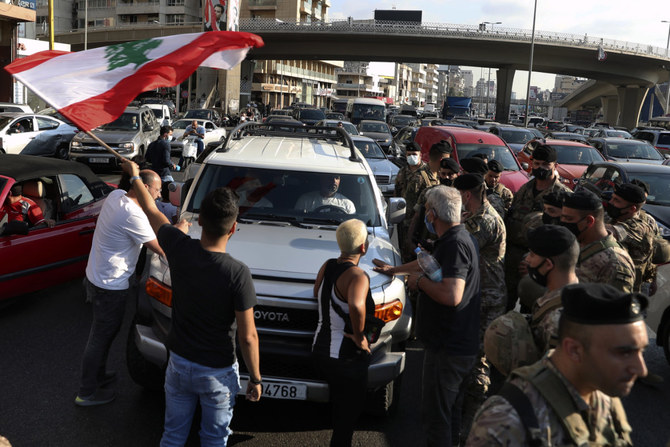
by BY CAROLINE VAKIL — thehill.com — Lebanese troops were deployed to Tripoli on Sunday following protests over Lebanon’s worsening economic conditions …
By NAJIA HOUSSARI -- arabnews.com -- BEIRUT: Lebanese authorities have rejected suggestions that the country is planning to import oil from Iran amid a worsening energy and currency crisis. Lebanon’s energy ministry on Saturday said that it had received no requests for a “permit, either from an official or private party, to import oil from Iran.” The official Lebanese response followed a tweet by the Iranian Embassy in Beirut saying that “the arrival of Iranian oil tankers does not need the attention of the US ambassador.” The embassy warned the US envoy not to intervene “in the brotherly relations between the Iranian and Lebanese peoples.” A photo of an oil tanker at sea was attached to the tweet. The tweet heightened speculation about the imminent arrival of an Iranian tanker in Beirut port following a proposal by Hezbollah that Lebanon look to oil imports from Iran. On Friday, the US envoy in Lebanon, Dorothy Shea, told a local television station that importing fuel oil from Iran “is not a practical solution.” She added: “What Iran is looking for is a sort of dependent state that it can use to carry out its agenda. There are much better solutions than turning to Iran.” She added: “The US has always been by the side of the Lebanese people, but Iran looks at Lebanon as being a state that could help it implement its agenda.”
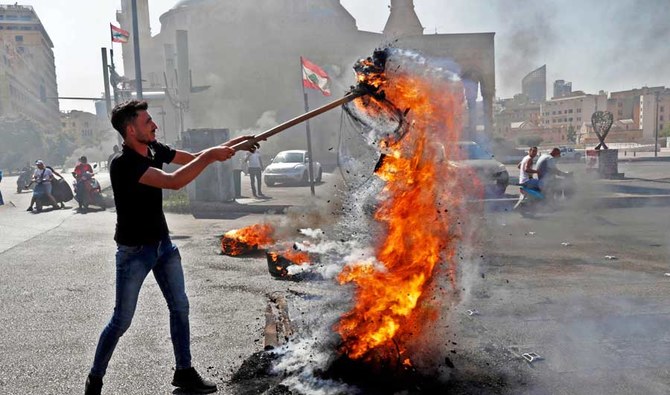
Hezbollah chief Hassan Nasrallah said that his party is “working in the background to implement a plan to buy oil from Tehran and pay for it in Lebanese pounds.” He proposed that two oil refineries be built in north and south Lebanon. The Hezbollah proposal provoked widespread anger, with former MP Ahmad Fatfat claiming that “Iran wants to keep Lebanon as a card in its hand to use later.” He said that Lebanon’s economic collapse has allowed Hezbollah to “get its hands on all sectors,” while its ally the Free Patriotic Movement (FPM) “has handed the party all the cards in return for getting power.” Political analyst Assaad Bechara told Arab News that Nasrallah’s insistence on importing oil from Iran “is a populist step that aims to suggest Iran is helping Lebanon while the rest of the world is doing nothing.” However, he questioned whether Lebanon’s private sector companies would be willing to risk sanctions by importing Iranian oil. “The queues at gas stations in Tehran are longer than the queues in Lebanon,” he added. Attempts to strengthen Iranian influence over Lebanon are unfolding amid a worsening financial collapse, with the exchange rate late on Saturday reaching 18,000 Lebanese pounds to the dollar.
ان كثرة التفاهمات والمصالحات وبيانات التهدئة والتوضيح والاستنكار رغم ضرورتها هي اكبر دليل ان المجتمع ليس بخير




Population Movements to Keserwan - The Khazens and The Maans
ما جاء عن الثورة في المقاطعة الكسروانية
ثورة أهالي كسروان على المشايخ الخوازنة وأسبابها
Origins of the "Prince of Maronite" Title
Growing diversity: the Khazin sheiks and the clergy in the first decades of the 18th century
Historical Members:
Barbar Beik El Khazen [English]
Patriach Toubia Kaiss El Khazen(Biography & Life Part1 Part2) (Arabic)
Patriach Youssef Dargham El Khazen (Cont'd)
Cheikh Bishara Jafal El Khazen
Patriarch Youssef Raji El Khazen
The Martyrs Cheikh Philippe & Cheikh Farid El Khazen
Cheikh Nawfal El Khazen (Consul De France)
Cheikh Hossun El Khazen (Consul De France)
Cheikh Abou-Nawfal El Khazen (Consul De France)
Cheikh Francis Abee Nader & his son Yousef
Cheikh Abou-Kanso El Khazen (Consul De France)
Cheikh Abou Nader El Khazen
Cheikh Chafic El Khazen
Cheikh Keserwan El Khazen
Cheikh Serhal El Khazen [English]
Cheikh Rafiq El Khazen [English]
Cheikh Hanna El Khazen
Cheikha Arzi El Khazen
Marie El Khazen