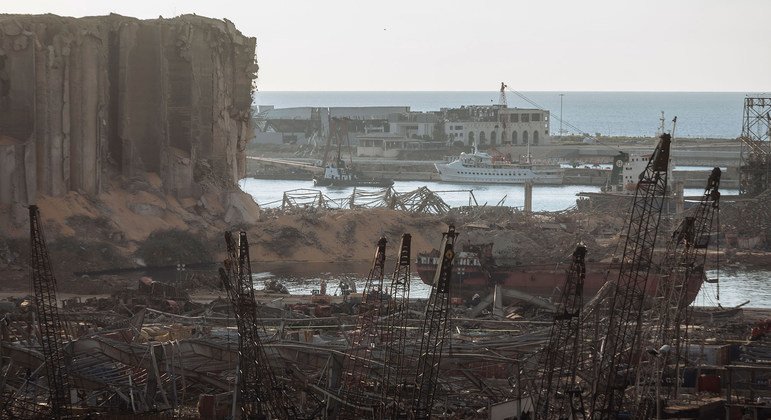
by news.un.org -- “The explosion at the Beirut port has accelerated a lot of things, that's for sure”, said Deputy Special Coordinator Najat Rochdi, who is also UN Resident and Humanitarian Coordinator for Lebanon, speaking to reporters at the UN in Geneva, referring to the deadly blast last August that killed around 200 and devastated the city. She said necessary political reforms had not been carried out “on time”, despite widespread warnings over the looming economic and financial crisis, that “a lot of analysts had already predicted…We're not talking about something that takes us by surprise today. I think everyone knew about it”. Between April 2019 and April this year, the consumer Price Index has increased by more than 208 per cent and the price of food and beverages increased by 670 per cent. As a result, over half of the Lebanese population is now living in poverty.
Public services wrecked “The crisis in the economy, the currency devaluation, as well as the governance vacuum has meant a breakdown of public services at a time when they are most needed”, said Ms. Rochdi. She added that "the pandemic has worsened a situation which was already fragile”. The Deputy Special Coordinator said international confidence had been hit by the failure to form a functioning government, deterring investors, and exacerbating the failure of the banking system and other public institutions. Extreme poverty rose threefold during the past two years. More and more Lebanese households are unable to afford basic services like food, health, electricity, water, internet, and child education. “The country is in the middle of a phase of hyperinflation, eroding the value of the national currency, people’s purchasing power and what remains of their trust in their leaders and institutions”, said Ms. Rochdi.
by gulf-times.com — The Commander of the Lebanese Army, General Joseph Aoun, has expressed thanks and gratitude to Qatar, for the valuable …
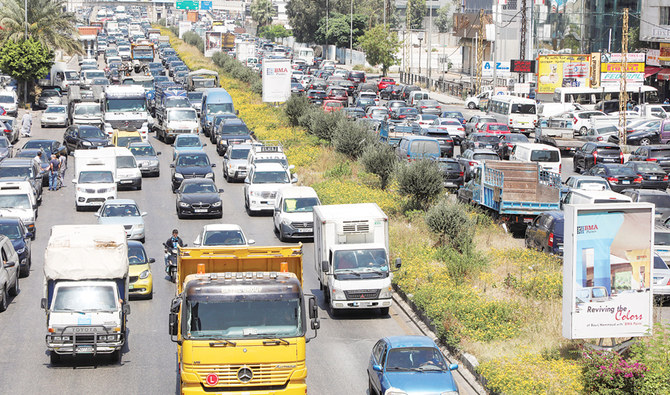
By Najia Houssari - arabnews.com -- BEIRUT: Public prosecutors in Lebanon have been instructed to crack down on the monopoly on foodstuffs and oil derivatives as political, security and diplomatic concerns grow over explosive daily protests. The spontaneous protests are also demanding access to medicine, fuel, hospitalization and electricity. The Crisis Observatory at the American University of Beirut warned that “the risk of Lebanon falling into the rank of failed states has become a reality after it fell 36 places over five years.” Its rank in 2021 was among the 34 most failed states out of 179 states. The Public Prosecutor at the Court of Cassation, Judge Ghassan Oueidat, on Monday called on public prosecutors in Lebanon to “strictly pursue the monopoly of foodstuffs and oil derivatives, after there has been a lot of refraining from selling these subsidized materials, or selling them at prices that exceed the set price.”
Judge Oueidat said that what is happening “are crimes stipulated by law and must be prosecuted, and shops, warehouses and stations belonging to the suspects must be sealed with red wax.” The judicial procedure came as trade unions and civil bodies prepare for a general strike that begins on Thursday to push for the formation of a government. On Monday, unions of food industries, bakeries, transport workers and taxi drivers announced that they would respond to Thursday’s strike. Bechara Al-Asmar, head of the General Labor Union, told Arab News: “Our move will be escalatory. I don’t know if the strike will last more than a day; we will see what happens Thursday.”
by digitalstudiome.com — The Director’s Fortnight running from 7th-17th July 2021 will showcase the director’s debut film titled The Sea Ahead at …




Population Movements to Keserwan - The Khazens and The Maans
ما جاء عن الثورة في المقاطعة الكسروانية
ثورة أهالي كسروان على المشايخ الخوازنة وأسبابها
Origins of the "Prince of Maronite" Title
Growing diversity: the Khazin sheiks and the clergy in the first decades of the 18th century
Historical Members:
Barbar Beik El Khazen [English]
Patriach Toubia Kaiss El Khazen(Biography & Life Part1 Part2) (Arabic)
Patriach Youssef Dargham El Khazen (Cont'd)
Cheikh Bishara Jafal El Khazen
Patriarch Youssef Raji El Khazen
The Martyrs Cheikh Philippe & Cheikh Farid El Khazen
Cheikh Nawfal El Khazen (Consul De France)
Cheikh Hossun El Khazen (Consul De France)
Cheikh Abou-Nawfal El Khazen (Consul De France)
Cheikh Francis Abee Nader & his son Yousef
Cheikh Abou-Kanso El Khazen (Consul De France)
Cheikh Abou Nader El Khazen
Cheikh Chafic El Khazen
Cheikh Keserwan El Khazen
Cheikh Serhal El Khazen [English]
Cheikh Rafiq El Khazen [English]
Cheikh Hanna El Khazen
Cheikha Arzi El Khazen
Marie El Khazen