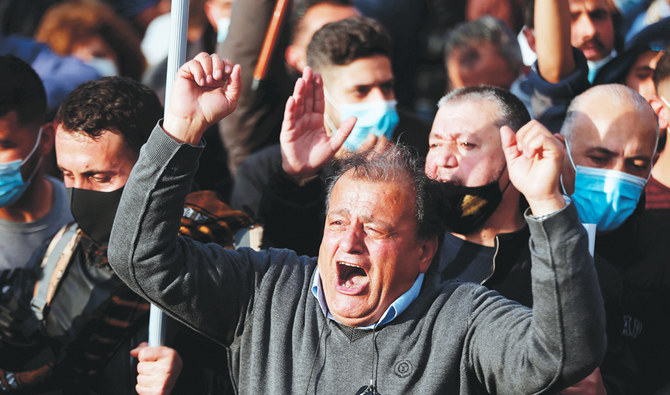
By NAJIA HOUSSARI -- arabnews.com -- . BEIRUT: Lebanon’s impoverished prisons could be hit by rioting and widespread unrest if overcrowding and hunger among inmates worsens, observers warn. The claim by prisoner representatives and human rights delegates comes as Lebanon’s economic crisis leads to a collapse in many state institutions. Hunger, as well as diseases linked to malnutrition and hygiene, are a growing issue in Lebanese prisons, especially those in poorer areas, where many prisoners rely on their families for food and medical care. Prisoners fear they are being “left behind” as the country’s economic and fiscal woes cut the value of the minimum wage by almost 90 percent, plunging many communities into poverty. Mohammed Sablouh, a lawyer and prison committee rapporteur at Tripoli’s Bar Association, told the parliamentary human rights committee that “hunger has found its way into Roumieh prison.” Roumieh, the country’s central prison facility, is considered better than other prisons in the governorates.
Sablouh told Arab News that the prison kitchen normally feeds about 800 inmates with no outside support, while the remaining prisoners receive money from their families to buy food from the prison’s store. However, the country’s economic crisis meant that most of the prisoners — about 3,200 — now depend on prison meals after the prices of goods in the prison’s store increased and most families were unable to provide the inmates with enough money. Sablouh added: “The quantity of food provided by the prison kitchen has decreased dramatically, and meat has disappeared.” Fruit is also scarce, he said. “Two inmates now share an apple. Dairy products have been replaced with jam — what can a diabetic inmate do?”
By Naharnet –– The United States and the European Union are reportedly expected to discuss the controversial situation in Lebanon during a …
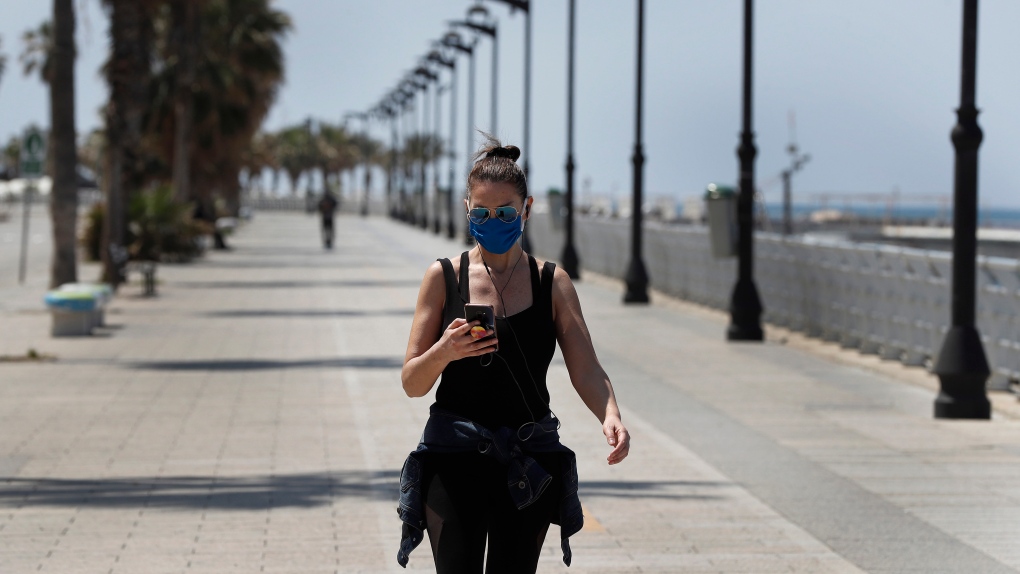
by AP --- BEIRUT -- Lebanon's private sector is stepping in to speed up the vaccination campaign against coronavirus by importing at least 1 million doses of Russian vaccines, with the aim of reopening businesses around the country hit by an unprecedented economic crisis. The first batch of 50,000 doses of Sputnik V vaccines arrived early Friday, making Lebanon one of few nations where the COVID-19 vaccine rollout is being boosted by private sector initiatives. Lebanon, a small nation of six million people including around one million Syrian refugees, began its inoculation campaign in mid-February after finalizing a deal for some two million doses with Pfizer. According to Lebanese Health Ministry, the country has so far received 224,640 Pfizer-BioNTech doses over the past six weeks with nearly 100,000 doses already administered. Lebanon's government also began receiving AstraZeneca vaccines this week, with 33,600 doses that arrived on Wednesday. The Pfizer vaccines are funded by the World Bank while AstraZeneca vaccines will be provided under the U.N.-backed COVAX program.
Lebanon is currently in the grips of the worst economic and financial crisis in its modern history, which has been exacerbated by the lockdown measures related to the pandemic. Tens of thousands have lost their jobs and the local currency has lost 90 per cent of its value against the dollar, leading to inflation and shortages in food products and medicines. According to the World Bank, more than half the population is now living under the poverty line. Jacques Sarraf, a Lebanese businessman and head of the Lebanese Russian Business Council, said he hoped the import of the Russian vaccines would help safely reopen businesses around the country. "Our first target will be private companies, factories, banks -- and this is important to reactivate institutions," he told The Associated Press in an interview. Sarraf, who played a major role in bringing the Sputnik V vaccines to Lebanon, said priority will be given for employees at companies and business institutions, including those of Lebanon's national carrier Middle East Airlines and the Banking Association. He added that with the private sector moving in, the numbers of people inoculated daily will multiply by more than three times compared with the current pace. Sarraf said the Sputnik V will be sold at a price of $38 for the required two doses, in addition to hospital fees. The minimum monthly salary in Lebanon is currently 675,000 Lebanese pounds, the equivalent of about $60.
By By Masood Farivar – voa.com — A former U.S. military translator pleaded guilty Friday of divulging classified information to a Lebanese …




Population Movements to Keserwan - The Khazens and The Maans
ما جاء عن الثورة في المقاطعة الكسروانية
ثورة أهالي كسروان على المشايخ الخوازنة وأسبابها
Origins of the "Prince of Maronite" Title
Growing diversity: the Khazin sheiks and the clergy in the first decades of the 18th century
Historical Members:
Barbar Beik El Khazen [English]
Patriach Toubia Kaiss El Khazen(Biography & Life Part1 Part2) (Arabic)
Patriach Youssef Dargham El Khazen (Cont'd)
Cheikh Bishara Jafal El Khazen
Patriarch Youssef Raji El Khazen
The Martyrs Cheikh Philippe & Cheikh Farid El Khazen
Cheikh Nawfal El Khazen (Consul De France)
Cheikh Hossun El Khazen (Consul De France)
Cheikh Abou-Nawfal El Khazen (Consul De France)
Cheikh Francis Abee Nader & his son Yousef
Cheikh Abou-Kanso El Khazen (Consul De France)
Cheikh Abou Nader El Khazen
Cheikh Chafic El Khazen
Cheikh Keserwan El Khazen
Cheikh Serhal El Khazen [English]
Cheikh Rafiq El Khazen [English]
Cheikh Hanna El Khazen
Cheikha Arzi El Khazen
Marie El Khazen