
By BY ANCHAL VOHRA -- foreignpolicy.com --New information suggests that the thousands of tons of ammonium nitrate that exploded at the Port of Beirut on Aug. 4, killing more than 200 people and doing some $15 billion in property damage, may have been intended for the Syrian government. The Lebanese government’s official story until now has been that the cargo’s destination was Mozambique. But an investigation by a Lebanese filmmaker that was aired on the local network Al Jadeed has established a link between three Syrian businessmen who backed Bashar al-Assad in the Syrian war and what appears to be a shell company that bought the explosives. Attention now turns to whether Fadi Sawan, a former military judge charged with investigating the tragedy, can leverage these new facts to hold the perpetrators—both foreign and domestic—accountable. But Lebanon’s government elites are also ramping up their own attacks on his reputation and his work. Foreign Policy reported in August that the Rustavi Azot chemicals factory in Georgia that supplied the explosives had been paid for 2,750 tons of explosives, yet Fábrica de Explosivos Moçambique (FEM), the company that ostensibly had it shipped, never claimed it. Now, a copy of a document obtained by Foreign Policy shows that while Rustavi Azot was the seller, the buyer was not FEM directly but a firm registered in London called Savaro. The sale contract shows the date of the purchase as July 10, 2013, when the Syrian war was at its peak. MV Rhosus, the ship that carried the cargo, docked in Lebanon that November and was then impounded as unseaworthy.
The United Kingdom’s Companies House registrar reveals that Savaro’s addresses are shared by properties previously owned or operated by the Syrian businessman George Haswani and brothers Mudalal and Imad Khuri, all three of whom are dual Syrian-Russian nationals. The man believed to own the ship, Igor Grechushkin, is Russian, too. Haswani received a doctorate in 1979 in the then-Soviet Union and is among the more seasoned intermediaries between Russia and the Syrian regime. Widely known as Moscow’s man in Damascus, he has a history of brokering deals with jihadi outfits as well as regime-backed shabiha, or militias. A Syrian businessman from Yabroud, Haswani’s birthplace, spoke to FP on the condition of anonymity and said: “Haswani is known to resolve disputes between locals and shabiha. But he also knew ISIS and [the Nusra Front].” Haswani is known to have negotiated the release in 2014 of a group of Greek Orthodox nuns who had been seized by the Nusra Front, an al Qaeda affiliate that has since been folded into the active Hayat Tahrir al-Sham. In 2015, Haswani was sanctioned by the United States for allegedly buying oil for the regime from the Islamic State, which controlled oil-rich parts of Syria at the time. Haswani also co-owned the now liquidated Hesco Engineering and Construction Co., which was listed under the same address as Savaro. That address matches the one written on the sale contract seen by Foreign Policy.
by arabnews.com — DUBAI: Former US President Donald Trump’s daughter, Tiffany, has announced her engagement to her Lebanese partner Michael Boulos this …
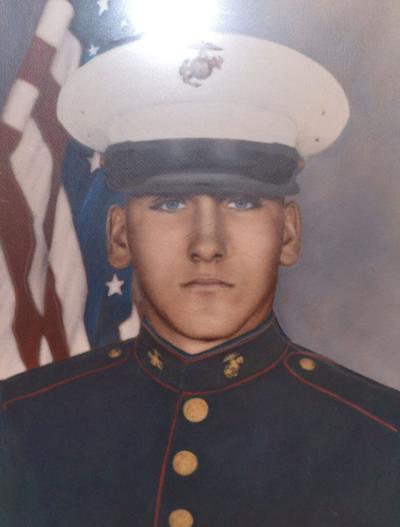
by BY KEN STICKNEY -- theadvocate.com -- Thirty-seven years after terrorists exploded a truck bomb in a Marine barracks in Lebanon, killing 241 U.S. military personnel, Iran has started to pay. Among the victims that day: Lex Trahan, 19, a Comeaux high graduate and the lone child of Percy “Blackie” Trahan and his wife, Shirley, of Lafayette. Attorney Warren Perrin, who represents the Trahan family, said he was notified Sunday that the first payment — $300,000 — of an almost $50 million settlement had arrived. Settlement of the suit will be made as assets of the Iranian regime are secured. They will generally be reaped from seizure of illegal goods; in this case, the payment to the Trahans and others was made by capturing an Iranian ship that was trying to illegally evade an embargo last year. Payments will vary according to how much illegal goods are seized. Perrin said Trahan’s father, “Blackie,” the sole remaining member of the family, was “really moved” that the initial payment of the settlement had arrived. His wife died in 2019.
Lafayette family awarded nearly $50 million for son's death in Marine Barracks terrorism case Lex Trahan joined the Marines in 1982 and planned to attend college when his service was complete. His intention was to work in the energy industry. But first Trahan, a combat engineer, was assigned to duty in Beirut, Lebanon, as part of a multinational peacekeeping effort. His room was on the third floor of a four-story dormitory when a terrorist driving a truck loaded with some 2,500 pounds of explosives broke through steel fences and sandbags at 6:20 a.m. Oct. 23, 1983, creating an explosion that left a crater 30 feet deep and 40 feet wide. The death toll included 220 Marines, 18 Navy sailors, three Army soldiers and some 60 French peacekeepers.

BEIRUT (Reuters) - Swiss authorities have opened an investigation into money transfers by Lebanon’s Central Bank Governor Riad Salameh, a Lebanese government official told Reuters on Tuesday. Salameh denied any wrongdoing. “Both the prime minister and the president are in the loop” on the inquiry which is also looking into Salameh’s brother and assistant, said the official who asked to remain anonymous. The Swiss attorney general’s office said it had requested legal assistance from Lebanon in the context of a probe into “aggravated money laundering” and possible embezzlement tied to the Lebanese central bank.
But in responding to questions from Reuters, it did not say whether Salameh was a suspect and declined further comment. A source familiar with the case said the Swiss asked Lebanese authorities via the embassy to ask Salameh, his brother and assistant “specific questions” about transfers abroad made in recent years that amount to nearly $350 million. Lebanon’s crippled banking system is at the heart of a financial crisis that erupted in late 2019. Banks have since blocked most transfers abroad and cut access to deposits as dollars grew scarce. The meltdown has crashed the currency, prompted a sovereign default and doomed at least half the population to poverty.




Population Movements to Keserwan - The Khazens and The Maans
ما جاء عن الثورة في المقاطعة الكسروانية
ثورة أهالي كسروان على المشايخ الخوازنة وأسبابها
Origins of the "Prince of Maronite" Title
Growing diversity: the Khazin sheiks and the clergy in the first decades of the 18th century
Historical Members:
Barbar Beik El Khazen [English]
Patriach Toubia Kaiss El Khazen(Biography & Life Part1 Part2) (Arabic)
Patriach Youssef Dargham El Khazen (Cont'd)
Cheikh Bishara Jafal El Khazen
Patriarch Youssef Raji El Khazen
The Martyrs Cheikh Philippe & Cheikh Farid El Khazen
Cheikh Nawfal El Khazen (Consul De France)
Cheikh Hossun El Khazen (Consul De France)
Cheikh Abou-Nawfal El Khazen (Consul De France)
Cheikh Francis Abee Nader & his son Yousef
Cheikh Abou-Kanso El Khazen (Consul De France)
Cheikh Abou Nader El Khazen
Cheikh Chafic El Khazen
Cheikh Keserwan El Khazen
Cheikh Serhal El Khazen [English]
Cheikh Rafiq El Khazen [English]
Cheikh Hanna El Khazen
Cheikha Arzi El Khazen
Marie El Khazen