
by reuters & Tass-- Interpol has put three men on the wanted list. Two Russian citizens and one Portuguese are suspected in delivering explosives to the docks of Beirut; the materials were stored there for six years begore going off in August 2020. That explosion killed 200 people, thousands were wounded, and the city suffered huge damage. 7news.com reported that on January 12. According to the outlet, "Interpol-issued Red Notices were for the owner and captain of the Rhosus, the ship that carried the 2750 tonnes of ammonium nitrate to Lebanon in 2013, as well as a Portuguese nitrate trader who visited the port's warehouse in Beirut in 2014 where the material was stored".
Boris Prokoshev, the captain of the Rhosus, the ship that delivered 2,700 tonnes ammonium nitrate to the port of Beirut in 2013, claimed that he does not consider himself responsible for the Beirut explosion and will defend himself. Previously, Watania News reported that the Lebanese authorities officially applied for an international arrest warrant from Interpol against two Russians - the owner and the captain of Rhosus. On Tuesday, Interpol issued the warrant. According to Watania, the red corner notification was issue in response to the application of the Prosecutor General of Lebanon. "I have received no papers yet; it is unpleasant news, of course, and I do not know what to do right now. I will observe the development of the situation and will defend myself on my own: I do not have money for lawyers, of course, I live on my pension. I do not consider myself guilty," Prokoshev told TASS.
The Red Notice is the request to law enforcers all over the world, which is supposed to speed up the search and temporarily arrest the culprit. It's not the arrest warrant, and the government is not required to arrest the wanted suspect. Lebanon's state prosecutor Ghassan Khoury was the one who asked the Interpol to issue the Red Notices. Related: 137 people died in Beirut’s explosion; French, American citizens among victims According to local media, the trio of suspects were "the vessel's former captain Boris Prokoshev and Igor Grechushkin, a Russian businessman residing in Cyprus who had bought the cargo ship in 2012. The Portuguese man was identified as Jorge Manuel Mirra Neto Moreira".
by naharnet -- The Israeli army alleged Tuesday that a Lebanese shepherd nabbed by Israeli forces in the border area of Kfarshouba was collecting information for Hizbullah. Israeli army spokesman Avichay Adraee tweeted that the shepherd was “arrested in an ambush” after he “deliberately” crossed the frontier into Israeli-controlled territory. Noting that the shepherd was taken to interrogation, Adraee stressed that the Israeli army “will not tolerate any attempt to violate the sovereignty of the State of Israel.” “The arrested Lebanese shepherd belongs to a group that has been identified as being collaborative with Hizbullah, which uses shepherds in missions for collecting information and monitoring the Israeli army forces,” Adraee added. The Lebanese Army identified the shepherd as Hassan Qasem Zahra and said he was guarding livestock when he was detained.
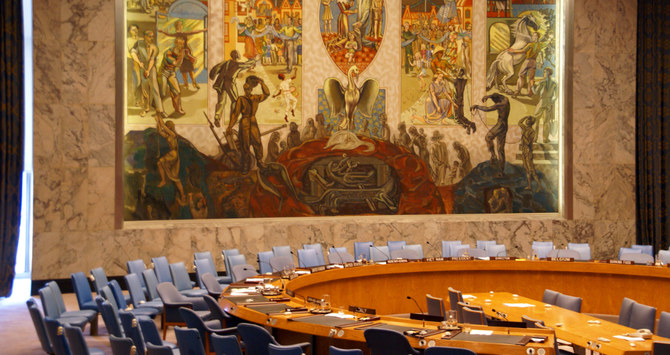
by NAJIA HOUSSARI -- arabnews.com --BEIRUT: Lebanon filed a complaint to the UN Security Council against Israel on Tuesday, over the latter’s continued violation of Lebanese airspace. The Lebanese Armed Forces command said that at least eight air violations were recorded by Israeli warplanes, which carried out low-altitude flights over the south and Mount Lebanon, in one day alone. It added: “The air violations are accompanied by sea violations. An Israeli gunboat violated on Monday Lebanese territorial waters off Ras Al-Naqoura in four stages and for a maximum distance of about 314 meters.” The army command stressed that “the issue of the violations is being discussed with the UN Interim Force In Lebanon (UNIFIL).”
MP Walid Sukkarieh, a retired Lebanese army officer, told Arab News: “There are two types of Israeli aircraft that violate the Lebanese airspace: Drones, which aim to monitor the movements on the ground, especially Hezbollah’s movements, and F-16 and F-17 warplanes, which are flying over Lebanon these days to show off. “Israel was betting on US President Donald Trump launching a war on Iran, as Israeli Prime Minister Benjamin Netanyahu cannot perform this mission alone without the US. However, what happened in the US Congress made Trump back off on this adventure, and when the factors of war crumble, Israel resorts to show off its strength in this manner.” He added that he believed that “neither Iran nor Hezbollah wants any war, nor do they have an interest in it.” UNIFIL has recorded a number of flights over Lebanese airspace in recent days by Israeli unmanned and fighter aircraft, said its spokesman Andrea Tenenti, who stressed that these are violations of Resolution 1701 and Lebanese sovereignty. “We have once again called on the IDF (Israel Defense Forces) Command to cease the overflights,” he said. “The continued violations increase fear among the local population and undermine our efforts to reduce tensions and establish a stable security environment in southern Lebanon.”
by middleeastmonitor.com — Lebanese, some wearing protective masks due to the COVID-19 pandemic, shop at a market in the Sabra neighbourhood of …

Vatican City, Courtney Mares -- (CNA) --- Pope Francis issued a motu proprio Monday changing canon law to allow women to serve as lectors and acolytes. In the motu proprio “Spiritus Domini,” issued on Jan. 11, the pope changed canon 230 § 1 of the Code of Canon Law to read: “Lay people who have the age and skills determined by decree of the Episcopal Conference, they can be permanently assumed, through the established liturgical rite, to the ministries of lectors and of acolytes; however this contribution does not give them the right to support or to remuneration by the Church.” Prior to this change, the law formerly said that “lay men who possess the age and qualifications established by decree of the conference of bishops can be admitted on a stable basis through the prescribed liturgical rite to the ministries of lector and acolyte.”
The roles of lector and acolyte are publicly recognized ministries instituted by the Church. The roles were once considered “minor orders” in the tradition of the Church and were changed to ministries by Pope Paul VI. According to Church law, “before anyone is promoted to the permanent or transitional diaconate, he is required to have received the ministries of lector and acolyte.” Pope Francis wrote a letter to Cardinal Luis Ladaria, prefect of the Congregation for the Doctrine of the Faith, explaining his decision to admit women to the ministries of lector and acolyte. In this letter, the pope highlighted the distinction between “‘established’ (or ‘lay’) ministries and ‘ordained’ ministries,” and expressed hope that opening these lay ministries to women might “better manifest the common baptismal dignity of the members of the People of God.” He said: “The Apostle Paul distinguishes between gifts of grace-charisms (‘charismata’) and services (‘diakoniai’ – ‘ministry [cf. Rom 12, 4ff and 1 Cor 12, 12ff]). According to the tradition of the Church, the various forms that charisms take when they are publicly recognized and are made available to the community and its mission in a stable form are called ministries,” the pope wrote in the letter published Jan. 11. “In some cases the ministry has its origin in a specific sacrament, Holy Orders: these are the ‘ordained’ ministries, the bishop, the presbyter, the deacon. In other cases the ministry is entrusted, with a liturgical act of the bishop, to a person who has received Baptism and Confirmation and in whom specific charisms are recognized, after an adequate journey of preparation: we then speak of ‘instituted’ ministries.”




Population Movements to Keserwan - The Khazens and The Maans
ما جاء عن الثورة في المقاطعة الكسروانية
ثورة أهالي كسروان على المشايخ الخوازنة وأسبابها
Origins of the "Prince of Maronite" Title
Growing diversity: the Khazin sheiks and the clergy in the first decades of the 18th century
Historical Members:
Barbar Beik El Khazen [English]
Patriach Toubia Kaiss El Khazen(Biography & Life Part1 Part2) (Arabic)
Patriach Youssef Dargham El Khazen (Cont'd)
Cheikh Bishara Jafal El Khazen
Patriarch Youssef Raji El Khazen
The Martyrs Cheikh Philippe & Cheikh Farid El Khazen
Cheikh Nawfal El Khazen (Consul De France)
Cheikh Hossun El Khazen (Consul De France)
Cheikh Abou-Nawfal El Khazen (Consul De France)
Cheikh Francis Abee Nader & his son Yousef
Cheikh Abou-Kanso El Khazen (Consul De France)
Cheikh Abou Nader El Khazen
Cheikh Chafic El Khazen
Cheikh Keserwan El Khazen
Cheikh Serhal El Khazen [English]
Cheikh Rafiq El Khazen [English]
Cheikh Hanna El Khazen
Cheikha Arzi El Khazen
Marie El Khazen