
Vatican City, (CNA).- Pope Francis issued a new law Monday reorganizing Vatican finances following a series of scandals. In a document issued Dec. 28, the pope formalized the transfer of financial responsibilities from the Vatican’s Secretariat of State to the Administration of the Patrimony of the Apostolic See (APSA), which functions as the Holy See’s treasury and sovereign wealth manager. He first announced the shake-up in an Aug. 25 letter to Vatican Secretary of State Cardinal Pietro Parolin that was made public on Nov. 5 after the Secretariat of State was engulfed by accusations of financial mismanagement. The pope promulgated the new law in an apostolic letter issued motu proprio (“on his own impulse”). The text, entitled “A better organization,” also set out new regulations for the oversight of Peter’s Pence, an annual worldwide collection supporting the pope’s mission.
Vatican officials have been forced to deny that money raised for Peter’s Pence was used to cover losses on a controversial London property deal overseen by the Secretariat of State. The document, signed Dec. 26 and coming into force before the start of the Vatican’s new fiscal year, contains four articles. The first concerns the transfer of investments and liquidity from the Secretariat of State to APSA. The second regulates the management of papal funds. The third sets out “provisions on economic and financial monitoring and supervision” and the fourth addresses the functioning of the Secretariat of State’s administrative office. Under the new law, APSA will gain ownership of funds, bank accounts, and investments, including real estate, previously administered by the Secretariat of State from Jan. 1, 2021. APSA’s management of its new responsibilities will be subject to “ad hoc control” by the Vatican’s Secretariat for the Economy, established in 2014 to oversee the financial activities of the Holy See and Vatican City State. The Secretariat for the Economy will in future also serve as the Papal Secretariat for Economic and Financial Matters.
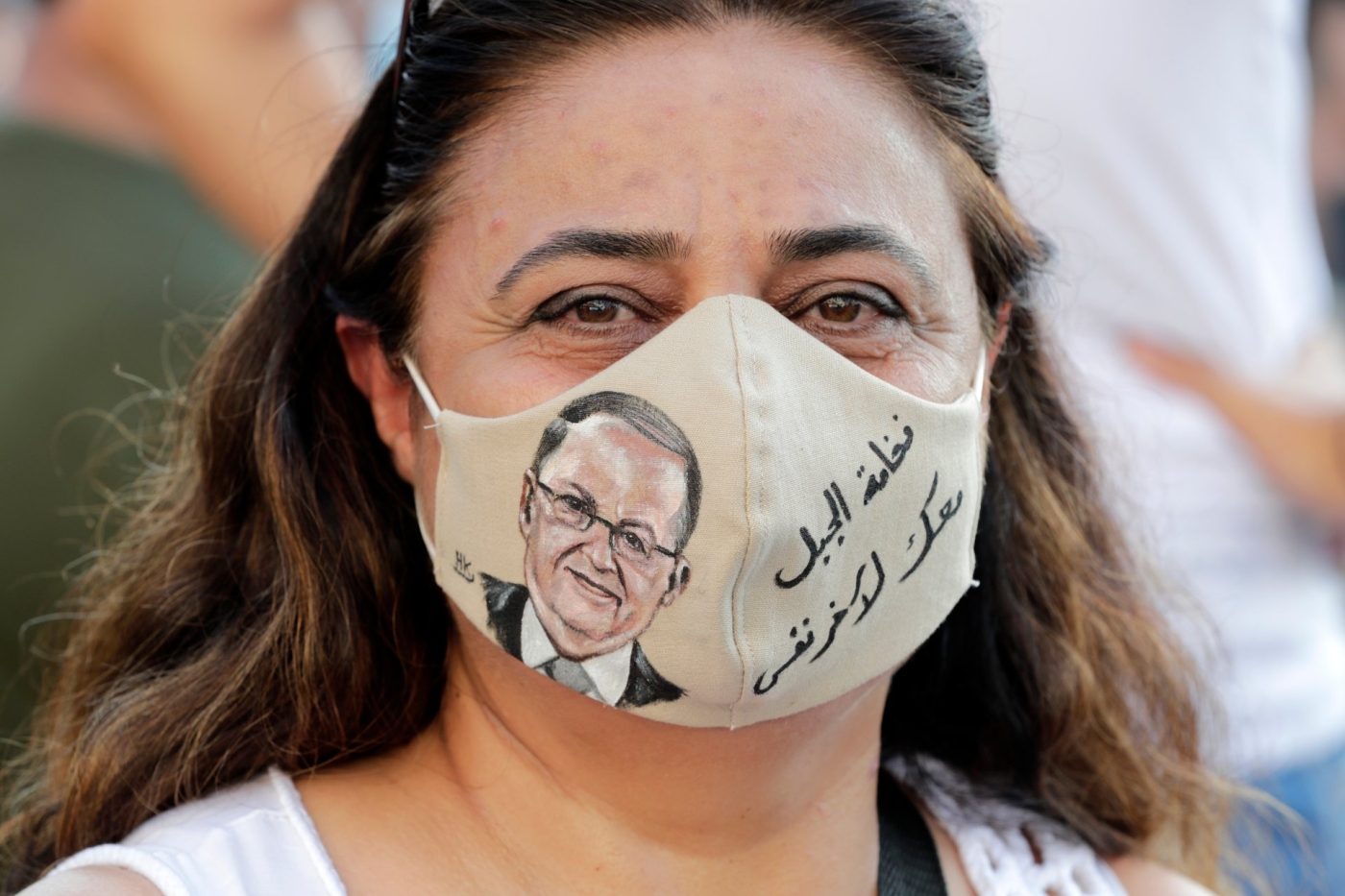
By Kareem Chehayeb -- middleeasteye.net -- Lebanon's Michel Aoun said on Monday he'd take the Covid-19 vaccine, hours after his spokesman told Middle East Eye the president had not decided whether to take it or not. The issue had become a hot topic in the country after al-Jumhurriah newspaper reported Aoun would refuse to take the vaccine and as healthcare officials attempt to tackle disinformation and conspiracy theories about the pandemic. "The President of the Republic, General Michel Aoun, will receive the vaccine against corona, in contrast to what was published today in the media and social media," Aoun's twitter account said on Monday. Earlier, his spokesman told MEE: "The president has not taken a decision yet," noting that the vaccine was not going to be rolled out in Lebanon until February anyway.
Other political officials, including Prime Minister-designate Saad Hariri and Speaker Nabih Berri, have not yet commented on the matter. Hezbollah Secretary-General Hassan Nasrallah said in an interview on Al-Mayadeen television that he would refer to his doctors' advice regarding the vaccine, but would "definitely not" take what he called "the American vaccine". Dr Firass Abiad, who heads the government-run Rafic Hariri University Hospital, told MEE that public officials needed to step up, endorse the vaccine and counter disinformation about it. "We need people with moral, social, scientific, and even religious authority coming up and endorsing the vaccine, to start some kind of a wave of acceptance," he said. "Unfortunately, up until now, we see that a lot of the people doing the talking are the sceptics with [only] some individual authorities fighting back."

BY AMY-MAE TURNER -- Mashable.com -- We're huge fans of Wikipedia. The nonprofit organization represents the largest collection of knowledge collaboratively accumulated in one place — ever. While the concept of a free, community-managed, online encyclopedia had been around for some time, Wikipedia, as we know it now, officially began with its first edit on Jan. 15, 2001, two days after the domain was registered by Jimmy Wales and Larry Sanger. Whether over the last 20 years you've used Wikipedia for study or for work, to satisfy random bursts of curiosity, to settle arguments, or to cheat at Zoom quiz nights, we're all indebted to the amazing free service. In order to celebrate Wikipedia's 20th anniversary, we're sharing 20-plus facts about the free encyclopedia that you never knew you never knew...
1. Wikipedia's stats are jaw-dropping. It currently has more than 55 million articles across more than 300 languages.
2. There are more than 280,000 editors who take time to contribute to Wikipedia every month.

by AFP -- Lebanon’s army said it had arrested eight people after a dispute led a group of Lebanese nationals to set fire to an informal refugee settlement in the country’s north. The army said on Sunday it “arrested two Lebanese nationals and six Syrians over a personal dispute … between a number of Lebanese men and Syrian workers,” according to a statement. “The Lebanese men fired bullets in the air and torched the tents of Syrian refugees,” it added, without elaborating on the cause of the altercation. The fire on Saturday night tore through the tented shelters of some 75 families near the town of Bhanine in the north Lebanon Miniyeh region, leaving only a charred wasteland. The camp’s more than 370 residents were forced to flee, according to the United Nations refugee agency (UNHCR), and at least four people were taken to hospital for injuries The National News Agency (NNA) reported that the fire followed an “altercation” between a member of a Lebanese family and “Syrian workers”. Other youths from the Lebanese family then “set fire to some of the refugees’ tents”, the NNA added. The Lebanese Civil Defence worked to control the blaze while the army and police were deployed to restore calm, according to the report. A security source told AFP shots were heard, saying the fight in the Bhanine area was set off when Syrian workers demanded a wage which their employers refused to pay.




Population Movements to Keserwan - The Khazens and The Maans
ما جاء عن الثورة في المقاطعة الكسروانية
ثورة أهالي كسروان على المشايخ الخوازنة وأسبابها
Origins of the "Prince of Maronite" Title
Growing diversity: the Khazin sheiks and the clergy in the first decades of the 18th century
Historical Members:
Barbar Beik El Khazen [English]
Patriach Toubia Kaiss El Khazen(Biography & Life Part1 Part2) (Arabic)
Patriach Youssef Dargham El Khazen (Cont'd)
Cheikh Bishara Jafal El Khazen
Patriarch Youssef Raji El Khazen
The Martyrs Cheikh Philippe & Cheikh Farid El Khazen
Cheikh Nawfal El Khazen (Consul De France)
Cheikh Hossun El Khazen (Consul De France)
Cheikh Abou-Nawfal El Khazen (Consul De France)
Cheikh Francis Abee Nader & his son Yousef
Cheikh Abou-Kanso El Khazen (Consul De France)
Cheikh Abou Nader El Khazen
Cheikh Chafic El Khazen
Cheikh Keserwan El Khazen
Cheikh Serhal El Khazen [English]
Cheikh Rafiq El Khazen [English]
Cheikh Hanna El Khazen
Cheikha Arzi El Khazen
Marie El Khazen