
by npr.org -- In mid-September, a small fishing boat packed with 37 people was found drifting off the coast of Lebanon in the Mediterranean Sea. The passengers, all trying to reach Cyprus for a better life, had paid nearly $1,000 each and were on the boat for eight days without sufficient food and water. By the time rescuers, members of a U.N. peacekeeping mission, were able to reach them, at least 13 of the four dozen or so passengers — including two children — had been lost at sea or were dead. As an economic and political crisis worsens across Lebanon, a growing number of people are trying to get out any way they can. Those with the means emigrate legally, using traditional routes such as student or work visas, or marrying foreign spouses. Those who lack the education, money or connections to make it abroad legally have increasingly resorted to paying human smugglers to take them in boats across the Mediterranean Sea. Dangerous sea crossings are occurring in unprecedented numbers, according to Guita Hourani, director of the Lebanese Center for Migration and Diaspora Studies at the University of Notre Dame-Louaize. Hourani refers to the exodus as a "forced migration" caused by the negligence and corruption of Lebanon's politicians.
During all of 2019, there were 17 sea-crossing attempts. But in the last three months alone, the U.N. Refugee Agency says there were 21 recorded attempted crossings from Lebanon to Cyprus, a European Union country some 160 miles away. Most passengers on the boats are Lebanese or Syrian nationals, according to UNHCR. With Lebanon's Ministry of Economy predicting that 60% of the population will live in poverty by the end of this year and no solutions in sight, Hourani warns that soon, even professionals and educated youth may begin attempting the dangerous route to Cyprus. Not even during Lebanon's 15-year civil war or the 2006 war between Israel and Hezbollah were sea crossings attempted from Lebanon in such high numbers, she says. Lebanon's economic collapse resulted from government debt and mismanagement. Unemployment is high, even among educated youth. The country's currency, the Lebanese pound, lost 80% of its value in the past year. Businesses have closed. Poverty is overtaking the middle class, after bank-imposed capital controls trapped people's savings.
By Sunniva Rose — thenational.ae — A coronavirus committee in the town of Hasbaya in South Lebanon has raised the alarm, saying …

by alkhaleejtoday.co -- Prime Minister Saad Hariri emphasized that “the French initiative has not ended,” noting that “this initiative wanted Lebanon to succeed and get it out of the impasse, and I do not know why they failed it.” His government is provocative names, and whoever brought down Hassan Diab’s government was the Beirut explosion. “ In an interview with the “Time Has Come” program, Hariri said: “The President of the Progressive Socialist Party, Walid Jumblatt, the head of the Lebanese Forces Party, Samir Geagea, and the head of the powerful Lebanon Bloc, Gebran Bassil, refused to take over the initiative government, so I decided to step aside.” He continued: “I am a candidate for prime minister without Jamila anyone. I have a parliamentary bloc and it is known who I am, but I do not threaten and promise as others do. Some critics and bidders want me to threaten and I will not do that, I am the son of moderate Rafik Hariri.” “I am the natural candidate for prime minister and I will make a round of contacts this week, and if all the parties are still agreeing on the program of the Pine Palace in terms of negotiations with the IMF and the required reforms then I will not close the door on the only hope to stop the collapse.
And he added, “I will conduct a round of contacts with all political parties to find out the stability of their position and their approval of the French reform paper, and if everyone agrees, I will not close the door.” He continued:I refuse to return according to the formula, either Saad Hariri and Gebran Bassil are inside or outside the government, but I think it is no longer on the table. “ He said, “We agreed in the Pine Palace that political parties would leave this government and not interfere in naming ministers and allow the new government to complete and rebuild Beirut, and everyone agreed to privatization and increase taxes.” Hariri assured that “the formation of a government of one color, as well as the government of Hassan Diab, will not obtain any support from the international community for Lebanon.” He added, “I was accused of forming the government of Dr. Mustafa Adeeb, but my job was only to warn Adeeb not to name people that provoke any political team, and to adhere to Saad Hariri’s nomination by Amal Movement and Hezbollah is only to avoid the Sunni-Shiite tension.”
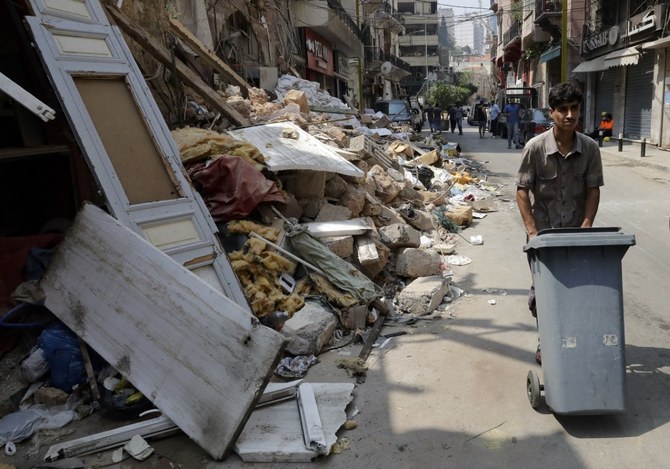
by arabnews.com -- PARIS: France will hold a humanitarian aid conference for Lebanon in November, French Foreign Minister Jean-Yves Le Drian said on Wednesday. The conference was initially planned for the end of October. Le Drian also told the French National Assembly that the Lebanon international contact group would meet in the coming days to reiterate the need for the formation of a government.




Population Movements to Keserwan - The Khazens and The Maans
ما جاء عن الثورة في المقاطعة الكسروانية
ثورة أهالي كسروان على المشايخ الخوازنة وأسبابها
Origins of the "Prince of Maronite" Title
Growing diversity: the Khazin sheiks and the clergy in the first decades of the 18th century
Historical Members:
Barbar Beik El Khazen [English]
Patriach Toubia Kaiss El Khazen(Biography & Life Part1 Part2) (Arabic)
Patriach Youssef Dargham El Khazen (Cont'd)
Cheikh Bishara Jafal El Khazen
Patriarch Youssef Raji El Khazen
The Martyrs Cheikh Philippe & Cheikh Farid El Khazen
Cheikh Nawfal El Khazen (Consul De France)
Cheikh Hossun El Khazen (Consul De France)
Cheikh Abou-Nawfal El Khazen (Consul De France)
Cheikh Francis Abee Nader & his son Yousef
Cheikh Abou-Kanso El Khazen (Consul De France)
Cheikh Abou Nader El Khazen
Cheikh Chafic El Khazen
Cheikh Keserwan El Khazen
Cheikh Serhal El Khazen [English]
Cheikh Rafiq El Khazen [English]
Cheikh Hanna El Khazen
Cheikha Arzi El Khazen
Marie El Khazen