
By NAJIA HOUSSARI -- arabnews.com -- BEIRUT: Two Lebanese soldiers were killed early Sunday at their barracks, hours after security forces had attacked a terror cell on the border with Syria. The Lebanese army said that on Sunday at 1 a.m. terrorists in a car had opened fire on guards at an army post in Arman-Miniyeh, which is north of Beirut. The guards responded by returning fire. The gunfight killed two soldiers and one of the attackers, while the remaining assailants fled.
The army, in another statement, said: “The terrorist Omar Burais, who was on a motorcycle, attempted to enter an army post in Arman in Miniyeh and the guards stopped him, which led to his immediate death. Upon examination of the terrorist’s body, hand grenades and an explosive belt, which he intended to detonate inside the post, were found in his possession. A military expert worked to dismantle the explosive belt and detonate it.” Army units raided places that Burais used to visit and they arrested five of his relatives, including uncles and cousins. The army mourned the soldiers killed in the attack: Cpl. Mohammed Khaled Al-Nashar and Cpl. Ahmed Khaled Saqr. The attack followed an operation from the Information Division of the Internal Security Forces against terrorists in the northern border region of Wadi Khaled. The division said it had identified and tracked down the people responsible for last month’s Kaftoun-Koura assault, which killed three municipal guards in the town, and it emerged that the perpetrators were part of a cell working for Daesh in Lebanon. “As a result of the efforts, the Information Division managed to identify all the terrorist group’s members, who were more than 15 and worked under the command of a Syrian (M.H.), and arrested three of them,” it added. “On Sept. 26, the Information Division identified the whereabouts of the terrorist group’s members in Wadi Khaled, and they were in a secluded house. A security operation was carried out by the division’s Strike Force to besiege the house.”
by reuters — BEIRUT – Leading Lebanese politician Gebran Bassil has been infected with a “mild” case of the coronavirus, his party …
by AFP — At a rare news conference devoted to Lebanon, Macron said the political elite had decided “to betray” their obligations …
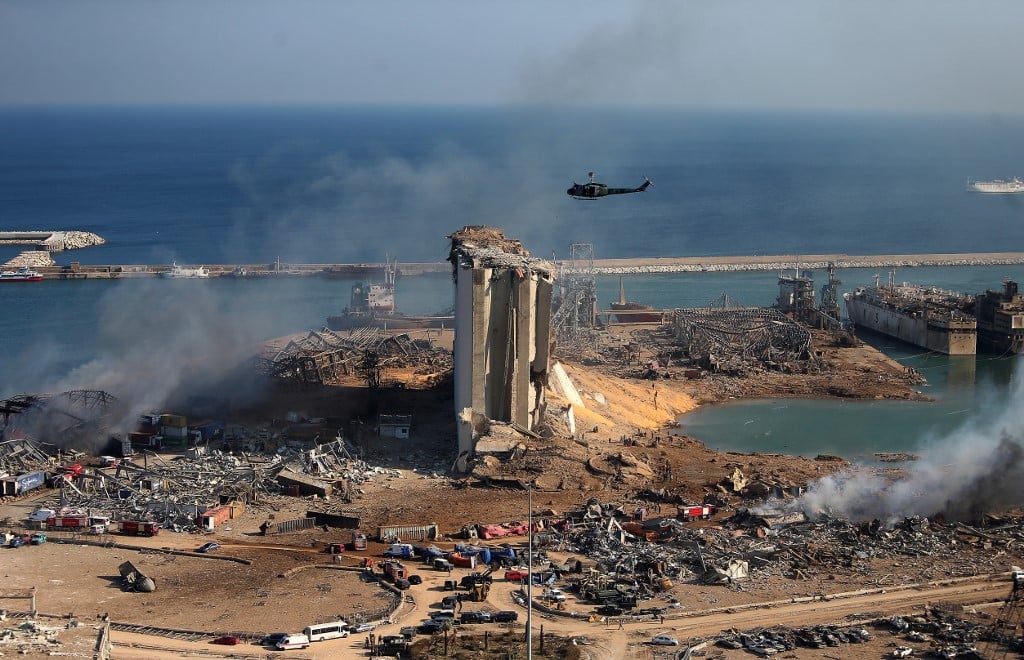
by upnewsinfo.com -- Matilda Coleman -- Lebanon’s political instability, failing economy, and the economic impact of the COVID-19 pandemic has pushed the Lebanese pound to lose 80% of its value, since August, according to the Associated Press. Many Lebanese nationals have turned to real estate during this of crisis, in a bid to safeguard their money. According to Bank Audi, in the first five months of 2020, residential real estate sales increased rose more than 50 percent, valuing the overall real estate market at $3.7 billion in May. Moreover, according to Lebanon’s General Directorate of Land Registry, real estate transactions jumped more than 16% in the first quarter of this year. However, August’s port explosion in Beirut led to an estimated 70,000 destroyed houses, 40,000 damaged buildings and 30,000 people being displaced.
Local action: The International Monetary Fund said in April that Lebanon’s economy is expected to shrink 12% in 2020. The government also announced a plan aimed at restoring positive growth in 2022 and promised assistance for the needy, yet many remain skeptical. An IMF emergency bailout for the country is also still pending approval following many rounds of negotiation. In the meantime, local non-profit organisations have been rolling up their sleeves to help rebuild their communities. Some Beirut NGOs have raised around $10 million to help reconstruct the city. Eddy Bitar is the co-founder of Live Love Lebanon, and he estimates that the destruction of residential areas could total $5 billion.




Population Movements to Keserwan - The Khazens and The Maans
ما جاء عن الثورة في المقاطعة الكسروانية
ثورة أهالي كسروان على المشايخ الخوازنة وأسبابها
Origins of the "Prince of Maronite" Title
Growing diversity: the Khazin sheiks and the clergy in the first decades of the 18th century
Historical Members:
Barbar Beik El Khazen [English]
Patriach Toubia Kaiss El Khazen(Biography & Life Part1 Part2) (Arabic)
Patriach Youssef Dargham El Khazen (Cont'd)
Cheikh Bishara Jafal El Khazen
Patriarch Youssef Raji El Khazen
The Martyrs Cheikh Philippe & Cheikh Farid El Khazen
Cheikh Nawfal El Khazen (Consul De France)
Cheikh Hossun El Khazen (Consul De France)
Cheikh Abou-Nawfal El Khazen (Consul De France)
Cheikh Francis Abee Nader & his son Yousef
Cheikh Abou-Kanso El Khazen (Consul De France)
Cheikh Abou Nader El Khazen
Cheikh Chafic El Khazen
Cheikh Keserwan El Khazen
Cheikh Serhal El Khazen [English]
Cheikh Rafiq El Khazen [English]
Cheikh Hanna El Khazen
Cheikha Arzi El Khazen
Marie El Khazen