
Opinions many not necessarily represents khazen.org views
BY EDWARD M. GABRIEL, OPINION CONTRIBUTOR -- The Hill -- The explosion that rocked Beirut, Lebanon, on Aug. 4, killing nearly 200 and injuring 6,500, left 300,000 people in need of food and 170,000 in need of shelter. This massive explosion has devastated a country that already was struggling economically. Lebanon was in financial default, with an 80 percent decrease in the value of its currency and food prices that had risen 55 percent. It has the highest per capita of refugees in the world, making up almost 20 percent of its inhabitants. And now its government has collapsed for the second time in a year, as the country continues to feel the pain of the COVID-19 pandemic. The people of Lebanon appear to have reached their limits, expressing hopelessness not before seen in a country that once was considered “the Switzerland of the Middle East.” Millions of citizens have taken to the streets in demonstrations for almost a year, protesting government corruption and incompetence. In the worst of times, such as these for Lebanon, America’s values can shine the most — and this may be such a moment for the United States.
One banner carried in the streets of Lebanon read: “You can’t clean a house with a dirty mop!” For the past year, in a strong carrot-and-stick approach, the United States, its European partners and several Gulf countries have signaled their interest to offer billions of dollars in aid to stabilize and rebuild Lebanon — but only if the country will establish a transparent government willing to make specific regulatory and budget reforms. The US on Tuesday sanctioned two former parliamentary ministers for providing support to Hezbollah, and French President Emmanuel Macron recently showed resolve by threatening sanctions on Lebanon’s corrupt individuals and anyone who harbors terrorist activities.
The United States can do more to help. It should step up the aid offered to organizations that advocate for the right of Lebanon’s citizens to freely assemble and express their demands for judicial and governmental reforms, and to American-style universities that it has supported in Lebanon. The U.S. has formed a solid, useful partnership with the Lebanese Armed Forces (LAF), which the U.S. military has called one of the best-trained fighting forces in the Arab world. This support, and the carrot-and-stick approach of the international community, is helpful in the longer term. Following the blast, the U.S. extended $18 million in humanitarian support, and it has promised $30 million in aid through the World Food Program. Yet, for a catastrophe of this size, this amount of assistance is paltry in comparison to the need. Both Congress and the U.S. administration have appeared reluctant to send humanitarian aid, out of concern that it could fall into the hands of Hezbollah or be utilized for corrupt or nefarious purposes.
By xinhuanet.com — Lebanese President Michel Aoun said Thursday that the massive fire that erupted at Beirut’s port earlier in the day …
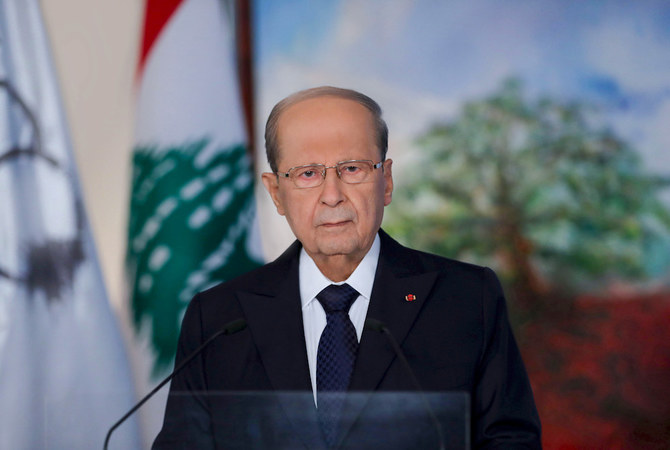
by arabnews.com -- BEIRUT: Lebanon’s President Michel Aoun has asked his interim foreign minister to contact the US embassy about the imposition of sanctions on two of the country’s former ministers, the presidency media office said on Wednesday. Aoun also requested contact be made with the Lebanese embassy in Washington “in order to understand the circumstances” behind the decision to place the politicians, allied with the Shiite Muslim group Hezbollah, on its sanctions list. The US Treasury on Tuesday announced it was imposing sanctions on former finance minister and top Amal official Ali Hassan Khalil and former public works and transportation minister Youssef Fenianos, a senior member of the Christian Marada Movement. The treasury department said they “provided material support to Hezbollah and engaged in corruption.” The move was Washington strongest warning against Hezbollah’s allies. Khalil is currently a member of the Lebanese Parliament and Hezbollah and its allies control majority seats in parliament.
The Shiite Amal group is headed by Lebanon’s longtime Parliament Speaker Nabih Berri and the Marada Movement is an organization allied with Hezbollah and Syrian President Bashar Assad’s government. The sanctions came as Lebanon grapples with an unprecedented economic and financial crisis and deals with the aftermath of a devastating explosion at Beirut’s port that killed more than 190, wounded 6,500 and caused damage worth billions of dollars. The sanctions also came as prime minister-designate Mustapha Adib works to form a new Cabinet to replace the one that resigned on Aug. 10, six days after nearly 3,000 tons of ammonium nitrate detonated in Beirut. The disaster fueled outrage against a ruling class that has run the country for decades amid widespread corruption and mismanagement. Some analysts in Lebanon saw the sanctions as a message to Hezbollah’s allies to review their links with the Iran-backed group, especially by targeting a Christian ally for the first time. “Fenianos and Ali Hassan Khalil are two central figures in the coalition that is led by Hezbollah,” said Ali Hamadeh, a political writer at An-Nahar newspaper who is often critical of the Iran-backed group.
by AFP — Lebanon launched a forensic audit of the central bank, in line with a long-standing request of donors, an outgoing …




Population Movements to Keserwan - The Khazens and The Maans
ما جاء عن الثورة في المقاطعة الكسروانية
ثورة أهالي كسروان على المشايخ الخوازنة وأسبابها
Origins of the "Prince of Maronite" Title
Growing diversity: the Khazin sheiks and the clergy in the first decades of the 18th century
Historical Members:
Barbar Beik El Khazen [English]
Patriach Toubia Kaiss El Khazen(Biography & Life Part1 Part2) (Arabic)
Patriach Youssef Dargham El Khazen (Cont'd)
Cheikh Bishara Jafal El Khazen
Patriarch Youssef Raji El Khazen
The Martyrs Cheikh Philippe & Cheikh Farid El Khazen
Cheikh Nawfal El Khazen (Consul De France)
Cheikh Hossun El Khazen (Consul De France)
Cheikh Abou-Nawfal El Khazen (Consul De France)
Cheikh Francis Abee Nader & his son Yousef
Cheikh Abou-Kanso El Khazen (Consul De France)
Cheikh Abou Nader El Khazen
Cheikh Chafic El Khazen
Cheikh Keserwan El Khazen
Cheikh Serhal El Khazen [English]
Cheikh Rafiq El Khazen [English]
Cheikh Hanna El Khazen
Cheikha Arzi El Khazen
Marie El Khazen