
by foreignpolicy.com -- BY ANCHAL VOHRA -- There is a saying in Lebanon that the country functions better without a government than with one. That has never been truer than now. Minutes after the explosion ripped through Beirut on Aug. 4, Red Cross medics appeared on the street with first aid kits, and volunteers managed traffic. Young men and women carrying water bottles went door to door asking if anyone needed help. Lebanon’s conflict-ridden past, riddled with wars and invasions, economic collapse, and rampant corruption, has steadily trained citizens to spring into action when confronted with an emergency. Within a week of the explosion that wreaked havoc in the capital, they cleaned the city’s roads, which had been made impassable with broken glass and debris.
Of course, in any other country, the army and disaster management officials would have also rushed to the spot of the explosion; politicians would have lined up to offer condolences and support. But here the state was conspicuously absent. Instead, President Michel Aoun imposed a state of emergency and granted the army expansive powers to curb freedom of movement, press, and assembly to boot out angry protesters from the streets. The Lebanese people have been both first responders and victims of their government’s response. Mounds of shattered glass, wood, and entangled metal, mixed with household items such as half-torn books, contorted utensils, and photographs, now fill the sidewalks of the neighborhoods that were, before the blast, the heart of the city. The volunteers who wielded brooms and shovels through the Christian-dominated neighborhoods of Gemmayze and Mar Mikhael hailed from across the country’s religious sects. Two groups of scouts, one from the Sunni-dominated northern city of Tripoli wearing maroon vests, and one from the Shiite south in green, were busy sweeping damaged houses. (The state was nowhere in sight: Police officers merely guarded the entry to the road and roped off a building that was in danger of collapse.)
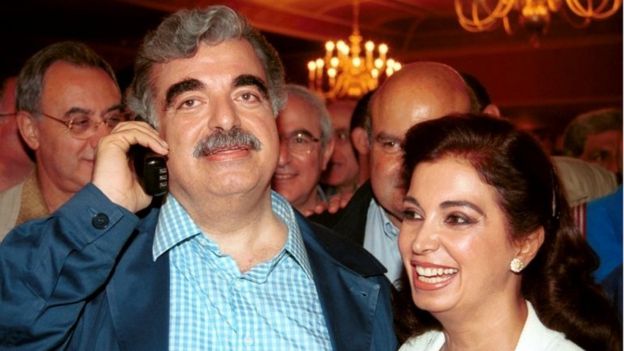
by bbc.com -- A UN-backed court has found a member of the militant group Hezbollah guilty of involvement in the assassination of former Lebanese PM Rafik Hariri. Judges at the Netherlands-based Special Tribunal for Lebanon said Salim Ayyash had a central role in the bomb attack in Beirut in 2005 that killed Hariri. They acquitted three other defendants, who like Ayyash were tried in absentia. Hezbollah denied any involvement, and the judges said no evidence implicated the Shia militant group's leaders. Hariri's son Saad, who is himself a former prime minister, told reporters outside the court: "I think today everybody's expectation was much higher than what came out, but I believe the tribunal came out with a verdict that is satisfying and we accept it." Now, he said, it was time for Hezbollah to "make sacrifices". "It is clear that the network responsible is from its ranks," he added. "We will not rest until the punishment is carried out."
The verdict comes at a time of crisis in Lebanon, with the country still reeling from a devastating explosion at Beirut's port two weeks ago that killed at least 180 people. The blast led to the resignation of the government, already embattled by protests over an economic collapse that has seen many people lose their savings and jobs. The tribunal's verdicts will disappoint supporters of Rafik Hariri as well the families of the 21 others who were killed and the 226 who were wounded, many grievously. The man convicted in his absence, Salim Ayyash, was a well-connected, mid-level operative in Hezbollah, the most powerful military and political group in Lebanon. It is classified by the UK, the US and others as a terrorist organisation.
By Vandana Rambaran | Fox News — Lebanese President Michel Aoun says it’s “impossible” that explosive material in the Beirut port that …

by english.aawsat.com -- Warnings by Western officials over the need for reforms in Lebanon had often been met with disappointing responses by the country’s political leaders, a senior United Nations official said on Monday following this month’s Beirut port explosion. US and French officials visiting the city after the Aug. 4 blast that killed 178 people said they had made clear they would not extend a financial lifeline to the country if its leaders did not tackle corruption and mismanagement. The officials were representing the International Support Group (ISG) for Lebanon which includes the United Nations, the United States, France and Britain. “With grave concerns ISG Ambassadors today discussed the deepening overall crisis in Lebanon,” tweeted Jan Kubis, UN special coordinator for Lebanon.
He said tough warnings had been delivered to the authorities and political leaders and their responses had often been rather disappointing. “Expectations of the international community are well known - without urgent reforms that require broad political support Lebanon cannot count on any bailout,” he tweeted. The call echoes others from Western powers, including French President Emmanuel Macron and US Undersecretary for Political Affairs David Hale, who both visited Beirut. Hale said Lebanon needed “economic and fiscal reforms, an end to dysfunctional governance and to empty promises”. The detonation of highly-explosive material stored unsafely for years at the port injured 6,000, left 300,000 homeless and destroyed whole neighborhoods. The now-caretaker cabinet on Monday extended a state of emergency in the capital until Sept. 18.




Population Movements to Keserwan - The Khazens and The Maans
ما جاء عن الثورة في المقاطعة الكسروانية
ثورة أهالي كسروان على المشايخ الخوازنة وأسبابها
Origins of the "Prince of Maronite" Title
Growing diversity: the Khazin sheiks and the clergy in the first decades of the 18th century
Historical Members:
Barbar Beik El Khazen [English]
Patriach Toubia Kaiss El Khazen(Biography & Life Part1 Part2) (Arabic)
Patriach Youssef Dargham El Khazen (Cont'd)
Cheikh Bishara Jafal El Khazen
Patriarch Youssef Raji El Khazen
The Martyrs Cheikh Philippe & Cheikh Farid El Khazen
Cheikh Nawfal El Khazen (Consul De France)
Cheikh Hossun El Khazen (Consul De France)
Cheikh Abou-Nawfal El Khazen (Consul De France)
Cheikh Francis Abee Nader & his son Yousef
Cheikh Abou-Kanso El Khazen (Consul De France)
Cheikh Abou Nader El Khazen
Cheikh Chafic El Khazen
Cheikh Keserwan El Khazen
Cheikh Serhal El Khazen [English]
Cheikh Rafiq El Khazen [English]
Cheikh Hanna El Khazen
Cheikha Arzi El Khazen
Marie El Khazen