
by thearabweekly.com -- BEIRUT--Tehran insists on being strongly present in Lebanon after the massive blast at Beirut’s port, with Iranian Foreign Minister Mohammad Javad Zarif visiting the Lebanese capital Friday, in conjunction with the visit of the US Assistant Secretary of State David Hale. Soon after his arrival in Lebanon, Zarif, who will be holding meetings with senior Lebanese officials, said that only the Lebanese people and their representatives can decide the country’s future. The blast at the Beirut’s port last week killed 172 people and prompted the government to resign. Iran backs Lebanon’s powerful armed movement Hezbollah, which along with its allies helped form the outgoing government. The United States classifies Hezbollah as a terrorist group.
The Iranian foreign minister played the moral high ground while he checked on his country's interests in Lebanon. “It is not humane to exploit the pain and suffering of the people for political goals,” Iran’s Zarif told a joint news conference with Lebanon’s caretaker foreign minister. “We believe that the government and the people of Lebanon should decide on the future of Lebanon.” Zarif was speaking after senior US and French officials met President Michel Aoun in a flurry of Western diplomacy that has focused on urging Lebanon to fight entrenched corruption and enact long-delayed reforms to unlock foreign financial aid needed to tackle an economic crisis.
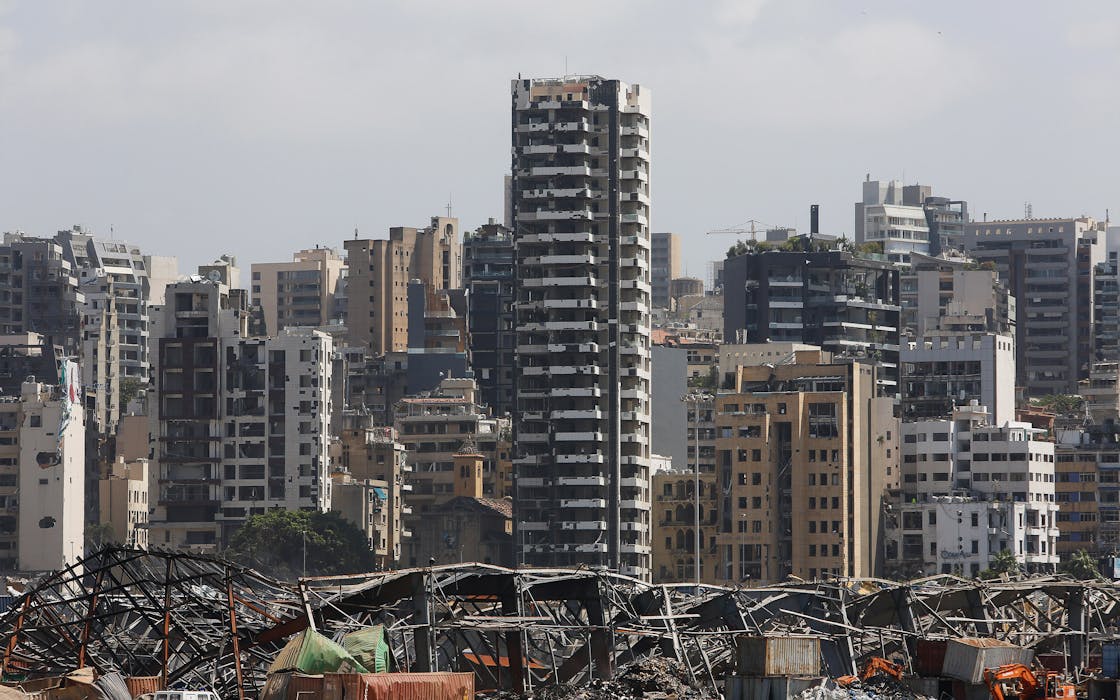
by Zeina Karam and Lori Hinnant The Associated Press -- Lebanon’s judicial investigation of the Beirut port explosion started with political wrangling over the naming of a lead investigator, military threats to jail leakers and doubts over whether a panel appointed along sectarian lines could be fully impartial. So for many Lebanese, their greatest hope for credible answers about the blast that wrecked much of their capital may lie with outsiders. Families of the dead and survivors on Friday called on the U.N. Security Council for an international investigation. Others pin their hopes on the French forensic police who have joined the probe and FBI investigators are expected to take part. Two French investigating magistrates have been assigned to the case, the Paris prosecutor’s office said Friday. “We are not lawyers or politicians, we are families and people, our appeal today is to the people of the international community,” said Paul Najjar, a survivor of the explosion. “Is it acceptable today that people would find their homes shattered, their families killed, their hopes and their dreams killed as well, with no justice, in all impunity?”
A Lebanese prosecutor on Friday postponed the questioning of former and current, caretaker finance and public works ministers, pending a letter from the newly appointed investigator assigned to the case that says he lacked the authority to question ministers. French teams have pressed ahead at their work, sending divers into the underwater crater, taking explosives samples and preparing recommendations for both the French and Lebanese magistrates. Among the French judicial police on the case are men and women who responded after the 2004 tsunami in Japan, the 2010 earthquake in Haiti, and the November 2015 and Bastille Day 2016 terror attacks in France.
by foxnews.com -- Brooke Singman --President Trump on Thursday announced what he called a “Historic Peace Agreement” between Israel and the United Arab Emirates, saying they agreed to “full normalization of relations.” “HUGE breakthrough today! Historic Peace Agreement between our two GREAT friends, Israel and the United Arab Emirates!” Trump tweeted Thursday morning. The president, Israeli Prime Minister Benjamin Netanyahu and Crown Prince of Abu Dhabi and Deputy Supreme Commander of the United Arab Emirates Sheikh Mohammed Bin Zayed released a joint statement Thursday, after the three spoke “and agreed to the full normalization of relations between Israel and the United Arab Emirates.” The statement said that the “diplomatic breakthrough” was at “the request of President Trump,” and that Israel will “suspend declaring sovereignty over areas outlined in the President’s Vision for Peace and focus its efforts now on expanding ties with other countries in the Arab and Muslim world.”
Israel and the UAE also said they will continue their efforts to “achieve a just, comprehensive and enduring resolution to the Israeli-Palestinian conflict.” “This historic diplomatic breakthrough will advance peace in the Middle East region and is a testament to the bold diplomacy and vision of the three leaders and the courage of the United Arab Emirates and Israel to chart a new path that will unlock the great potential in the region,” the statement read. “All three countries face many common challenges and will mutually benefit from today’s historic achievement.” Delegations from Israel and the UAE are expected to meet in the coming weeks to “sign bilateral agreements regarding investment, tourism, direct flights, security, telecommunications, technology, energy, healthcare, culture, the environment, the establishment of reciprocal embassies, and other areas of mutual benefit.” “Opening direct ties between two of the Middle East’s most dynamic societies and advanced economies will transform the region by spurring economic growth, enhancing technological innovation, and forging closer people-to-people relations,” the statement also read. Trump on Thursday said he had a call with Israel and the United Arab Emirates.
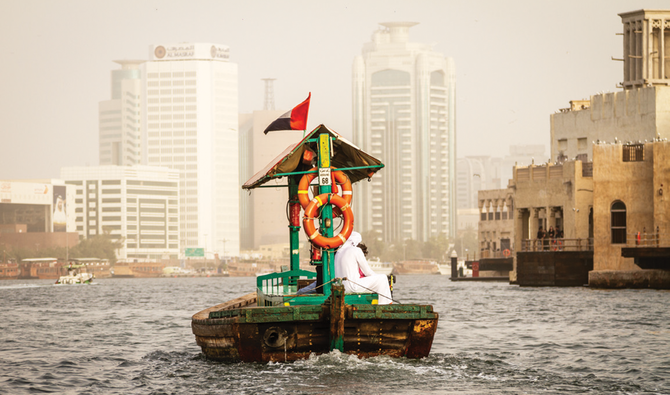
by arabnews.com -- DUBAI: Just days after the enormous blast that shattered Beirut, Ali Hammoud found himself looking down on the rubble from an airplane window, leaving behind his family and hometown. Born and raised in Lebanon’s capital, the 30-year-old IT engineer finally decided to head for Dubai after the explosion destroyed his last hopes of ever seeing Beirut prosper. “It’s not easy at all, but I had to finally leave. I feel I’ve betrayed the city I love to death, but there is nothing left for me there except depression,” Hammoud said after arriving in the Gulf emirate. “Now I can start a professional career, live in peace and send money back to my family,” said Hammoud, who had spent a year looking in vain for work before the Aug. 4 disaster that left more than 170 people dead and compounded Lebanon’s financial crisis.
Like many of his compatriots longing for safety and stability, the young man has applied for a job in Dubai. He joins tens of thousands of Lebanese who helped build a glitzy city that reminds them of their parents’ tales of the glamor of old Beirut — but with glimmering skyscrapers instead of Ottoman-era and French colonial villas. Last week’s explosion of a long-neglected stock of ammonium nitrate at Beirut’s port ripped through the vibrant coastal city known for its rich history as well as legendary nightlife and cuisine. The fact that Lebanese officials had long tolerated a ticking time-bomb in the heart of the Mediterranean city has served as proof to many of the rot at the core of the state apparatus. “My aim is to overcome the guilt of leaving,” said Hammoud. “Dubai will be my new Beirut.”




Population Movements to Keserwan - The Khazens and The Maans
ما جاء عن الثورة في المقاطعة الكسروانية
ثورة أهالي كسروان على المشايخ الخوازنة وأسبابها
Origins of the "Prince of Maronite" Title
Growing diversity: the Khazin sheiks and the clergy in the first decades of the 18th century
Historical Members:
Barbar Beik El Khazen [English]
Patriach Toubia Kaiss El Khazen(Biography & Life Part1 Part2) (Arabic)
Patriach Youssef Dargham El Khazen (Cont'd)
Cheikh Bishara Jafal El Khazen
Patriarch Youssef Raji El Khazen
The Martyrs Cheikh Philippe & Cheikh Farid El Khazen
Cheikh Nawfal El Khazen (Consul De France)
Cheikh Hossun El Khazen (Consul De France)
Cheikh Abou-Nawfal El Khazen (Consul De France)
Cheikh Francis Abee Nader & his son Yousef
Cheikh Abou-Kanso El Khazen (Consul De France)
Cheikh Abou Nader El Khazen
Cheikh Chafic El Khazen
Cheikh Keserwan El Khazen
Cheikh Serhal El Khazen [English]
Cheikh Rafiq El Khazen [English]
Cheikh Hanna El Khazen
Cheikha Arzi El Khazen
Marie El Khazen