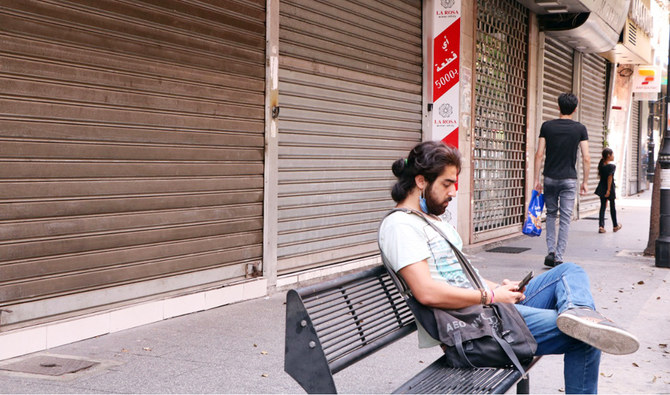
by Carine Hajjar ,National Review -- news.yahoo.com -- This week, while reading a slew of WhatsApp messages from family in Lebanon, I was shocked to hear that my cousin Dalila had to pay the equivalent of USD 200 for dairy products for her family. Expensive dairy is the least of Dalila’s worries, however. As a new mother, she is facing quotas when buying products for her baby boy. “Last month was hard because I was only able to buy two of each item — a maximum of two diapers!” she told me. Her biggest problem is getting formula: “All baby formula is out of stock. They are not going to bring them to Lebanon anymore.” This is the new normal for Dalila and all mothers during Lebanon’s second month of hyperinflation. But for me, this is a shocking departure from the Lebanon I remember. It was just two years ago that I spent a few weeks in Beirut with my family, celebrating Dalila’s wedding. We spent those summer nights going to many of Beirut’s fabled restaurants and enjoying the vibrant shopping centers, the streets filled with sleek sports cars, and the extravagant hotels that the Mediterranean nation is known for. During the day, we’d venture to different beaches, amazed at the lavish coastal resorts. On family visits to surrounding villages, we were greeted with trademark Lebanese hospitality. From the moment you step into a house, there is a full mezza set out with hummus, tabbouleh, grape leaves, nuts, and much more. Just when you’re about to burst, platters of kebabs, rice, and vegetables are brought out, topped off by towers of fruit for dessert. And, of course, an ornate hookah was at the disposal of any visitor as they ate and drank.
In a word, it was a place of abundance. But the “land of milk and honey,” where locals boast of their ability to “ski and swim in one day,” is now financially gutted, leaving its citizens wanting for electricity and even meat. The rumblings began in October, when a proposed WhatsApp tax sparked massive protests against the Lebanese government and its decades of corruption. Since then, the Lebanese economy has crumbled and the nation has defaulted on its Eurobond loans, government services (which were always unreliable) have virtually disappeared, and Lebanon has become the 62nd case in history of hyperinflation, with a rate of 462 percent. Lebanon and Venezuela are the only two countries in the world currently experiencing hyperinflation. Many chalk up the nation’s crisis to years of a government-led Ponzi scheme. In a New York Times op-ed, Lina Mounzer, a Lebanese citizen, points to years of unsustainable interest rates and debt financing by Lebanese banks in conjunction with the central bank, the Banque du Liban, and the government. Mounzer notes that politicians achieved “individual enrichment” using “increased public debt.” More specifically, Lebanese banks offered exorbitantly high interest rates to attract foreign currency — mainly U.S. dollars — to maintain the peg for the Lebanese pound (LBP).
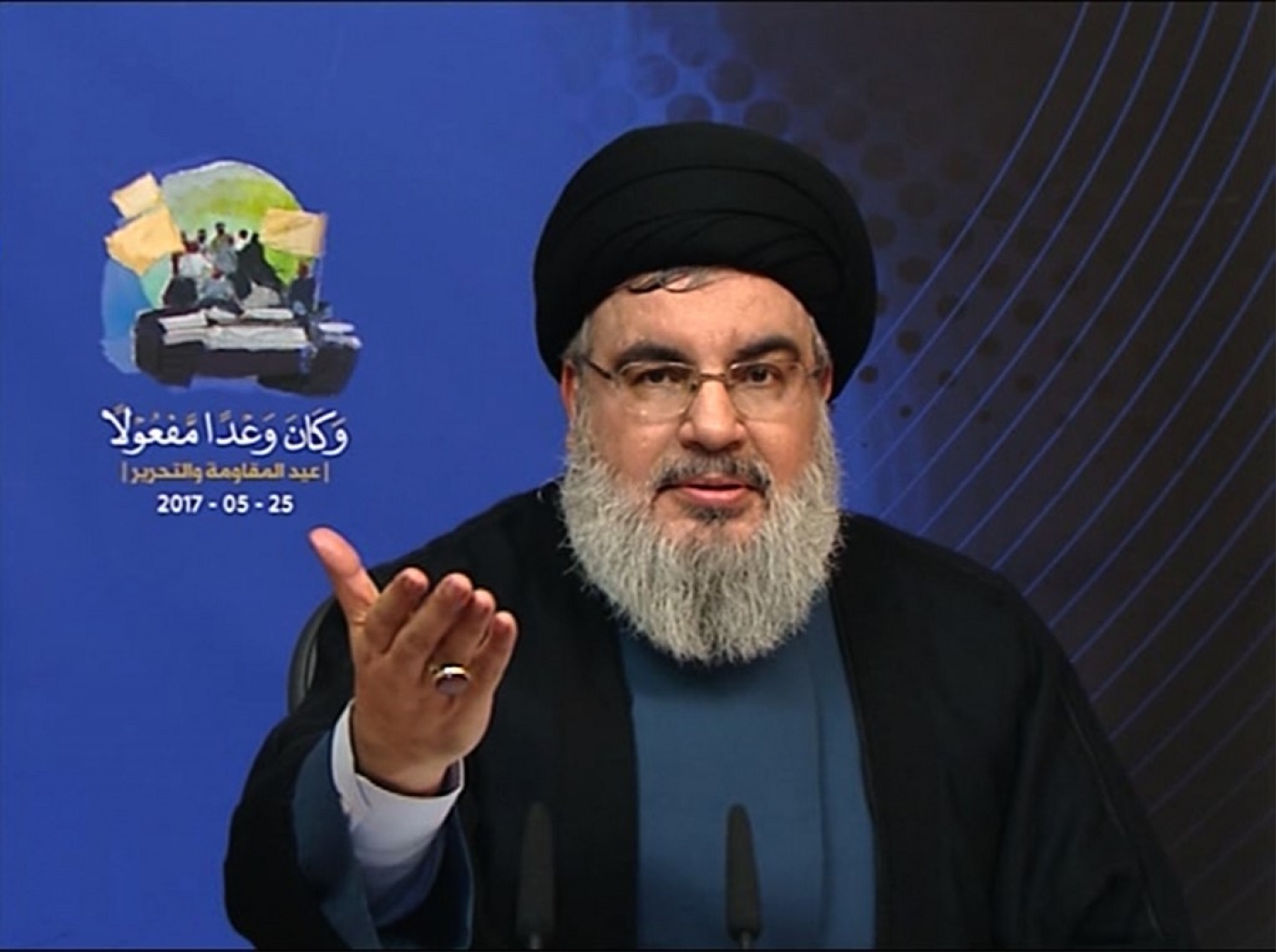
by middleeasteye.net -- US President Donald Trump has renewed a 13-year national emergency order over the political situation in Lebanon, citing Iran's "ongoing" weapons transfers to Hezbollah. The order ensures the legal grounds for the US president to levy sanctions and "to deal with the unusual and extraordinary threat to the national security and foreign policy of the United States" due to Hezbollah's presence in Lebanon, a statement released by the White House on Wednesday said. The administration said "certain persons" - alluding to members of Hezbollah and its allies - were seeking to undermine the Lebanese government. Lebanon has been dealing with several crises during the past year, from the coronavirus pandemic to a plummeting economy and recent skirmishes with the Israeli army on its southern border. Hezbollah, an Iran-backed group, is a major political party in Lebanon and consolidated its influence in the state's affairs in 2018 after winning, along with its allies, a small majority in national elections. The US designated Hezbollah a "foreign terrorist group" in 1997.
Despite Hezbollah's growing influence within the Lebanese government, the White House's order alleged "certain persons" were deliberately working to "break down" the rule of law in Lebanon "through politically motivated violence and intimidation". "Certain ongoing activities, such as Iran's continuing arms transfers to Hizballah - which include increasingly sophisticated weapons systems - serve to undermine Lebanese sovereignty, contribute to political and economic instability in the region, and continue to constitute an unusual and extraordinary threat to [US] national security and foreign policy," the White House said. Washington is particularly concerned by those allegedly seeking to "reassert Syrian control or contribute to Syrian interference in Lebanon", the order said. The annual move, entitled "Continuation of National Emergency with Respect to Lebanon", has been renewed every year since it was declared by former President George W Bush in 2007. Bush's order said the United States would freeze the property and assets of anyone trying to undermine Lebanon’s democratically elected government.

By RAY HANANIA -- arabnews.com -- CHICAGO: Texas Senator Ted Cruz is pushing new legislation that would deny US funding to any nation that provides sanctuary or support to the Lebanese Hezbollah movement, which serves as a military proxy for Iran. Now before the Senate Committee on Foreign Relations, Senate Bill 3691 was introduced by Cruz, a Republican, in May. It will receive a hearing before it is sent to the full Senate, where it is expected to be approved. The legislation specifically targets Lebanon’s government, of which Hezbollah is a part. In conjunction with the Foreign Assistance Act and the Arms Export Control Act, the bill would prohibit the US government from assisting any Lebanese government of which Hezbollah is a part, over which it exercises undue influence, or in which “a ministry, agency, or instrumentality of that government is effectively controlled by Hezbollah.”
To become law, the bill would have to also be passed by the US House before being sent to President Donald Trump, a critic of Hezbollah, for his signature. Hezbollah was designated a terrorist organization by the US in 1995. The directive does not distinguish between Hezbollah’s military arm and its political leadership. In 2013, Hezbollah’s militia was designated a terrorist organization by the EU after the group was accused of blowing up an Israeli tour bus in Bulgaria. Hezbollah remains a powerful force in Lebanon, where it has received the backing of Lebanese Prime Minister Hassan Diab. Together with its Christian political ally, the Free Patriotic Movement headed by Lebanese President Michel Aoun’s son-in-law Gebran Bassil, Hezbollah remains one of Lebanon’s most potent political organizations.
by Press Release: Euro-Med Monitor -- The Lebanese security and judicial authorities continue to suppress public freedoms and restrict freedom of publication, especially with regard to publishing information and records about politicians or influential figures, the Euro-Mediterranean Human Rights Monitor said. The Directorate General of Operation and Maintenance of the Lebanese Ministry of Communications decided to block www.shinmimlam.com website which facilitates the publication of data that is available on the Lebanese Ministry of Justice website and that is available for the public to view in the commercial registry. The decision to block the website was issued by the interim relief judge of Beirut on June 16th, although the information displayed on the website does not reveal personal data of lawyers but provides existing information. “What raises concern the most is that the appeal to block the website came from the Beirut Bar Association, which is supposed to be the first defense line for public freedoms, and a main supporter for enhancing transparency and accountability,” said Tariq Hajjar, Euro-Med Monitor’s legal advisor. “The Association’s behavior is fundamentally inconsistent with the principles and ethics that govern its work,” he added, warning of the dangerous repercussions of the decision on the transparency and integrity of its work.




Population Movements to Keserwan - The Khazens and The Maans
ما جاء عن الثورة في المقاطعة الكسروانية
ثورة أهالي كسروان على المشايخ الخوازنة وأسبابها
Origins of the "Prince of Maronite" Title
Growing diversity: the Khazin sheiks and the clergy in the first decades of the 18th century
Historical Members:
Barbar Beik El Khazen [English]
Patriach Toubia Kaiss El Khazen(Biography & Life Part1 Part2) (Arabic)
Patriach Youssef Dargham El Khazen (Cont'd)
Cheikh Bishara Jafal El Khazen
Patriarch Youssef Raji El Khazen
The Martyrs Cheikh Philippe & Cheikh Farid El Khazen
Cheikh Nawfal El Khazen (Consul De France)
Cheikh Hossun El Khazen (Consul De France)
Cheikh Abou-Nawfal El Khazen (Consul De France)
Cheikh Francis Abee Nader & his son Yousef
Cheikh Abou-Kanso El Khazen (Consul De France)
Cheikh Abou Nader El Khazen
Cheikh Chafic El Khazen
Cheikh Keserwan El Khazen
Cheikh Serhal El Khazen [English]
Cheikh Rafiq El Khazen [English]
Cheikh Hanna El Khazen
Cheikha Arzi El Khazen
Marie El Khazen