
By SAMUEL HAIG -- cointelegraph.com -- Lebanon’s national currency continues to shed value amid the country’s deepening monetary crisis, with unofficial reports indicating that the Lebanese pound, or lira, has lost 50% of its purchasing power in less than two weeks. On Thursday, local crypto advocate Saifedean Ammous, author of The Bitcoin Standard, took to Twitter to assert that after “having lost half its value in the last 10 days, the Lebanese lira is now worth one satoshi” — comprising a historic low for the currency of roughly $0.000093. On June 21, Ammous noted that “Ten years ago, one Lebanese lira was worth 0.67 Bitcoin.” “Imagine spending 45 minutes explaining Bitcoin to a group of Lebanese people and then having one of them ask: ‘but without a central bank regulating, what guarantees Bitcon’s value?’” Ammous posted a day earlier.
Lebanon’s citizens turn to crypto
It’s hard to confirm the precise exchange rate, as Lebanon’s lira has officially been valued at $0.00066 United States dollars since 1997. However, chronic economic mismanagement has led to the emergence of a parallel market for the currency. Reports indicate it has seen its value plummet 86% in roughly one year. The accelerating crisis has crippled daily life in Lebanon, with the country now preparing for a wave of emigration as it prepares to open its sole international airport following COVID-19 restrictions. “We're like prisoners who do nothing but try to plot our escape,” 32-year-old graphic designer Bernard Hage told Al Jazeera.
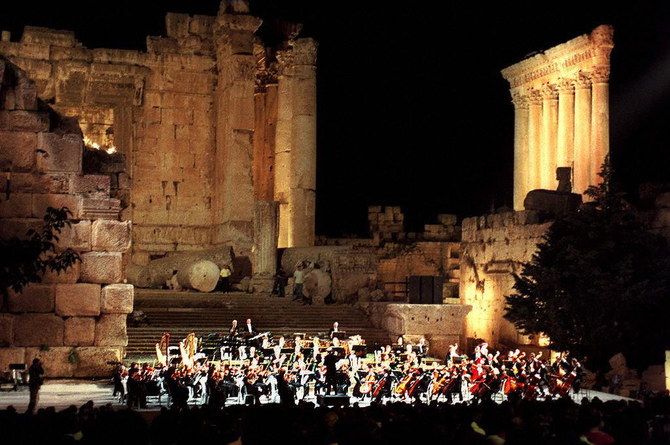
by arabnews.com --DUBAI: Lebanon’s Baalbeck International Festival is set to take place this month on July 5 despite the ongoing coronavirus, organizers announced this week. The renowned arts and culture event, however, will have no audience. It will broadcast live concerts from the heart of the Bacchus Temple, an ancient site in Lebanon’s Baalbeck at 9 p.m (Saudi time) on the festival’s Facebook and YouTube pages, MBC’s streaming service Shahid and a number of Lebanese TV channels like MTV, LBC and more. “The Bacchus Temple will harbour history, culture and arts as the City of the Sun opens virtually its gates for a one-of-a-kind live concert,” read the festival’s released statement. “The Sound of Resilience will serve as an example for future concerts to be held during the ongoing health crisis.” The program for the concert has not been revealed yet, but the festival stated that the event will celebrate Beethoven’s 250th birthday by presenting the German composer’s most famous pieces.

By Zeina Karam Associated Press BEIRUT -- With Beirut's airport partially reopening from a three-month virus shutdown, the government is hoping thousands of Lebanese expatriates will return for the summer – and bring dollars desperately needed to prop up the crashing economy. But Lebanon's far-flung diaspora, renowned as entrepreneurs who for years sent their cash home, may no longer be willing to do that. Many are staying away, appalled at the ruling elite's handling of Lebanon's unprecedented economic and financial meltdown and outraged at local banks holding their dollar deposits hostage. Some have stopped sending money, except small amounts to sustain their families. Others are considering cutting ties completely with a corrupt country they say has robbed them of a future. "If you're a Lebanese considering visiting this summer, you will think about bringing only what you need to spend while there, not a single penny more," said Hasan Fadlallah, who has lived since 1997 in Dubai, where he founded a consultancy agency, Brand Lounge. "I doubt anyone is thinking about investing in the economy, especially when you know the recipient is not worthy of this help," he said.
Once a beacon of free market growth and fine living, Lebanon is suffering the worst economic crisis in its modern history. The local currency has lost around 80% of its value against the dollar on the black market since October and continues to tumble daily. Banks have clamped down on withdrawals and transfers of U.S. dollars. Food prices have soared, businesses and households have been thrown into disarray, salaries and savings are fast disappearing, and unemployment has surged. The crisis stems from decades of systematic corruption and mismanagement. Public frustration exploded into street protests in October demanding the entire leadership go. Now, a slide into violence is feared amid mounting poverty and sectarian tensions. Still, political leaders appear unwilling to act, instead squabbling and trading blame. Talks with the International Monetary Fund over a bailout have faltered over the inability to implement pledges to combat corruption and instill reforms.

by thenational.ae -- An evening dress for milk formula, children's clothes for cooking oil – as they watch prices soar in crisis-hit Lebanon, parents are taking to bartering online to survive. Tens of thousands of people across the social spectrum have lost their job or part of their income due to Lebanon's worst economic crisis in decades. As the Lebanese pound has plunged to historic lows, many have reverted to non-cash transactions to get hold of vital goods now prohibitively expensive in the supermarket. On Facebook, a group called "Lebanon barters" has attracted 12,000 users in just two weeks. Among them, Zeinab, 25, is looking to swap a black evening dress for milk formula and two packets of nappies for her 11-month-old baby boy. "I've never asked for anything from anyone, so I thought bartering would be better," she told Agence France Presse. "I'd feel more comfortable if I swapped something I didn't need for what I really do."
Until very recently, her family lived a "good" life, said the make-up artist from the northern city of Tripoli. But then the financial crisis hit, turning their lives upside-down. Her husband's employer closed shop and the novel coronavirus pandemic prevented her from seeing clients. As the economy nose-dived, diapers suddenly cost nearly three times as much, and the price tag on milk formula almost doubled. "We're now spending the small amount we managed to save, but I don't know what we'll do when it runs out," Zeinab said.




Population Movements to Keserwan - The Khazens and The Maans
ما جاء عن الثورة في المقاطعة الكسروانية
ثورة أهالي كسروان على المشايخ الخوازنة وأسبابها
Origins of the "Prince of Maronite" Title
Growing diversity: the Khazin sheiks and the clergy in the first decades of the 18th century
Historical Members:
Barbar Beik El Khazen [English]
Patriach Toubia Kaiss El Khazen(Biography & Life Part1 Part2) (Arabic)
Patriach Youssef Dargham El Khazen (Cont'd)
Cheikh Bishara Jafal El Khazen
Patriarch Youssef Raji El Khazen
The Martyrs Cheikh Philippe & Cheikh Farid El Khazen
Cheikh Nawfal El Khazen (Consul De France)
Cheikh Hossun El Khazen (Consul De France)
Cheikh Abou-Nawfal El Khazen (Consul De France)
Cheikh Francis Abee Nader & his son Yousef
Cheikh Abou-Kanso El Khazen (Consul De France)
Cheikh Abou Nader El Khazen
Cheikh Chafic El Khazen
Cheikh Keserwan El Khazen
Cheikh Serhal El Khazen [English]
Cheikh Rafiq El Khazen [English]
Cheikh Hanna El Khazen
Cheikha Arzi El Khazen
Marie El Khazen