BEIRUT (AP) – The Lebanese pound continued to slide in price and hit its lowest level against the dollar on Wednesday, raising …

by armenianweekly.com -- Yeghia Tashjian -- Lebanese resilience is being severely tested by the ongoing financial crisis. Economic and social costs are overwhelming, and the middle class is disappearing as poverty spirals out of control. The Lebanese currency has almost lost 60 percent of its value compared to US dollars in the black market. Unemployment has reached 55 percent. Poverty has exceeded 65 percent, and we have an uncertain and unpredictable political environment. The roaring but essentially non-violent civilian protests, which have swept through Lebanon for several months, have conveyed a compelling demand for change. However, during the last two months, protesters took a violent path, looting and burning banks and stores. On a regional level, the Sunni-Shia conflict has been intensified from Yemen to Syria where institutional decay has further inflamed the region. Amid these uncertainties, Turkey has started to spread its tentacles and mobilize its proxies in Lebanon.
Davit Hirst in his book “Beware of Small States: Lebanon, Battleground of the Middle East” argues that Lebanon is a reflection of the geopolitical developments in the Middle East. Sometimes, the political developments in Lebanon reflect on the region. I would say both the political shifts in the country and the region are interdependent due to the sectarian infrastructure that had shaped the region after the fall of Saddam Hussein in Iraq. The fall of Saddam inflamed a Sunni versus Shia conflict whose roots go back to 632 AD following the death of Prophet Mohammad. The conflict was later regenerated with the political vacuum that Americans left with the ousting of the Baathist regime in Iraq. Italian philosopher Niccolo Machiavelli would have advised otherwise, that instead of dissolving the Iraqi army, which was playing the role of “check and balance” to Iran’s influence, the US would have used this army to contain the Iranian expansion and preserve the regional status quo. However, President George W. Bush’s administration unleashed more chaos in the region.

by AP -- One of the Arab world’s oldest and most prestigious universities, which endured civil war, kidnappings and various economic crises, is preparing for what may be the biggest challenge in its 154-year history. The American University of Beirut is confronting a global pandemic, a severe recession and the collapse of Lebanon’s currency — all at the same time — and is planning a series of sweeping layoffs and salary cuts in response. AUB president Fadlo Khuri said the school, which ranks among the top 150 in the world, will lay off up to 25% of its workforce, close administrative departments and shelve an ambitious project for a major new medical center. “The layoffs are very painful,” Khuri told The Associated Press in an interview at the sprawling campus on the Mediterranean Sea. “AUB has never had to do this before, we’ve never been forced to have layoffs.”
The American University of Beirut, which operates under a charter from the state of New York, was the first to introduce American education to the Middle East. For generations, it has educated the Arab world’s elite, produced three presidents, around a dozen prime ministers — including Lebanon’s current premier, Hassan Diab — and countless Cabinet ministers and ambassadors. Its vibrant campus has also been a pillar of Beirut’s cultural and intellectual life, with a diverse student body and a history of activism. The announcement has come as a shock to members of the 6,500-strong workforce of AUB and the American University Medical Center. Tens of thousands of Lebanese have already lost their jobs in a worsening economic crisis exacerbated by the coronavirus outbreak. The crisis is rooted in decades of institutionalized corruption and mismanagement that came to a head last October, igniting mass protests. The economic meltdown has plunged the fragile country into deep uncertainty and threatens to unleash further unrest and chaos. Unemployment has skyrocketed to 35%, and nearly half the population lives below the poverty line, according to the World Bank.
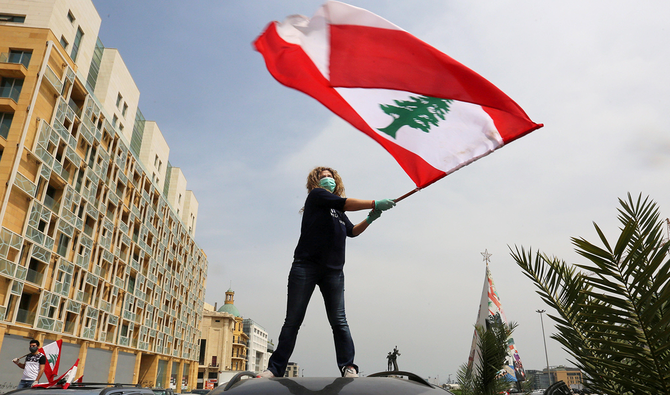
by NAJIA HOUSSARI -- .arabnews.com -- BEIRUT: The Lebanese real estate sector has witnessed a spike in activity in the past three months despite an economic crisis that has seen the exchange rate of the dollar reach 6,000 lira, four times the official price. Raja Makarem, a property expert and director of Ramco Real Estate, said that sales over the past three months amounts to over $2 billion. He told Arab News that the real estate rush “will continue as long as the Lebanese banks agree to give bank checks to their depositors.” The decline of the real estate sector was one of the major signs of the economic crisis that began in 2012. The crisis peaked after the end of subsidized housing loans and the decline of foreign investment in the Lebanese real estate market. With Lebanon entering the stage of financial collapse in the second half of last year, real estate sector indicators recorded dire results for property value and sales numbers on top of a notable decline in new building licenses.
Property sales fell by up to 70 percent and the prices of apartments, especially larger ones, fell in value by 25 percent on average. In light of banking restrictions on personal savings pushed through last November, and rumors of further measures, many Lebanese have used property as a vehicle to retain personal savings. Jamal Shamas, a property expert, said: “During the last three months, depositors, especially those with large amounts, have been rushing to buy apartments in Solidere, in the heart of Beirut, and apartments on the Beirut waterfront, as these areas maintain their value due to their unique locations.” He added: “I now receive 20 calls per day to procure apartments as an accredited expert for real estate appraisal. “This phenomenon reached its climax when the banks announced that the depositors can withdraw small amounts from their dollar-based savings in Lebanese pounds, with a generous fixed exchange rate, so depositors rushed to real estate to save their deposits.” “These depositors are not all Lebanese; there are Syrians, Iraqis, and Gulf nationals who have accounts in Lebanese banks. Most of the Lebanese are expatriates in Africa or those who work in Arab countries.”

Population Movements to Keserwan - The Khazens and The Maans
ما جاء عن الثورة في المقاطعة الكسروانية
ثورة أهالي كسروان على المشايخ الخوازنة وأسبابها
Origins of the "Prince of Maronite" Title
Growing diversity: the Khazin sheiks and the clergy in the first decades of the 18th century
Historical Members:
Barbar Beik El Khazen [English]
Patriach Toubia Kaiss El Khazen(Biography & Life Part1 Part2) (Arabic)
Patriach Youssef Dargham El Khazen (Cont'd)
Cheikh Bishara Jafal El Khazen
Patriarch Youssef Raji El Khazen
The Martyrs Cheikh Philippe & Cheikh Farid El Khazen
Cheikh Nawfal El Khazen (Consul De France)
Cheikh Hossun El Khazen (Consul De France)
Cheikh Abou-Nawfal El Khazen (Consul De France)
Cheikh Francis Abee Nader & his son Yousef
Cheikh Abou-Kanso El Khazen (Consul De France)
Cheikh Abou Nader El Khazen
Cheikh Chafic El Khazen
Cheikh Keserwan El Khazen
Cheikh Serhal El Khazen [English]
Cheikh Rafiq El Khazen [English]
Cheikh Hanna El Khazen
Cheikha Arzi El Khazen
Marie El Khazen