by naharnet -- Cabinet on Wednesday approved important administrative and financial appointments amid the boycott of Marada Movement’s two ministers Lamia Yammine and Michel Najjar. Wassim Mansouri, Salim Chahine, Bashir Yaqzan and Alexander Moradian were named as deputies for the central bank governor, as Maya Dabbagh was named head of the central bank's Banking Control Commission and Kamel Wazni, Joseph Haddad, Marwan Mikhail and Adel Dreiq were appointed as its members. Christelle Wakim was meanwhile named state commissioner to the central bank as Shadi Hanna was named as a member of the central bank's Special Investigation Commission and Wajeb Ali Qansou, Fouad Choucair and Walid Qaderi were appointed as members of the Capital Markets Authority.
As for the administrative appointments, Cabinet named Marwan Abboud as Beirut Governor, Pauline Dib as Jbeil-Keserwan Governor, Mohammed Abu Haidar as director general of the Economy Ministry, Ghassan Noureddine as Director General of Investment at the Energy Ministry, Nisrine Mashmoushi as head of the Civil Service Council, Jeryes Berbari as Director General of the Directorate General of Cereals and Sugar Beet at the Economy Ministry. The long-awaited appointments had been the subject of controversy and disagreements for several months, especially those related to the governors and the deputies of the central bank governor. “The approach of the distribution of shares, which was the norm over the past years, is no longer valid today and we believe in the inevitability of abandoning it,” Marada sources told MTV earlier on Wednesday. “There is a need to move to a transparent mechanism for appointments that would be exclusively based on competence and skill,” the sources added. “We received more than one offer over the past two days, but we rejected them in line with our previous stances,” the sources went on to say, warning that “these appointments will destroy what’s left of the spirit of this state.” “We won’t be partners in this or witnesses,” the sources added.

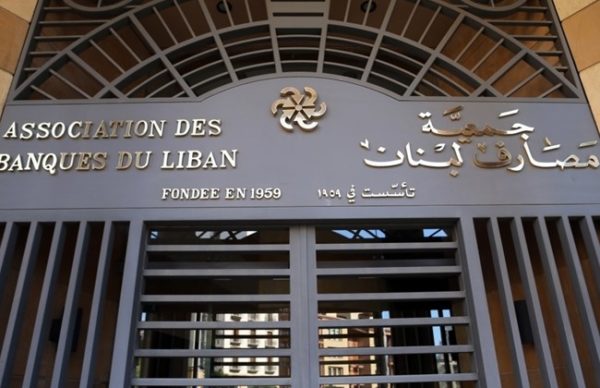
by al-monitor.com -- Hanan Hamdan -- BEIRUT — There have been widespread reports recently about the Lebanese government’s desire to restructure the banking sector. Minister of Finance Ghazi Wazni said May 15, “The government is seeking to reduce the number of banks in Lebanon — currently amounting to 49 banks — by around 50%.” Wazni’s comments came as the country entered into negotiations with the International Monetary Fund (IMF) to secure financial aid in the form of loans in return for economic reforms that Lebanon is expected to enact. Prime Minister Hassan Diab announced April 30 that the government’s economic rescue plan aims at “restructuring the banking and financial sectors in order to grease the economic wheels, provide good and sustainable job opportunities, launch promising economic sectors in line with the high capabilities of the Lebanese people and protect depositors’ money.” Lebanon’s monetary and financial crisis has led thousands of Lebanese to take to the streets on Oct. 17, 2019, to protest against the deteriorating economic and living conditions plaguing the country. Since then, the Lebanese people have been queuing up in front of banks across the country to receive parts of their deposits, after banks began to impose restrictions on foreign currency withdrawals.
The protests are still ongoing albeit at a lighter pace due to the coronavirus lockdown. Meanwhile, demonstrations took place on June 6 in Beirut's Martyrs Square. Jad Chaaban, associate professor of economics at the American University of Beirut, boiled down the current banking crisis to two main points. “First, banks lent the Lebanese state a lot of money, but the state failed to repay this money. In other words, the public sector failed to pay off its debt to the banks. The private sector and bank customers also failed to pay off their loans due to the deteriorating economic and living conditions in the country. Second, bank deposits in US dollars have declined,” he told Al-Monitor. Based on this, the government is seeking to reduce the number of banks in order to be able to weather potential challenges and meet depositors’ needs. This government’s plan has sparked debate on the mechanism that will be adopted to reduce the number of banks.

by AFP -- The UN peacekeeping force in Lebanon, criticized by the United States and Israel, needs to be "more agile and mobile," UN chief Antonio Guterres said in a report published Tuesday ahead of the mission's renewal in August. "Standard armoured personnel carriers are not entirely suitable for crowded areas, narrow streets and mountainous terrain," Guterres said. With lighter transport vehicles, troops would have fewer restrictions on their movement, he said. He also called for "better situational awareness" for UNIFIL. Lebanon and Israel are still technically at war, and UNIFIL usually patrols the border between the two. Set up in 1978, UNIFIL was beefed up after a months-long war in 2006 and tasked with guaranteeing a ceasefire and Israeli withdrawal from a demilitarized zone on the border. UNIFIL can have up to 10,000 troops on the ground, monitoring the truce and helping Lebanese troops secure the borders.
Guterres said the changes could come from "replacing some heavy infantry functions used for day-to-day activities with reconnaissance functions" using smaller "high-mobility light tactical vehicles and reconnaissance vehicles with improved monitoring capacity," he noted. The shift "would result in a force sufficiently protected but with a lighter footprint, geared towards better situational awareness," he said. That could mean more troops working in observation and surveillance missions and a reduction in the number of battalions in the zone of operations, he said. The UN head said he wanted to see construction of observation posts and for UN troops to have modern technology to collect and analyze data and improve their communications. As well as the video surveillance and sensors already deployed, Guterres called for thermal-imaging cameras, hi-tech binoculars and drones which could bolster surveillance capacity, in particular on the Blue Line separating Lebanon from Israel.
![Lebanese security forces intervene in protesters flouted iron and concrete barriers placed around the parliament building as thousands of people gather at Martyrs' Square during a demonstration to protest against economic crisis and high cost of living, on 6 June 2020 in Beirut, Lebanon. [Hussam Chbaro - Anadolu Agency]](https://i2.wp.com/www.middleeastmonitor.com/wp-content/uploads/2020/06/20200606_2_42835424_55703077.jpg?resize=1200%2C800&quality=85&strip=all&ssl=1)
by middleeastmonitor.com -- A demonstration in support of the Black Lives Matter (BLM) movement was cancelled in Lebanon yesterday because of sectarian clashes that took place in the country. A demonstration of Lebanese youth organizations that was scheduled in front of the American embassy in Awkar was cancelled due to sectarian clashes that took place yesterday, while the Speaker of Parliament considered that “any call promoting sedition has a Hebrew voice.” The youth demonstration that was scheduled at 11am in front of the US embassy to support US protests following George Floyd’s murder and condemn US interference in Lebanon’s internal affairs, was cancelled due to the tense security conditions. No new date was set for the protests. African-American Floyd died in Minneapolis on 25 May after a white police officer knelt on his neck for nearly nine minutes suffocating him.



Population Movements to Keserwan - The Khazens and The Maans
ما جاء عن الثورة في المقاطعة الكسروانية
ثورة أهالي كسروان على المشايخ الخوازنة وأسبابها
Origins of the "Prince of Maronite" Title
Growing diversity: the Khazin sheiks and the clergy in the first decades of the 18th century
Historical Members:
Barbar Beik El Khazen [English]
Patriach Toubia Kaiss El Khazen(Biography & Life Part1 Part2) (Arabic)
Patriach Youssef Dargham El Khazen (Cont'd)
Cheikh Bishara Jafal El Khazen
Patriarch Youssef Raji El Khazen
The Martyrs Cheikh Philippe & Cheikh Farid El Khazen
Cheikh Nawfal El Khazen (Consul De France)
Cheikh Hossun El Khazen (Consul De France)
Cheikh Abou-Nawfal El Khazen (Consul De France)
Cheikh Francis Abee Nader & his son Yousef
Cheikh Abou-Kanso El Khazen (Consul De France)
Cheikh Abou Nader El Khazen
Cheikh Chafic El Khazen
Cheikh Keserwan El Khazen
Cheikh Serhal El Khazen [English]
Cheikh Rafiq El Khazen [English]
Cheikh Hanna El Khazen
Cheikha Arzi El Khazen
Marie El Khazen