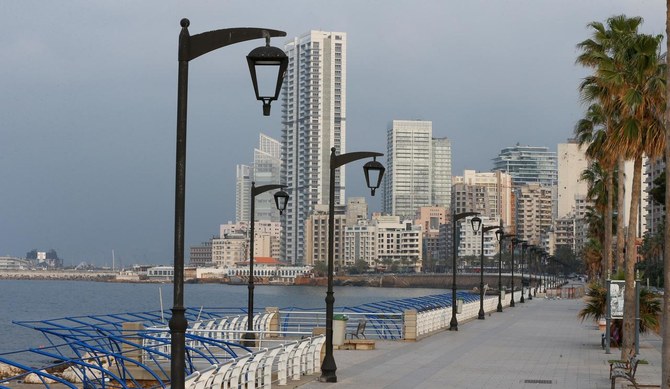
by arabnews.com -- NAJIA HOUSSARI -- BEIRUT: A prominent member of the Lebanese engineering and construction sector has warned of dire consequences if the industry collapses. Maroun El-Helou, chairman of the Syndicate of Contractors of Public Works and Buildings, said: “The collapse, if it occurs, will directly affect 700 contracting companies, 300 consulting firms, and 15,000 engineers working in companies or as freelancers in the public and private sectors. The collapse will affect 3,000 engineering offices and subcontractors and more than 150,000 administrators, technicians, and workers, in addition to workers in all other construction-related jobs.” El-Helou warned that a collapse could lead to “an exodus of skilled and specialized manpower as well as unemployment and starvation in Lebanon.”
The accumulated amount owed to contractors, engineers and consultants by the Lebanese government is approximately $600 million. El-Helou said: “The irregular payments, plus the lack of a clear roadmap for state action in light of the exceptional conditions that Lebanon is experiencing has put all projects in limbo. This will be directly reflected by the decline of environmental, health and living conditions. The investments and projects will be lost because of the government’s lack of seriousness in dealing with the burning issues.” Most of the projects carried out by contractors under the Council for Development and Reconstruction are related to infrastructure such as roads and water. El-Helou said, “There are 18 projects under construction and we demanded the cancellation of contracts for these projects. The projects are worth about $150 million and were funded locally.

by thenational.ae -- Lebanon needs urgent international help and long-demanded reforms to shield its people from their country's worst ever economic crunch, the International Crisis Group said on Monday. "Lebanon will need emergency external assistance to ward off the worst social consequences of the crisis," the Brussels-based think tank wrote in a new report. "The economic crisis is without precedent in the country's history," the ICG said.
The Mediterranean country's economy has been in freefall since last year, partly sparking mass protests from October against an entrenched political class viewed as inept and corrupt. The local currency has plunged in value, prices have soared, and tens of thousands have lost their jobs or seen their salaries slashed - all compounded from mid-March by a coronavirus lockdown. The heavily indebted country defaulted for the first time in March. The government has since adopted an economic recovery plan and entered talks with the International Monetary Fund, seeking to unlock billions of dollars in aid. "Lebanon needs to urgently push ahead with the negotiations with the IMF, on which support from other sources also depends," the ICG warned.
![Lebanese protesters push lines of riot police during the demonstration [Aziz Taher/Reuters]](https://www.aljazeera.com/mritems/imagecache/mbdxxlarge/mritems/Images/2020/6/6/f26bd7f100c047a9a3bfbbdfac1d7848_18.jpg)

by AFP -- “No to Hezbollah, no to its weapons,” said a sign held up by Sana, a female protester from Nabatiyeh, a city in southern Lebanese, a Hezbollah stronghold. “Weapons should be only in the hands of the army,” said the 57-year-old. Supporters and opponents of Hebzollah threw stones at each other, prompting the army to intervene by forming a human chain to separate them, an AFP photographer said. Supporters of Hezbollah, which is also represented in the government and parliament, chanted: “Shi’ite, Shi’ite.” Security forces also fired teargas near a street leading into the parliament building behind Martyrs Square, after some demonstrators pelted them with stones and ransacked shops in the area.
by aljazeera.com -- by Timour Azhari -- Beirut, Lebanon - Thousands of anti-government protesters filled a main square in downtown Beirut to voice their discontent at the slow pace of reforms in the crisis-hit country. The peaceful demonstration - the largest in some three months after the country eased a nationwide lockdown aimed at stemming the spread of COVID-19 - devolved into clashes between protesters, counter-protesters and security forces. The Lebanese Red Cross said 37 protesters had been injured, of which 11 were taken to hospitals for treatment.
Demonstrations have been taking place in Lebanon since October, when more than a million people burst onto the streets to demand a solution to the ailing economy, an end to rampant corruption and the downfall of civil war-era politicians. "We had a small break during coronavirus [lockdown], but we're back," Mario Sawaya, a 65-year-old retiree, told Al Jazeera from Beirut's Martyr's Square. He said the government of Hassan Diab, which gained confidence in February after protesters toppled the government of former Prime Minister Saad Hariri, had failed to show it could take strong independent decisions. "I don't think they're humans, because humans are defined by a conscience and values. They do not have any of that. This isn't a government, it's a zoo," Sawaya said. Saturday's protest saw a more mixed crowd than previous demonstrations, after former governing parties, with a majority-Christian support base that now finds itself in the opposition, called on their supporters to participate. Some called for the removal of the arsenal of Shia Hezbollah, a powerful Iran-backed militia and political force.
Most protest groups have pushed back, focusing on immediate reform - such as a new electoral law that reverses deep gerrymandering and the independence of the country's judiciary - before tackling such divisive issues. Clashes ensued when dozens of counter-protesters, who support Hezbollah and its main Shia ally the Amal Movement, emerged from a neighbourhood near Martyr's Square and shouted sectarian slogans. Hundreds of protesters ran towards them and hurled rocks and sticks at thick lines of riot police and soldiers. The protesters were pushed back but they clashed with security forces for several hours. Protesters set fires on main roads and at one point destroyed police motorbikes and set one alight.
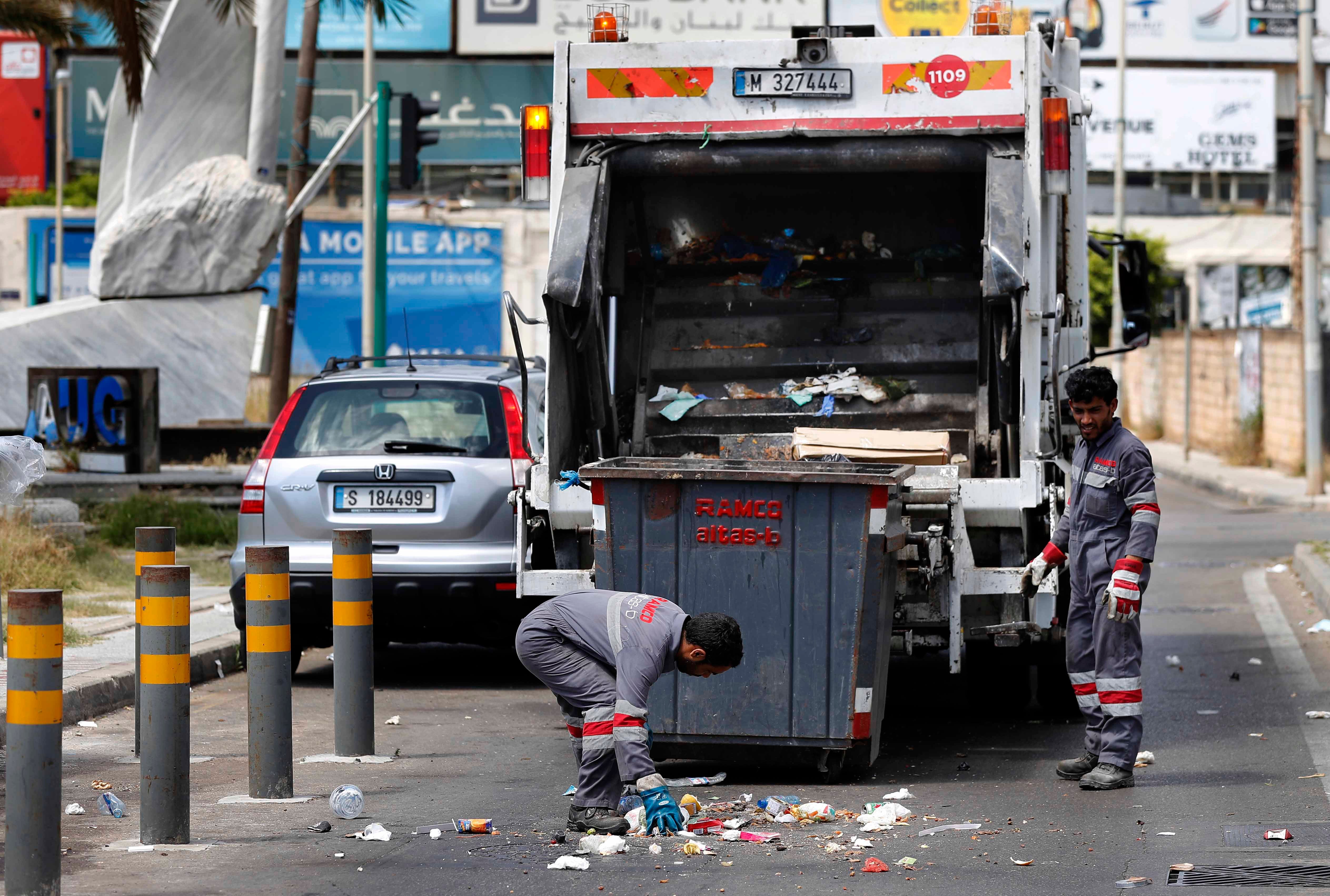
by hrw.org -- Aya Majzoub -- In early April, about 400 foreign employees of RAMCO, a Lebanese construction, facility, and waste management company, went on strike to demand payment in US dollars and better working conditions. The strike, believed to be the first of its kind among foreign laborers in Lebanon, could set an example for other groups of workers demanding social and economic rights. Although RAMCO’s foreign workers have contracts in US dollars, workers say that since November, the company had been paying them in Lebanese lira at the now-defunct official exchange rate of 1,500 Lebanese lira to the dollar. Over the last few months, the lira has lost more than 60 percent of its value, meaning that their families back home are now unable to afford basic necessities. Walid Bou Saad, RAMCO’s director, confirmed to Human Rights Watch (HRW) that the company was paying workers in Lebanese lira, saying that this was because the company itself was receiving its payments from the Lebanese government in the local currency.
The workers eat and sleep on company premises and say RAMCO retains their passports and other identification documents; HRW confirmed the latter with Bou Saad. The workers also say that they are denied the minimum wage and days off. Bou Saad tells HRW the workers are receiving one day off per week as the labor law stipulates, and that their average salary is $400 per month—the legal minimum wage in Lebanon is LL675,000 ($450 at the official exchange rate). The workers called the strike on April 2. When RAMCO employees blocked roads outside company premises on May 12 and prevented the garbage trucks from leaving, riot police were called in. Videos circulating on social media show the riot police launching tear gas and beating the workers. A small number of workers appear to have destroyed company property. A week later, on May 20, the Bangladeshi embassy in Beirut announced that RAMCO had negotiated a temporary deal with the workers for an increase in their salaries, details of which remain unclear.

Population Movements to Keserwan - The Khazens and The Maans
ما جاء عن الثورة في المقاطعة الكسروانية
ثورة أهالي كسروان على المشايخ الخوازنة وأسبابها
Origins of the "Prince of Maronite" Title
Growing diversity: the Khazin sheiks and the clergy in the first decades of the 18th century
Historical Members:
Barbar Beik El Khazen [English]
Patriach Toubia Kaiss El Khazen(Biography & Life Part1 Part2) (Arabic)
Patriach Youssef Dargham El Khazen (Cont'd)
Cheikh Bishara Jafal El Khazen
Patriarch Youssef Raji El Khazen
The Martyrs Cheikh Philippe & Cheikh Farid El Khazen
Cheikh Nawfal El Khazen (Consul De France)
Cheikh Hossun El Khazen (Consul De France)
Cheikh Abou-Nawfal El Khazen (Consul De France)
Cheikh Francis Abee Nader & his son Yousef
Cheikh Abou-Kanso El Khazen (Consul De France)
Cheikh Abou Nader El Khazen
Cheikh Chafic El Khazen
Cheikh Keserwan El Khazen
Cheikh Serhal El Khazen [English]
Cheikh Rafiq El Khazen [English]
Cheikh Hanna El Khazen
Cheikha Arzi El Khazen
Marie El Khazen